“Moss has provided us with a comprehensive history of the city’s zoning laws, demonstrating how they carefully (and at times, not carefully at all)
mask their racism with claims of wanting to make the city “more livable.”
More livable for whom, Moss asks again and again. The answer is always the white and the wealthy. It is here that Moss flourishes.
Using the numbers, he successfully argues his most persistent, and strangely hopeful, claim:
…the disappearance of the New York we love, or say we love, whose fabric has long been weaved from the mom-and-pop shops and artistic havens that once bloomed here, is not the inevitable reality of living in a changing city.
September 13th1994[apologies no archival link available that we could find but copy of article at the end]
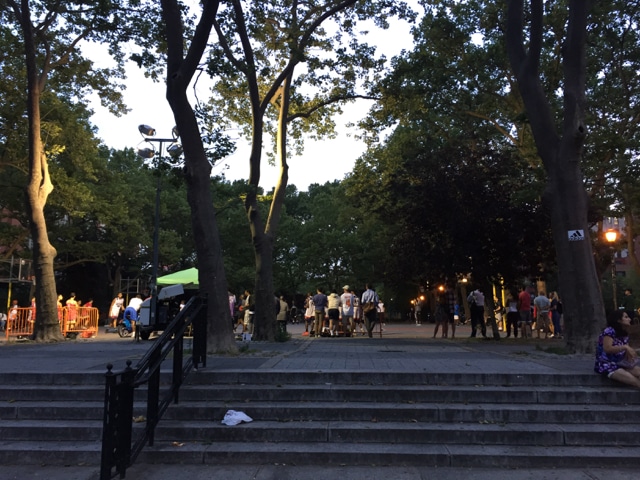
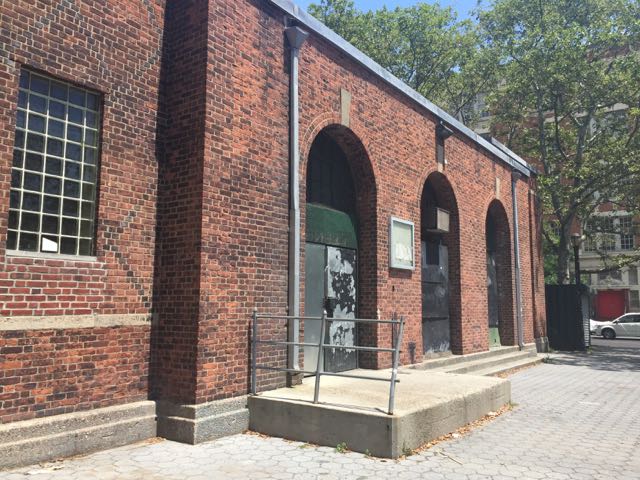
Entrance to Sara Roosevelt Park from Houston Street
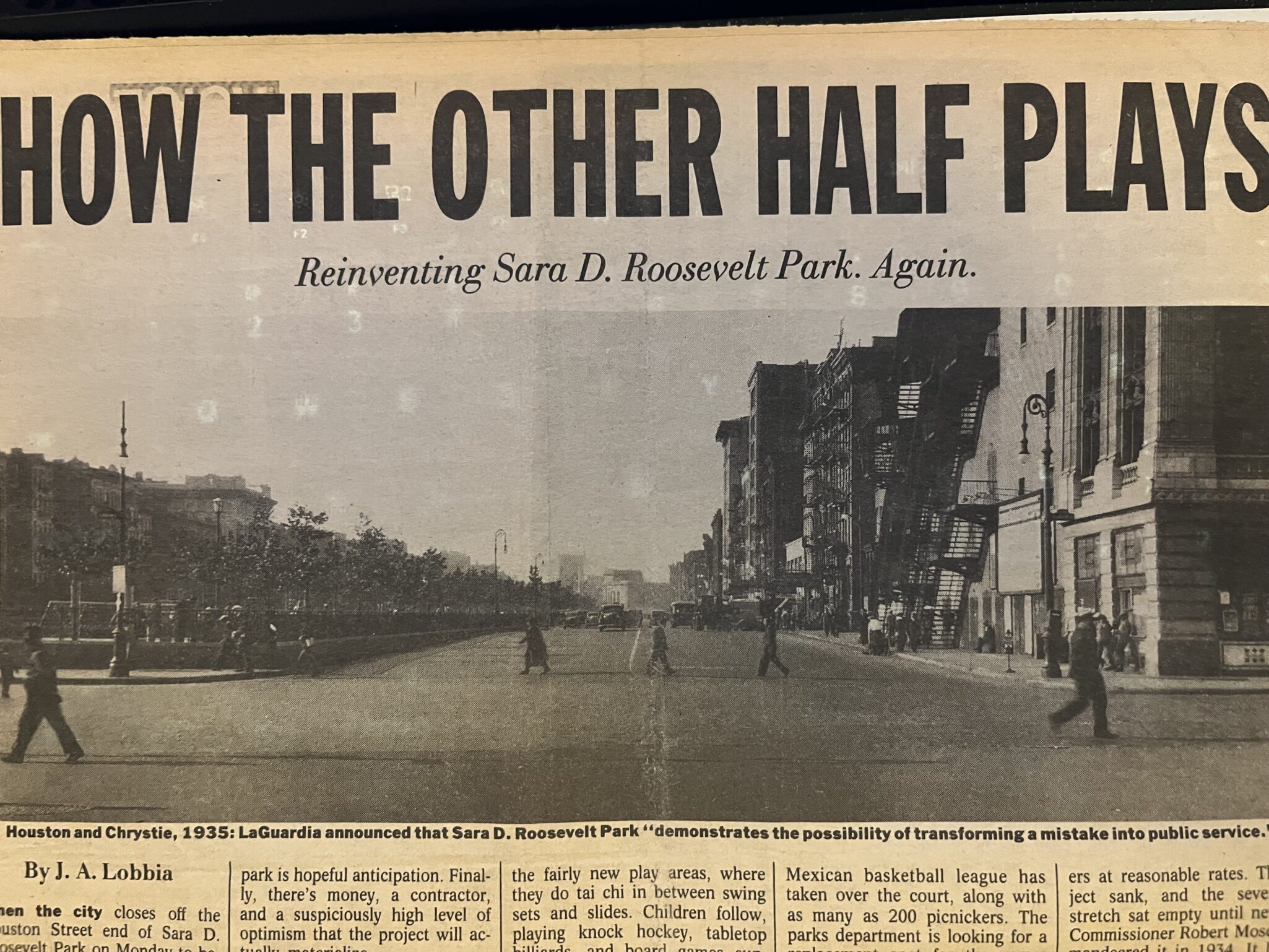
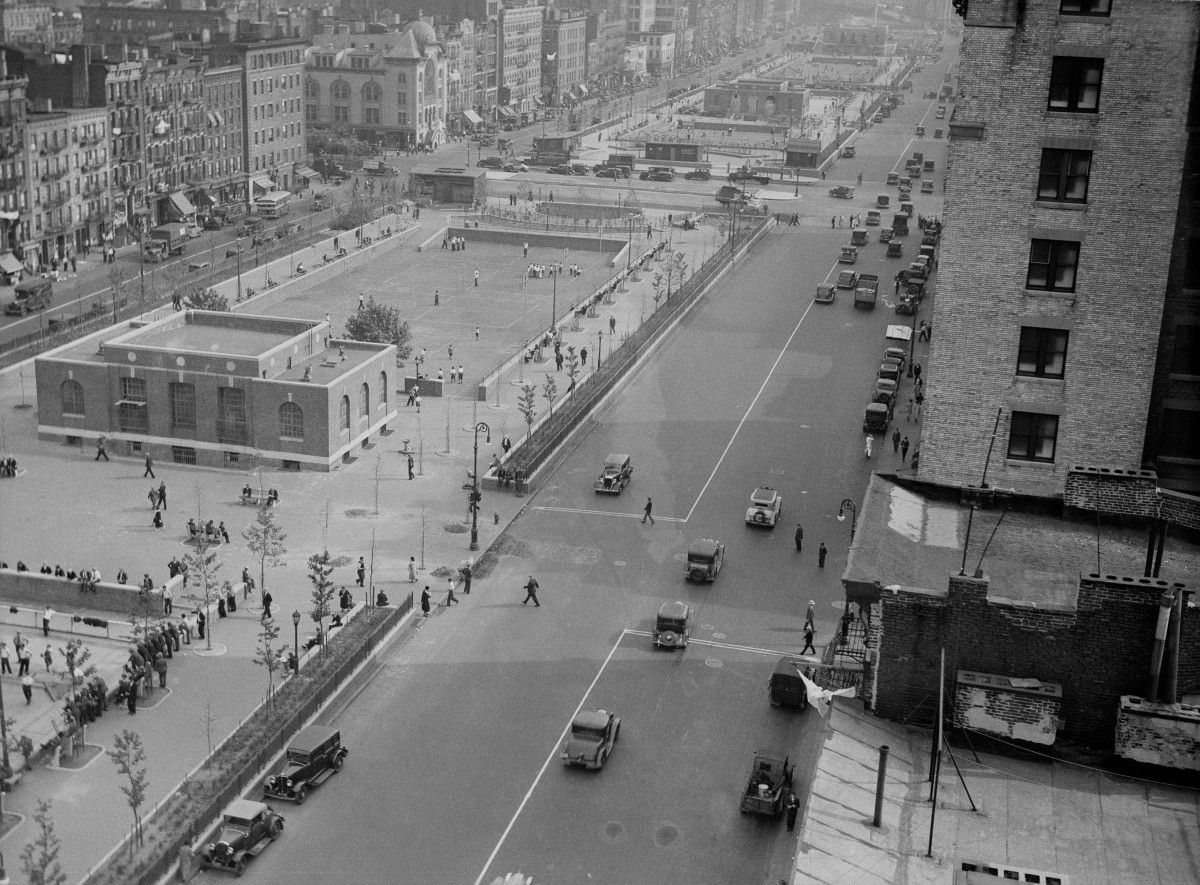
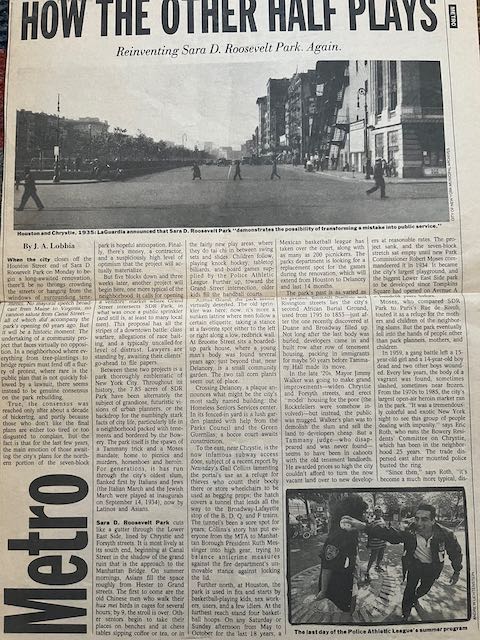
Houston and Chrystie, 1935: LaGuardia announced that Sara D. Roosevelt Park “demonstrates the possibility of transforming a mistake into public service.”
When the city closes off the Houston Street end of Sara D. Roosevelt Park on Monday to begin a long –awaited renovation, there’ll be no throngs crowding the streets or hanging from the windows of surrounding tenements. No mayoral speech broadcast from Maine to Virginia, no cannon salute from Canal Street – all of which did accompany the park’s opening 60 years ago. But it will be a historic moment: The undertaking of a community project that faces virtually no opposition. In a neighborhood where everything from tree-plantings to bridge repairs must fend off a flurry of protest, where rare is the public plan that is not quickly followed by a lawsuit, there seems instead to be genuine consensus on the park rebuilding.
True, the consensus was reached only after about a decade of bickering, and partly because those who don’t like the final plans are either too tired or too disgusted to complain. But the fact is that for the last two years, the main emotion of those awaiting the city’s plans for the northern portion of the seven-block park is hopeful anticipation. Finally, there’s money, a contractor, and a suspiciously high level of optimism that the project will actually materialize.
But five blocks down and three weeks later, another project will begin here, one more typical of the neighborhood….
[more on this section of the park in a later post]
Between these two projects is a park thoroughly emblematic of New York City. Throughout its history, the 7.85 acres of SDR Park have been alternately the subject of grandiose, futuristic visions of urban planners, or the backdrop for the numbingly stark facts of city life, particularly life in a neighborhood packed with tenements and bordered by the Bowery.. The park itself is the spawn of a Tammany trick and a Moses mandate; home to picnics and murders, horseshoes and heroin. For generations, it has run through the city’s oldest slum, flanked first by Italians and Jews (the Italian March and the Jewish March were played at the inaugurals on September 14, 1934), now by Latinos and Asians.
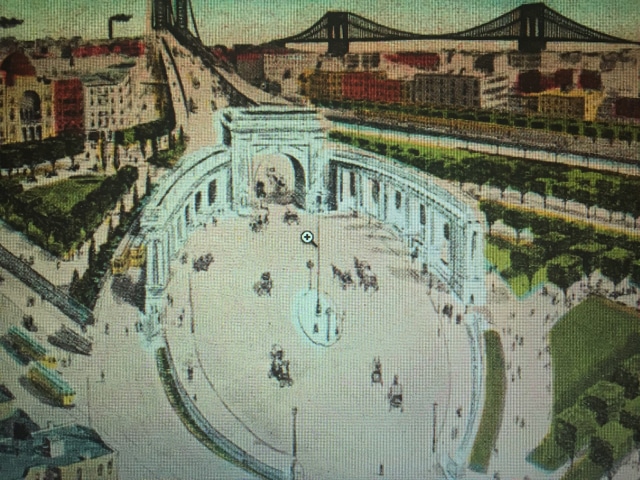
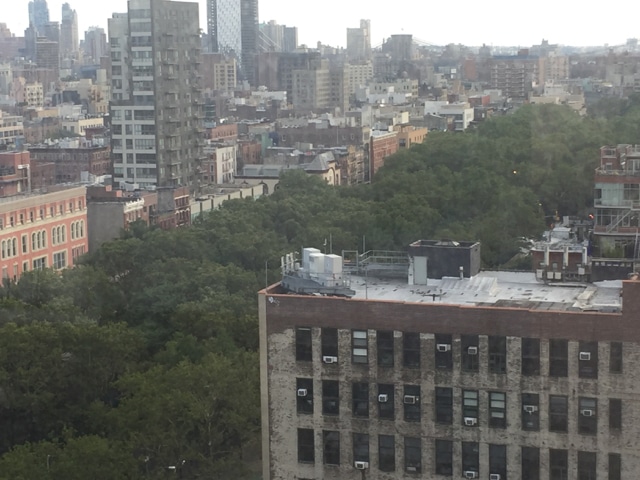
Sara D. Roosevelt Park cuts like a gutter through the Lower East Side, lined by Chrystie and Forsyth Streets. It is most lively at its south end, beginning at the Canal Street in the shadow of the grand ruin that is the approach to the Manhattan Bridge.
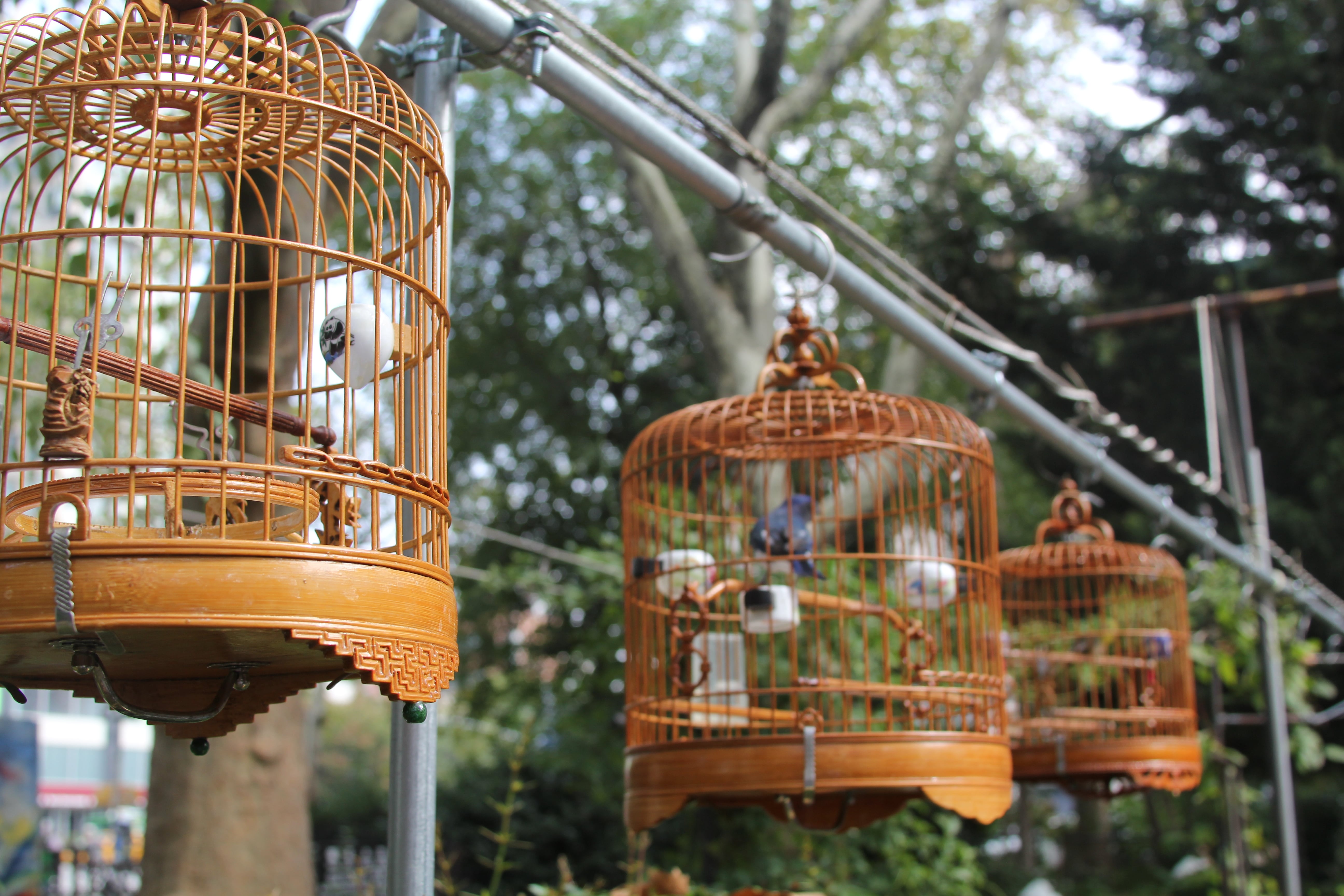
On summer mornings, Asians fill the space roughly from Hester to Grand Streets. The first to come are the old Chinese men who walk their hua mei birds in cages for several hours; by 9, the stroll is over. Other seniors being to take their places on benches and at chess tables sipping coffee or tea, or in the fairly new play areas, where they do tai chi in between swing sets and slides. Children follow, playing knock hockey, tabletop billiards, and board games supplied by the Police Athletic League. Further up, toward the Grand Street intersection, older kids fill the handball courts.
The Hua Mei Bird Sanctuary – photo Lee Elson
Across Grand, the park seems virtually deserted. The old sprinkler was here; now, it’s more a sunken latrine where men follow a certain etiquette, taking a stance at a favorite spot either to the left or fight along a low, redbrick wall.
At Broome Street sits a boarded-up park house, where a young man’s body was found several years ago; just beyond that, near Delancey, is a small community garden. The two tall corn plants seem out of place.
Crossing Delancey, a plaque announces what might be the city’s most sadly named building: the Homeless Seniors Services center. In its fenced –in yard is a lush garden planted with help from the Parks Council and the Green Guerrillas [Sara RPCC]; a bocce court awaits construction.
To the east, near Chrystie, is the now infamous subway access door, subject of a recent report by Newsday’s Gail Collins lamenting the portal’s use as a refuge for thieves who count their booty there or store wheelchairs to be used as begging props; the hatch covers a tunnel that leads all the way to the Broadway – Lafayette stop of the B, D, Q and F trains. The tunnels been a sore spot for years; Collin’s story has put everyone from the MTA to Manhattan Borough President Ruth Messinger into high gear, trying to balance anticrime measures against the fire department’s unmovable stance against locking the lid.
Further north, at Houston, the park is used in fits and starts by basketball-playing kids, ‘sex workers’ [Ed. Note: mostly young Black women addicted to heroin and sold by their pimps to be sexually exploited by mostly by older white men], and a few idlers. At the furthest reach stand four basketball hoops. On any Saturday afternoon from May to October for the last 18 years, a Mexican basketball league has taken over the court, along with as many as 200 picnickers. The parks department is looking for a replacement spot for the games during the renovation, which will extend from Houston to Delancey and last 14 months.
The park’s past is as varied as its present. Beneath Stanton and Rivington Streets lies the city’s second African Burial Ground, used from 1795 to 1853 – just after the one recently discovered at Duane and Broad way filled up. Not long after the last body was buried, developers came in and built row after row of tenement housing, packing in immigrants for maybe 50 years before Tammany Hall made its move.
In the late ‘20’s, Mayor Jimmy Walker was going to make grand improvements – widen Chrystie and Forsyth Streets, and erect ‘model’ housing for the poor (the Rockefellers were somehow involved) – but instead, the public was mugged. Walker’s plan was to demolish the slum and sell the land to developers cheap. But a Tammany judge – who disappeared and was never found- seems to have been in cahoots with the old tenement landlords. He awarded prices so high the city couldn’t afford to turn the now vacant land over to new developers at reasonable rates. The project sank, and the seven-block stretch sat empty until new Park Commissioner Robert Moses commandeered it in 1934. It became the city’s largest playground, and the biggest Lower East Side park to be developed since Tompkins Square had opened on Avenue A a hundred years before.
Moses, who compared SDR Park to Paris’s Rue de Rivoli, touted a refuge for the mothers and children of the neighboring slums. But the park eventually fell into the hands of people other than park planners, mothers, and children.
In 1959, a gang battle left a 15-year-old girl and a 14-year-old boy dead and two other boys wounded. Every few years, the body of a vagrant was found, sometimes slashed, sometimes near frozen. From the 1970’s to 1985, the city’s largest open-air heroin market ran in the park. “It was a tremendously colorful and exotic New York sight to see this group of people dealing with impunity, “ says Eric Roth, who runs the Bowery Residents Committee on Chrystie, which has been in the neighborhood 25 years. The trade dispersed east after mounted police busted the ring.
“Since then,” says Roth, “it’s become a much more typical, disgusting seedy NY Park.”
Though Moses intended to attract mothers and kids to Sara D. Roosevelt Park, his design makes it forbidding for many would-be users. All sidewalks are interior forcing pedestrians to walk either in the street or within the confines of the park, which is walled off by brick and wrought –iron fences and lined with trees. That gives a feeling of being enclosed, even trapped, in a sometimes uninviting place. Most playgrounds are below street level, making people feel hidden and vulnerable – or licensed to do something they shouldn’t. Even in the depth of the park’s best –planted garden or most populated playground, the feeling of being on a giant traffic-median is inescapable.
The renovation plans will change some of that. The sunken courts will be elevated to street grade, and ramps will be big enough to accommodate not only pedestrians but police cars. The four basketball standards will remain courts resurfaced with decorative parks department oak leaf [Ed Note: It’s the London Plane leaf!] logos added. Ample lighting will line the area, and new slides, swings, and climbing toys will surround an abandoned park house. The old wrought –iron fence (pilfered in places by thieves from local antique shops [Ed Note:–and where did the rest go?] is to be renovated and replaced. And, perhaps in memory of Moses, the parks department will install benches from the 1964 World’s Fair.
It was around that time that Bob Humber moved to the neighborhood. Then in his early 20’s, he was an ardent basketball player. Now, he runs a 40-league team in the park for kids aged 6-18. He’s been a major advocate for park improvements, beginning by fighting plans about eight years ago to turn the whole park into a garden. Humber wanted to make sure kids could still play games there. “I was never much into gardening,” he admits,” he admits, though he did win a Parks Council grant to landscape the area behind the senior center. He did it with the help of some junkies who hung out in the park, most of them, he says, have since died.
Humber – who spends even his vacations in the park and who wears a shirt that announces “BOB” so you know just who you are talking to- has a complicated relationship with the junkies. He wants to keep the park for everyone including the Bowery overflow. He knows some of ht users from way back, when they were kids from his league.
“I caught a guy shooting up here once, and he said, ‘Oh Bob, I’m so sorry. I wish it was a police that caught me. I know you don’t like this.’” Just as junkies use the park as a sort of back-alley hideout, the city itself has treated it as a storage bin to serve other, more deserving oases. For instance, some original plans for Central Park were once found stored in an SDR park house, but city archives and even the parks department have little information on the downtown park itself.
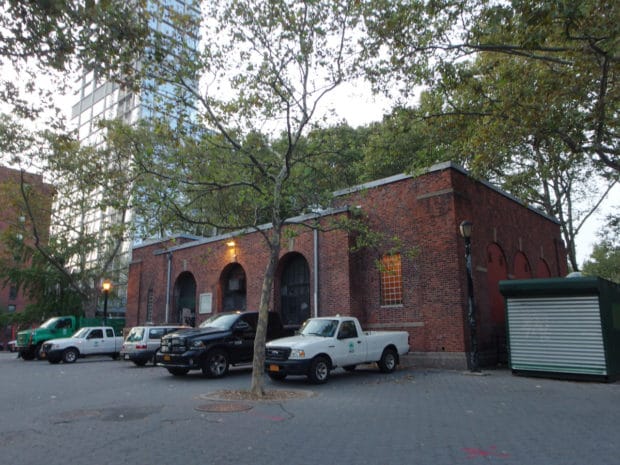
That building there is a warehouse for city supplies, but we can’t even get a mop out of there if we want one,” Humber says. That should change with the renovation, when the warehouse becomes a rec center with Ping-Pong tables, a nursery, a theater, and a ‘safe haven’ program for neighborhood kids.
“We’ve been waiting for so long, now we just can’t wait till it will happen,” he says. “No one is fighting about this, and that’s because we’ve had the main event. But it’s all been worked out.”
Continuation [Vendor’s Market?]
That much can’t be said for the vendor’s market.
“The suits have been drafeted and we are waiting for the vendor’s approval. We would be suing the city, Mayor Giuliani, the police department, the department of consumer affairs, and, of course, Kathryn Freed personally. I promised her at a meeting that I would name her in the suit.
Now that sounds more like the Lower East Side. The speaker is Steve Goldman, a lawyer, representing the Chinatown Vendor’s Association, a group of about 300 licensed sellers who hawk everything from roast duck on rice to plastic shoes in the packed confines of Chinatown and Little Italy. Freed is the district’s City Council Member and leader of efforts to push vendors off the streets into a park market. She argues the venors clog already narrow streets and fail to set up shop the required 20-foot distance from an existing business. Goldman argues that no sidewalks in Chinatown are 20 feet wide, that the vendors have paid for legitimate licenses, and that Freed is running a ‘vendetta” for store -owning merchants in Little Italy, who, he notes, clog nearby Mulberry Street with sidewalk cafes from April to October.
Freed’s plan dates back several years, now, after many meetings and modifications, the market is scheduled to open October 1 under a setup that allows the parks department to contract University Settlement (US), the city’s oldest settlement house, to operate the forum. Around 100 vendors will pay $125 to $350 a month for kiosks in the park; US will pay the parks department at least $22,000 a year for the contract. Any profits will go for park programs. The plan is a change from one that was jettisoned earlier this year, it would have put a for-profit firm in control and charge merchants at least $750 a month per booth.
“When we saw the parks department request, we decided, we’ve been involved in fighting for the park, we’re a community organization, and after considerable discussion, we decided that if it was going to be done, we could make it a community development project,” says Mike Zisser, executive director of US, which was founded on the Lower East Side in 1886. (University Settlement by the way, hosted convicted state assembly speaker Mel Miller’s community service stint. His conviction was overturned.)
Zisser says he’s received nearly 100 applications and twice as many inquiries for market stalls. Most applicants are Asian, he’s looking to attract Latino, African, and other vendors as well.
Goldman has no beef with Zissor’s plan, so long as the market is an option, not mandatory. But that is unlikely, as cops intend to continue forcing out vendors, including those who are licensed.
“I would never go over there, to the park,” says a Cantonese -speaking vendor. Since 1987, he’s sold tofu, T-shirts, and caps, along Grand Street. It’s not worth the money. I don’t make enough to pay another set of rent and over there, there wouldn’t be any business.”
Ironically, even though the pit in the park is but a few steps away from where most of the vendors sell, virtually no one goes in there unless he has a full bladder. Merchants rely on the tremendous foot traffic, particularly the 16,000 people the MTA estimates come in and out of the B, D, and Q subway stop at the corner every day.
“Those vendors are part of teh whole culture, a fabric, where you walk one block, buy a bag, and walk another and see the same bag cheaper. They you walk another block and get roast duck,” says Goldman. “in that park, there are a lot of homeless people, there’s prostitution, drinking, drugs, it’s dark and dirty. Why should a merchant want to go into the park and go away from where people are, especially tourists?”
Zisser’s plan could overcome there problems. He’ll hire several local people for market maintenance and sanitation; it will run seven days a week, 12 hours a day. More important, Zisser says, “We’ve been in the community for 108 years. We intend this to be a community project. If the community decides that this market doesn’t belong there, we will be working with them, I mean we are them. If there’s a more appropriate use for this park, we will have absolutely no hesitation in following the communities wishes.
He adds that this market could be a prototype for others. With Giuliani’s sweep to get vendors off the street, Zisser says, the move is toward congregated markets. “All over the city, the issue of vendors is coming up, and all over the city I think you’ll see a lot of social service providers moving into economic development.”
But Zissor isn’t only looking forward: “Eleanor Roosevelt worked here. FDR courted her here. This was his first real exposure to tenements. WE say the New Deal got its start down here. What comes around goes around.”
For the better part of the century, politicians, planners, and reformers have alternately neglected this downtown acreage or labor to turn it into some idealized site be it model housing or an urban pastoral. Most efforts have a tint not just of improvement but of rescue at the opening ceremonies one speaker proclaimed that mayor fiorello la Guardia had “transformed this devastated and disease breeding area into a junior Central Park” And thanked him “for giving us a Moses who will lead the children of all races and religions of the east side from darkness into sunlight.”
So but the schemes of reformers have never quite taken, and the park, despite their wishes, has never been able to escape the fact of its location as an isolated strip running through one of the city’s poorest, most diverse, and most crowded communities.
“It’s great that people are interested, but I’ve seen people interested in this park before,” says Roth of the Bowery Resident’s Committee. “I’ve seen beautification that lasts for a few weeks, clean-up plans that come and go. The renovation is long overdue, and whether a market improves the park beyond the market itself, remains to be seen.”
Late on a recent Tuesday afternoon two West African men sat on one of the benches that lined the perimeter of the pit that will become the market. Cabbies, they have parked their cars on Grand to take a break, have a beer and a smoke. As their argument heats, the volume rises.
“You say you hate Black people, but you live with Black people” one says to the other, slapping a newspaper on the bench. That’s how this country is. This country is for everyone.”
As he says this a sea of people – mostly Asian – head West on grand in a crowd so dense, it looks like a Jacob Riis photo. A few head east, mostly Jewish men wearing yarmulkas and side curls. Three Puerto Rican kids parked their bikes in front of the Chinese butcher on the corner.
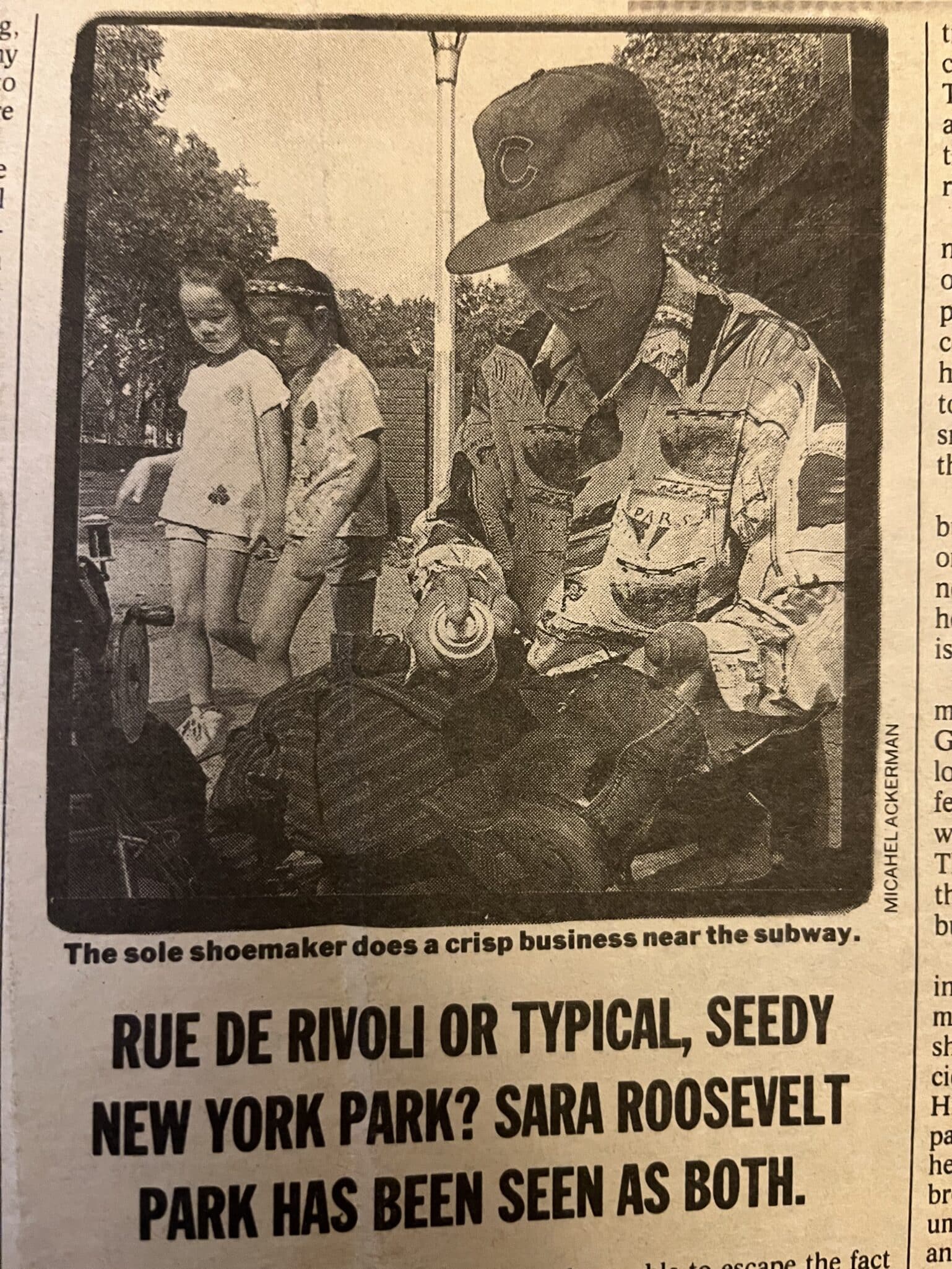
Photo: Michael Ackerman
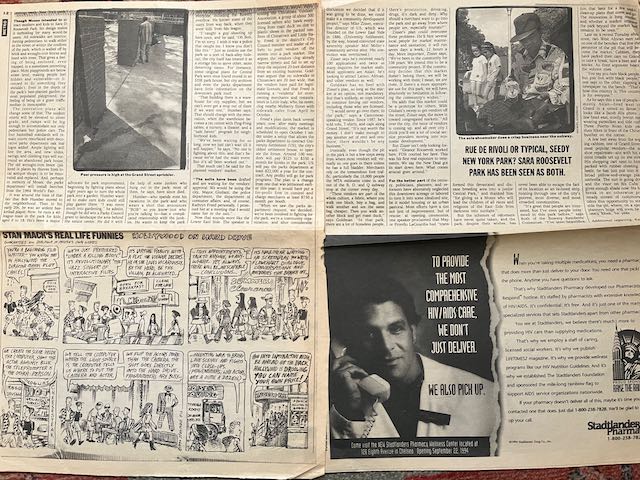
A few feet away from the arguing cabbies, one of the Grand Street’s most popular vendors – the sole shoe repairman – sits with his ancient treadle set up on the street. His shopping cart next to him is packed with rubber sheeting for heels; he has just put into it his broad yellow-and-orange plastic umbrella. The sun is going down, and the visor on his Cubs hat gives enough shade now. He has a break in an otherwise pretty steady stream of customers; he takes this opportunity to step inside the pit, where on a spot that planners hope will soon be somebody’s kiosk, he pees.
Additional reporting : Karen Lam
All photos below: Michael Ackerman
[more on this part of the park in a later postconcerning the area history around Grand Street.]
*A. Lobbia
NEW YORK (AP) — J. A. Lobbia, was an award-winning columnist and investigative reporter on housing and race relations.
Since 1990, Lobbia was an editor and reporter for the Village Voice in New York. She got her start writing about housing issues as an intern at the St. Louis Post-Dispatch in 1983, and later was an investigative reporter and managing editor of the Riverfront Times in St. Louis. Lobbia’s articles in the Voice dealt with housing, community preservation, the elderly and immigrants. At the Riverfront Times, she wrote about black-on-black crime, black activism and racial imbalances in the judiciary. The Newswomen’s Club of New York recently gave Lobbia a Front Page Award for her reporting on housing. The Greater St. Louis Association of Black Journalists honored her four times for her work.
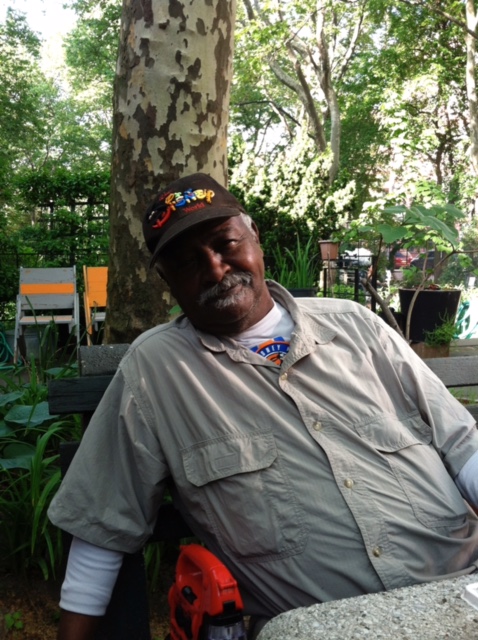
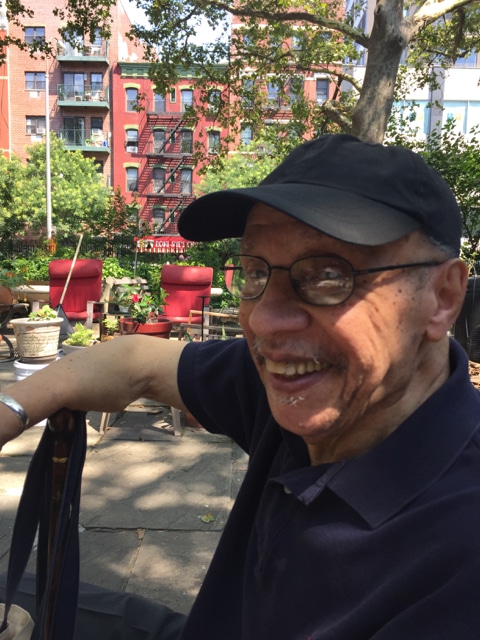
Bob Humber. Still here. Still fighting. Still holding out hope.
“Two Friends and the fence between them” The Daily News
Juan Gonzalez@juangon68Tuesday September 20, 198(?)8
Ira Dobrin had been desperate to leave the job for months. Too much work, so much misery on every bench, “so little recognition all for $18,000.
Ira shook hands with Robert Humber across the iron railing last Friday and said goodbye to Roosevelt Park, that long sliver of rundown trees and playgrounds that cuts through Manhattan’s lower East Side.
For the last two years Dobrin’s job has been to keep the park clean, which is something like being a point man for the rotting of urban America.
“We’re gonna miss ya, buddy,” says Humber, sprinkles of gray glimmering from the sides of his Afro, his Doberman pacing sentrylike at his side.
Humber is staying because of the kids, because he has no job to lose, and because each of us at some point has to take a stand or the weeds will strangle us all.
About 20 scraggly bodies are scattered nearby sleeping on benches or sipping alcohol out of brown paper bags.
“You wouldn’t believe the stink in this park some mornings from urine and feces, especially after a weekend,” says Humber, who has lived on the lower East Side for 30 years.
“Some mornings when I come to work every bench is filled with homeless,” says the tall Dobrin who sports a beard, wears a blue jean jacket and baseball cap, and has a Walkman draped around his neck.
They wanted me to throw the homeless out of the park,” he says with rebel’s contempt for his old supervisors, all the way up to Parks Commissioner Henry Stern. “Wake up a homeless man sleeping in a box and say, “You’ve got to move? Who knows what a person will do?
“They used to have 15 people working this park. I’ve been the only full-time maintenance man since [?], “ he says.
Dobrin lives in Bensonhurst, has a bachelor’s degree from Fordham and a wife and three kids to think about.
“Those steps used to be the biggest shooting gallery in the neighborhood,” Humber says, pointing to the old park house 20 feet away that has become his battleground. One Saturday last June, junkies killed one of their own in the park.
“The Mexican league was playing, 300 people were watching a game when the shooting started. Any one of those kids could have gotten killed,” says Humber, who used to work for the Children’s Aid Society.
“I just blew my stack that day. I told some of the fellows: We have to do something about these drugs.” Kids and old folks had stopped using the park. The dope fiends had claimed it.
Humber decided to take it back. Every afternoon he sits in the enclosed area near Stanton and Chrystie Street and asks the junkies to move. He called it Friends of Roosevelt Park.
Once he asked a man not to smoke crack on a bench. The guy pulled a gun. “I’m just a concerned person, “ Humber told him. The junkie left.
“We don’t walk around with clubs or guns. This is not a vigilante-type thing. We ask them in a nice way,” Humber says.
The kids have returned. Friday there were more than 50 on the basketball and baseball courts.
“Two of the prostitutes (on Chrystie St.) even brought us books for them to read, “ says Humber. He and the kids have built several brightly painted birdhouses.
“I knew most of their fathers. Some are dead now. I enjoy telling them about their dads and what we used to do in the old days,” he says. He’s posted anti-drug signs on all the trees and painted a big sign: “LET OUR CHILDREN GROW”.
Park bureaucrats say staples in he signs are dangerous to the trees, that birdhouses are illegal. They ordered Dobrin to remove the signs, which he refused to do.
Friday afternoon, while the kids played ball and the Doberman stood guard, the rebel and the warrior said goodbye.
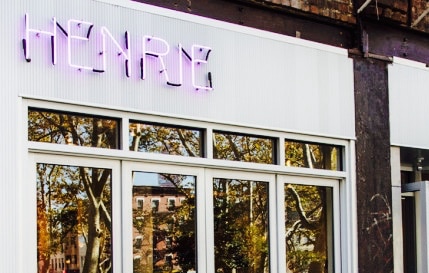
Nearby tenants and long -time neighbors turned out to say ‘no thank you’ to Cafe Henrie’s request for a full liquor license. They listed a number of key reasons.
“Our long- time experience as a community has been that when a full liquor license is given, things change. I do not believe that our neighborhood needs more fully-licensed establishments with 7-day-a-week, 2AM closing hours.
There are at least 3 OP licenses already on the Chrystie street side of the park, and their revelers can be heard late into the morning as they wait to gain entrance
Happy Ending was a disaster, and Louie and Chan has similar noise issues from patrons gathered outside.
In addition to the hotels, the number of businesses within 750’ of CH suggests that rampant proliferation of licenses in our community is not an exaggerated concern
Every additional bar or OP business that opens has a significant impact on the quality of life of the residents who live nearby
An over-arching concern is this: as one of the small streets located just west of the much-discussed over-saturated area, and just east of several new large hotels on Bowery and Chrystie – all of whom have (or will have) several OP licenses within them – we run the risk of being squeezed as the next area ripe for businesses that cater to transient visitors looking for pub-crawls and bar-hopping.
…This site does not have [a full liquor license] currently, and if approved it becomes such a space ever after.
– There are families with school-aged children who would thank you for this.
– There are seniors who like to go to bed early, and they will thank you, too.
– There are workers who live the 9-5 grind who would appreciate being able to enjoy their quiet time at home.
CH’s owner is internationally known as a nightclub developer, a graffiti artist, style and fashion maven. As he stated, to become this successful: “Everything I do comes from the freedom” he embraced as a grafitti artist: “if I want to do something, I do it. If I want to paint this rooftop…this train…or a place that is difficult to access..I’m going to do it…. and I’ve kept this attitude with everything I do…I want a night club, I’ll do it.” **
Andre wanted a coffee shop, and he got it.
We ask that he work with the community to make sure that we get what we want and need, too – the peaceful enjoyment of our homes and neighborhood, and a continued successful coexistence with the café.”
These issues and…
the venue is required by their lease to close at 12midnight
the Pentecostal Church (which one of the attendees is a member of) is within 200 ft
For future reference:
Community Groups in Community Board 3: CB3 keeps a listing of all nearby community groups to help get the word out for venues requesting licensing. It helps…democracy. It means venues have easy access to reach out beyond the, at times, insular world of their own clientele. It keeps us communicating openly and honestly as neighbors.
BoweyBoogie covered the preliminary issues here. (Thank you BoweryBoogie)
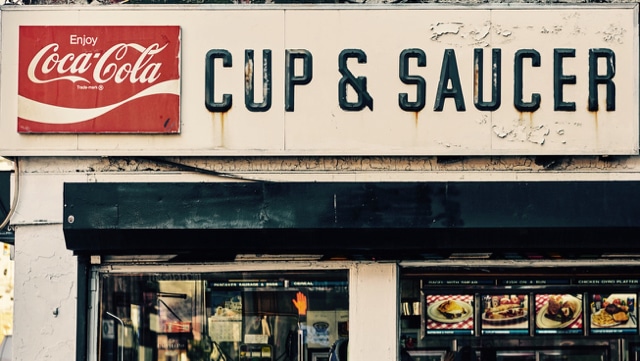
“John Vasilopoulos and Nick Tragaras stood before an assembly line of egg sandwiches. Mr. Tragaras slid the eggs and bacon from the griddle onto the buns as Mr. Vasilopoulos followed to wrap and stack.
It was a familiar rhythm for the owners of Cup & Saucer, a diner on the eastern edge of Manhattan’s Chinatown. But on Monday afternoon, after more than 70 years, the clink of metal spatulas flipping eggs and bacon will quiet for the last time as Cup & Saucer closes its doors.
“We really care about every customer who comes in; we get involved with them,” Mr. Vasilopoulos…..
….The owners plan to take the summer off to regroup and possibly look for another space.
“We have to do something,” Mr. Vasilopoulos said.”
“We humans are so constituted that we need a sense of our own social significance. Nothing can give us more pleasure than the sense that we are wanted and useful. Conversely, nothing is more productive of despair than a sense that we are useless and unwanted.” Dr. M Scott Peck, People of the Lie
“I think people usually use the term ‘homelessness’ without ever really being able to understand what it means… Not to be flippant, homelessness actually means sofalessness, cookerlessness, showerlessness…and, worst of all, bedlessness…
The word ‘homeless’ seems to present the condition as a single lack, but homelessness is actually many individual deficiencies combined. The worst of them are emotional: but to mention the physical challenges first: the single worst bodily aspect of homelessness is exhaustion. It is caused by several different factors including sleep-deprivation, hunger, and a constant need to remain on the move…
..When I became homeless, the first shock to me was the constant ceaseless need to remain in transit, and finding somewhere to simply be was a far bigger problem than I could have previously imagined. Nowhere you go are you left alone. Nowhere can you expect that luxury, because of course, all the private places of the world are closed to you and all the public places offer no privacy. Many of them do not even grant you admittance
…nowhere that offers dryness, safety, cleanliness, warmth and comfort. A park bench may be dry, if it is not raining, and it may be clean, if you are lucky, but it is not safe, warm or comfortable…
…the real and deepest damage of homelessness: the loneliness…
…It’s the experience of being utterly unwanted, of your very presence being an undesirable commodity in all places and all situations. Wherever you are, as a homeless person, you are unwelcome. When a person is homeless, their sense of social significance is reduced to zero. It doesn’t exist. Their sense of themselves is of being worthless and unwanted; a social pariah, an exile, an outsider whose very body is an unwanted intrusion they must carry with them wherever they go. They are unwanted in the most literal sense of the term. They are redundancy embodied. I felt these feelings in homelessness. All homeless people do. It’s unavoidable…
[Homelessness] is joylessness, and for many, hopelessness also.
In homelessness, you are not invisible to people, but rather not worth looking at.
One of the strangest things about my experience with homelessness, and probably the one of those most worth recording, is the feelings I remember of my very first time on the street. There was the feeling of an irresistible and seductive pleasure to destitution in disguise, but it was a fragile creature and it perished like a little bird in the depths of an unendurable winter. I had morphed destitution into freedom in my own mind, but the ruse didn’t last long.”
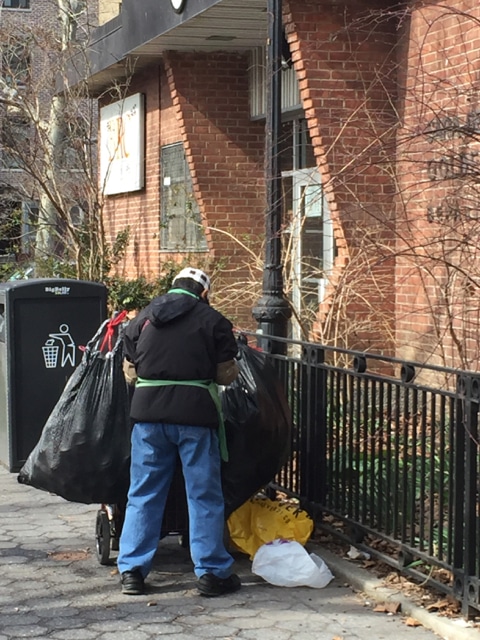
“the American Recycling infrastructure… provides three-quarters of a million jobs and tens of billions of dollars in economic activity…”
Written Bob Gedert, President, National Recycling Coalition; Senior Recycling Consultant, RRS; SWEEP Steering Committee Member
“..The President’s proposed fiscal 2018 budget, the Environmental Protection Agency’s (EPA) … budget allocation is proposed to be cut by one third [eliminate] over 50 programs and 3,200 jobs. …including the Sustainable Materials Management program and the Waste Reduction Model. [Reducing] ..critical support of recycling and negatively impact the American recycling industry.
…in order to have any chance of reaching for Zero Waste, our country requires an upgraded recycling infrastructure….
..Instead of shipping nearly half of all recovered recyclables to overseas markets, a refreshed recycling infrastructure will support new American end markets…
Investing in American recycling infrastructure will also lower impacts on climate change. The energy required to make new products from recovered material is a fraction of that to create them from virgin materials and tighter, closed loop systems lower transportation impacts.
Contact your local Congressional Representative: ask for support of the US EPA budget, as well as infrastructure support for the American recycling system…”





 “..The President’s proposed fiscal 2018 budget, the Environmental Protection Agency’s (EPA) … budget allocation is proposed to be cut by one third [eliminate] over 50 programs and 3,200 jobs. …including the Sustainable Materials Management program and the Waste Reduction Model. [Reducing] ..critical support of recycling and negatively impact the American recycling industry.