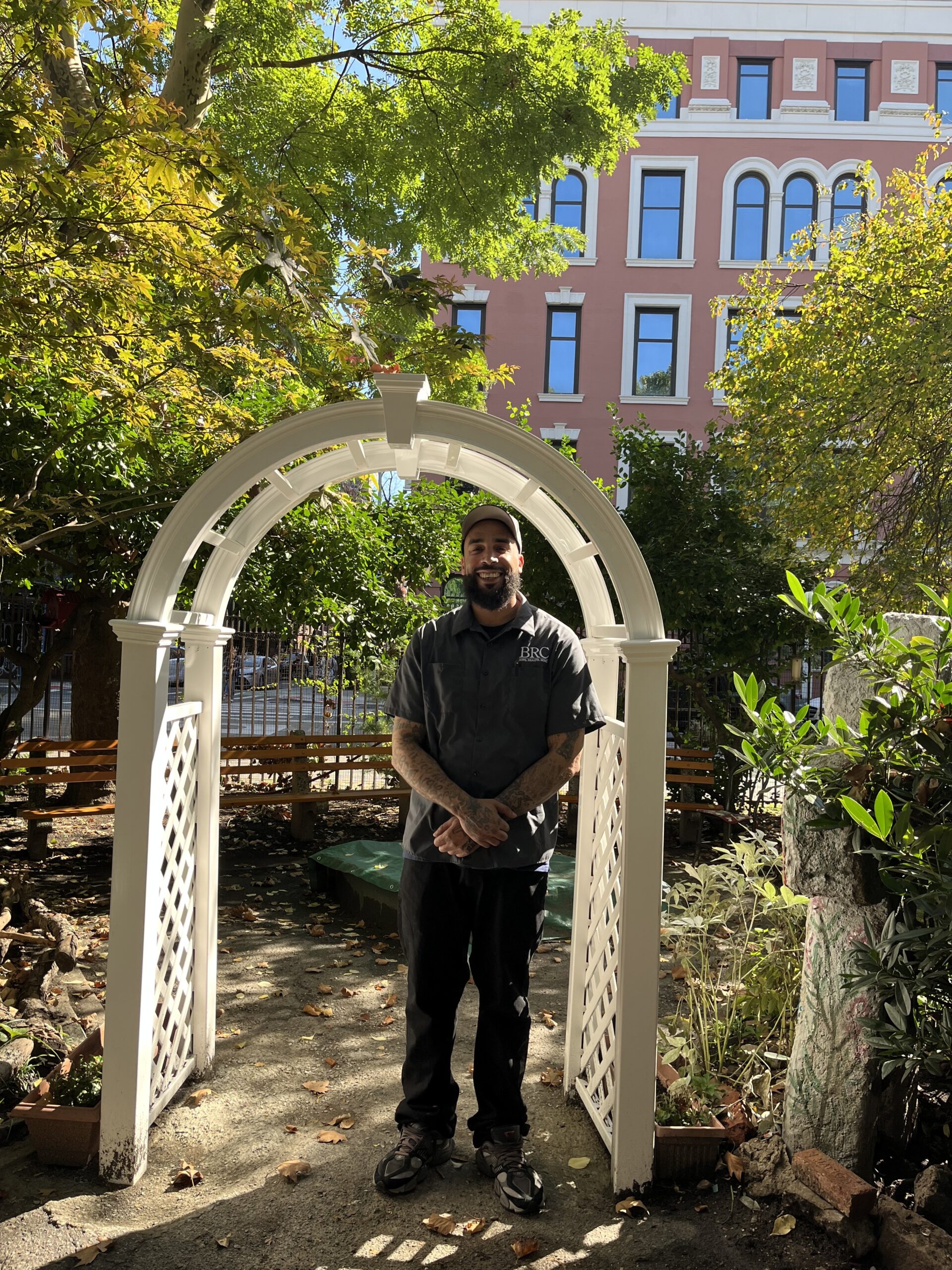
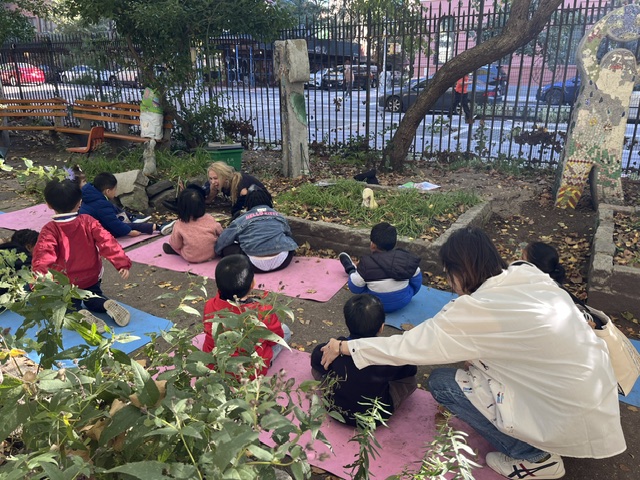
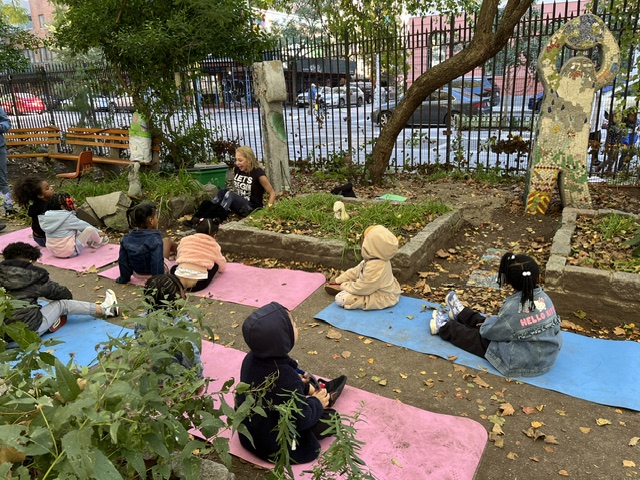
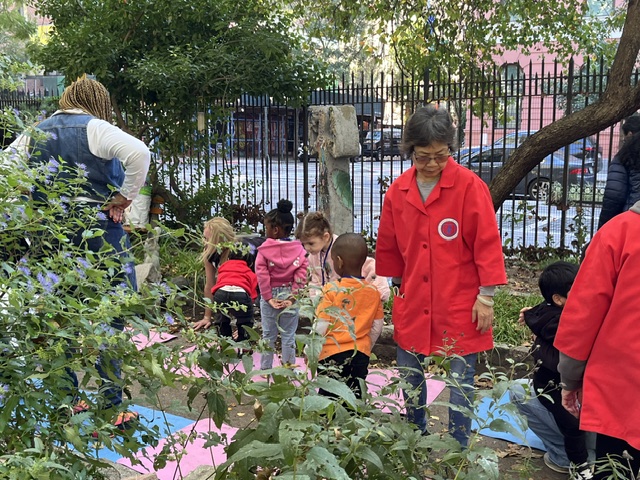
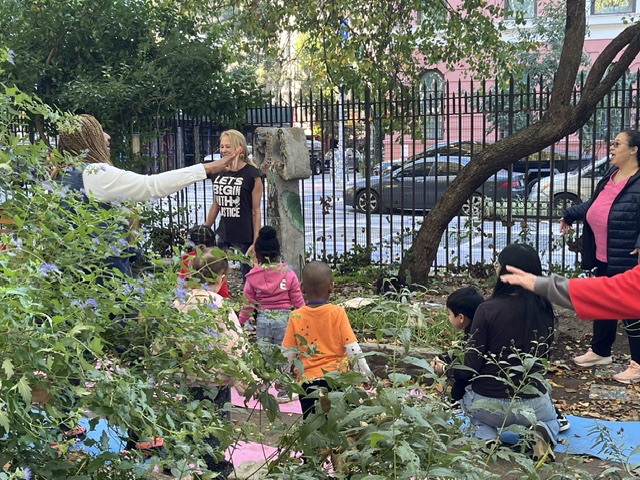
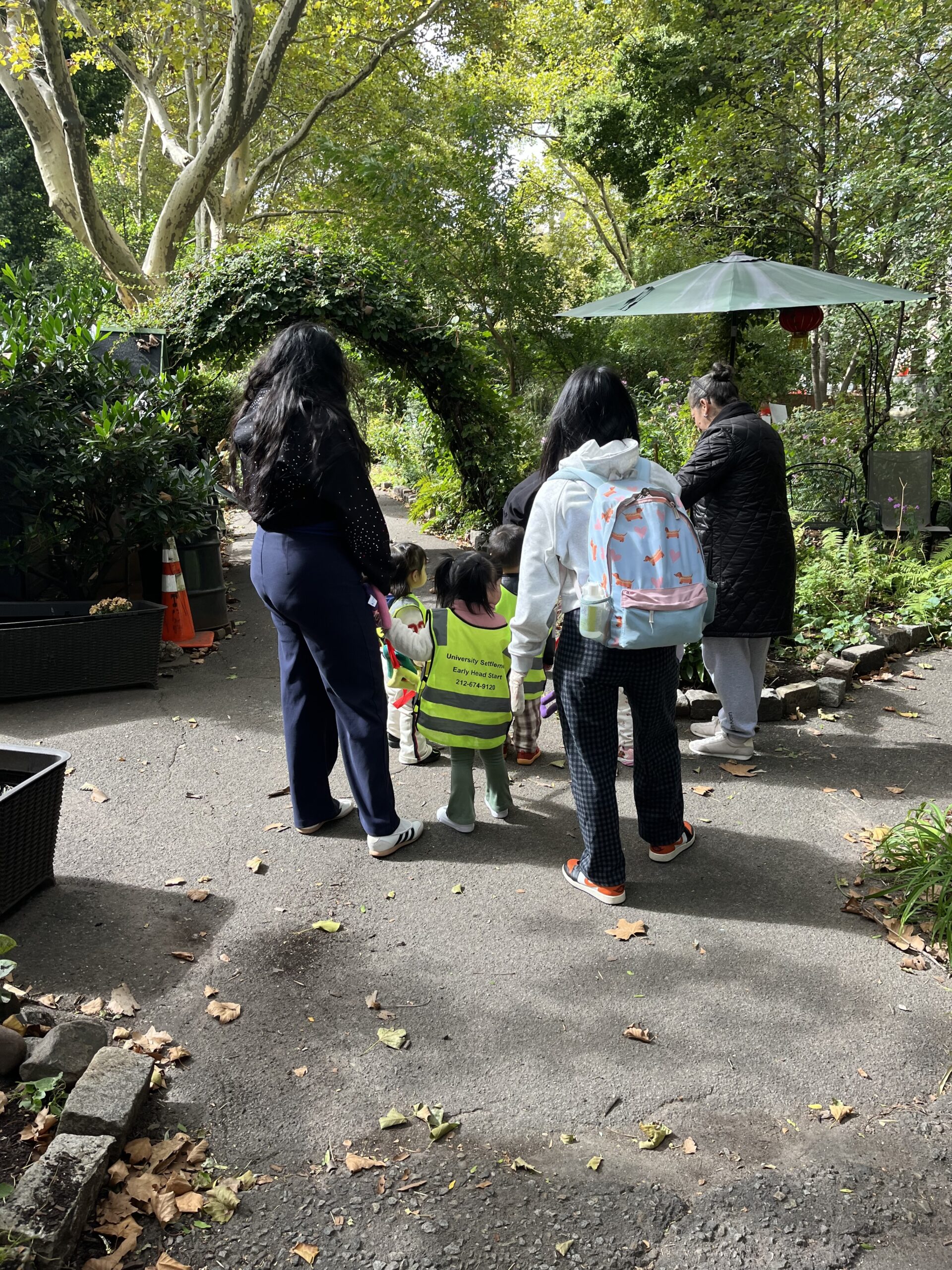
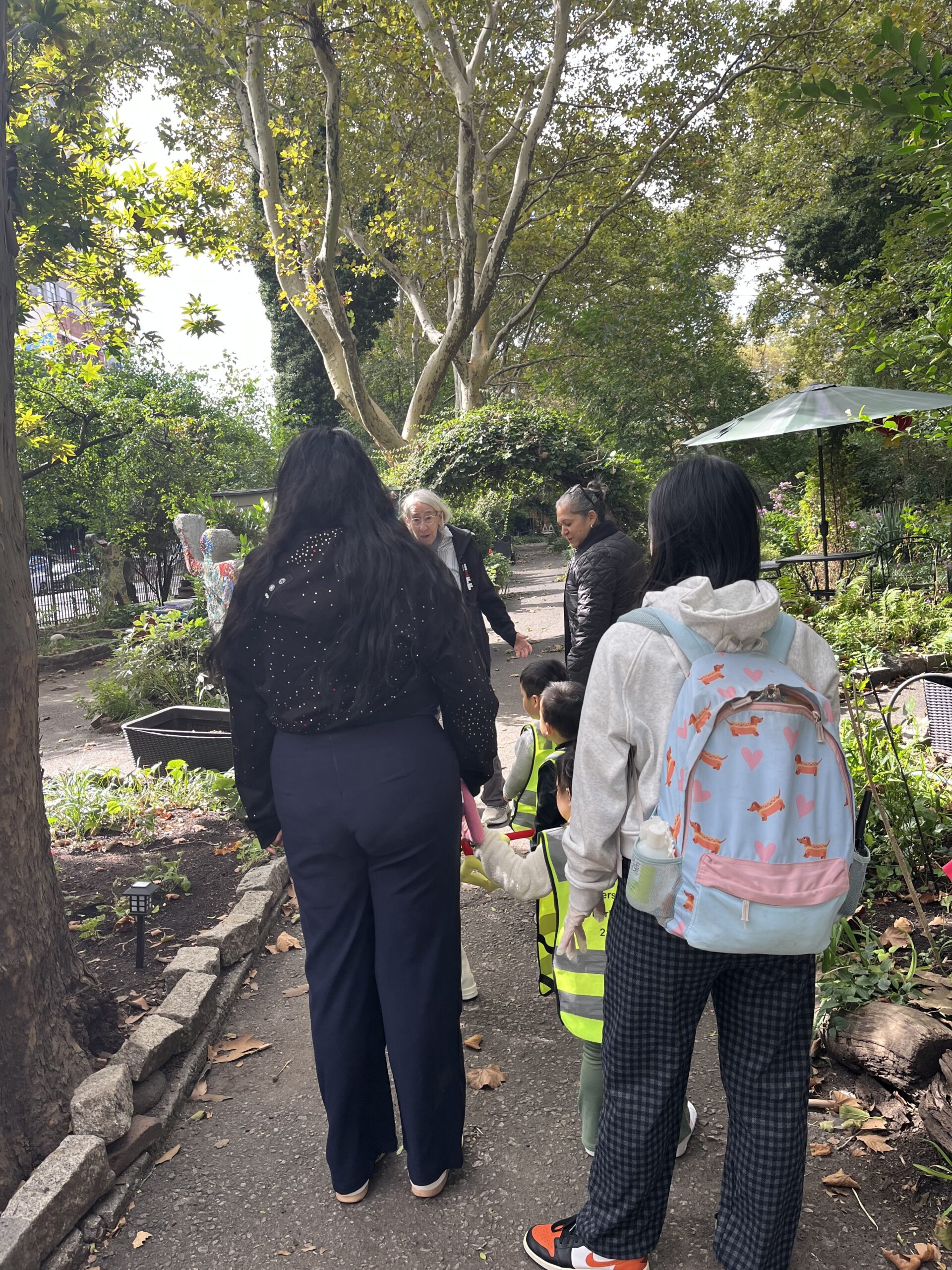
Part 3: Break-Out Tables and Photos Food & Feedback Sara Roosevelt’s Frontline Workers – Stories of Service

Part 3: Break-out tables and Photos

Intro to Break -Out Tables: Ted Enoch of Partnerships for Parks

Thank you to all of you for tonight, for decades of service your neighborly treatment of one another it’s a great pleasure to see all of you this is a really powerful and beautiful community space and tradition you have.

We have an hour to go in this program

You have note you have a number on your name tag and there are numbers on each table. so in a moment we’re going to ask people to get some food – we have more people who showed than we anticipated – which is awesome!

Please be select with the refreshment you choose (laughter).

And then come to your table and we’re going to talk and respond to this incredible collection of wisdom and stories that I know is the tip of the iceberg for you guys.

Myself (Ted), Jennifer, K, Debra, and Sayde, will make sure we’re at one of each of these five groupings.

We’re going to have a conversation and a note taker at each table. We’re going to share this conversation very briefly when we get back together with each other (in about 45 minutes). Before you leave, please make sure you leave your email here so we can share the reports we have.

Someone just said they wanted to be invited to the table to hear what happens So make sure you sign up with your e-mail.

There’s so much to say; I’m so inspired I could cry tears of joy, I could cry tears of heartache, of appreciation for your dedication, but I don’t want to take up too much time. this is really meant for everyone to respond to one another. – Ted Enoch


Break Out Tables: April 29, 2026

Table #1 

Interests:

Public directory of resources in the park: food sources, mental health, etc. Phone #’s so neighbors know what to do. Pathways to work. Rob: many ask him for this.

DOE Fund uptown – something like this here?

Ideas

Tessa – Park tax so many fancy buildings how have them contribute /give back?

Brian from Housing Works – Safe injection sites idea:  HW is trying to open a safe injection site @ C and D [Cylar House]. Currently stuck in bureaucracy. Needs public endorsement and funding.

A solidified community voice needed. Next step: Brian to share materials with K


Testimony example who works with /near school. New Health Commissioner?

Health:

Rob: Better signage for bathrooms. Need restrooms cleaned every hour/more cans!

Rob: put fake camera where there is illegal dumping

Eddie” Need more $$ 1% for Parks, Police funded separately. Parks does a detail every Thursday with Sanitation/NYPD. CB 3 is the biggest district with the smallest resources.

Noel: Power of reaching out to Council Member and Assembly Member. There is only one shelter that has single room options.

Sayde: Other parks have done community resource fairs.

Tessa: Around Juneteenth would be a good time.

Amazon worker are using playground @ Rivington Playground for their breaktime.

Why the new designs put benches and tables outside – but need this before the renovation.

Idea is there a way to do temporary benches and tables for Amazon in the interim?

Table #2

Here since the 70’s. We had boys clubs/girls club as kids. Park changed a lot. Maintenance needs to be better.

Here since ’89. More people need to come out to clean up our sections of this park. Bob and others cleaned up the Park – but now needs help again. Bob built a garden named after the African Burial ground that was here. Prepare for impact of Bellevue intake center closing.

Other events like this. Same issues where I live.

UWS. She used to work down here advocate with AAFE (know K from AAFE), a lot of people are involved in the upper west side – let’s do that here.

Do arts work in this park. Brought “Walking Amal” to the park after connecting with K. Every year Remote Theater does site specific stories/plays about this park and its people.

18 years here. This is my bike ride to work area. Worked on getting the two-way bike lane adjacent to park. I’ve lead bird tours  here. NYC Parks worker – not speaking as that here. On Community Board 3 Parks Committee with K.

28 years in neighborhood, gardener with Bob – helping him with “circular economy” (redistributing used clothes, etc), we need more free stores, a laundromat, safe places to do drugs, agrees on shower bus.

10 years Safe Horizon, Street work homeless youth, wellness. ‘Professionals’ don’t want these outreach jobs. Need to recruit people wo have experience, but also have different communication skills. Wants to see sites for managing public drug use (and discards). Housing is a key issue. Can’t recover without some privacy.

Grateful for the people in this park who do this work on the ground – they have knowledge we need.

-Bring back Community Policing. Shower bus, Meetings like this, so people can’t so easily be set up against each other. Advocate for Parks budget, Go to meetings with 5th Pct to give your perspective. Go to Community Board meetings -advocacy.

-Take into account the legitimate fears of constituencies here: Anti-Asian violence was real here, vulnerabilities due to being elderly, female, GLBTQ. There is trauma of violence/death here (from and to every walk of life).

-Impacts of generational poverty generational racism is not a mental health issue – it’s a policy choice (One can go “crazy” if homeless for a long time -add “quick fix” street drugs or unmonitored Rx drugs to numb out -mental health deteriorates).

-Housing. Eliminated cheap SRO housing on Bowery, shot down the creation of a Safe Haven nearby, litigated for a decade against the LGBTQ friendly, deeply affordable housing for formerly homeless seniors of Haven Green. How get well/be well without a home?

Everyone should have input that is heard.

Better outreach and referrals.

Publicize resources for health, mental health, housing, youth services for those uninsured (immigrants for instance).

Table #3

Who:

– Community Liaison for harm reduction

– stigma around drug use

– misconceptions about Narcan enabling abuse

– Translator for the evening from University Settlement

– Prevent loss of stable housing

– Earlier role was alternatives to incarceration in Philadelphia

– “There should be a Bob on every block.”

– “resilience”

– ran non-profit

– 30K families

– business owner (restaurant) resident and father of a young woman being raised near the park

– “A quick answer is often harsh and violent”

I’ve been in a leadership position for two years as a co-chair in the committee. I’m invested in the park and I don’t normally feel unsafe in NYC. However, I do feel that way in the park often.

I am part of a professional community (Housing Works) who does service work in the park. I am a community liaison and I believe Harm Reduction principles are essential here, as the stigma around drugs and drug use are so rampant.

I was here to provide interpretation, but the program was so compelling, I stayed anyway even though no interpretation was needed.  I think there is a need for eviction protection in this neighborhood. I do like this format because it helps us learn about communities in the Lower East Side.

Business owner: I’ve lived here since 1978, raised my daughter here. My wife and I are here. “We’ve been overrun since Covid and it’s detracting from positive activities in the park. Police are unrespondent. This is a long-term project and we will need patience.

I do walk-ins in the garden and I help take care of the rats.

I’m a volunteer and I want to be part of making it better here.

Ideas – thoughts:

-Getting together more often and building relationships, getting to really know each other

-Getting and keeping the service providers together, networked, and supportive and in alignment is a really big, important opportunity. To build on this very program…

-Wayfinding in the public. Better signs. Bathrooms. Services. Trashcans.

-More learning about overdose centers around town. – Jenna would love to follow-up and offer an info session on this topic, and provide coordinated follow-up.

-Our park feels like a sacrifice zone.

-When do we need to call 911 and the police? When and how we need to understand if overdose protections are needed.

-A drop-in center is controversial, but there is none south of 14th street in Manhattan (verify). Does En Pointe have a successful model?

-Get the Bike Rack out of Rivington pass through because it is interrupting flow

-Might there be a resource fair? How do we become more aware of resources?

-More signage and info-graphics.

-Other report out information:

Signs, cards, backpacks.

-More trashcans, water fountains, sharps containers,

-How to share interests? A volunteer brigade?

-Community policing?

-A shower bus?

– free stores

– public bathrooms: Open, clean, safe.

– mobile showers for the unhoused

– mosquito prevention

– mentioning neighbors’ concerns  to Parks and 5th Pct. and other meetings for people who will never attend those meetings.

More signage and info-graphics.

Other report out information:

Signs, cards, backpacks.

More trashcans, water fountains, sharps containers,

Table #4 

What is your connection to the Park?

Eight participants at table 4.  Three from CBOs who do work in the park, two who live on the park and are very active users, one from M’finda Kalunga garden, two were invited by heavy users of the park and are occasional users.


Why did you come to the event?

  • Two came because they felt it is important to be good neighbors by participating in civic life
  • Interested in complex problems that affect the city as a whole (issues in NYC parks) and possible solutions
  • Want to advocate for the soccer pitch between Broome and Grand to be fixed up and reopened
  • Wanted to share they work they do to help the unhoused in the park
  • Even though they no longer live in the LES, they feel very connected to the neighborhood and want to stay involved
  • Some say the LES is over served but this participants doesn’t agree and thinks the neighborhood is underserved
  • Was looking to see what the current Mayoral Administration can / will deliver to the park
  • To think how to make the park safer for all


What did you think about the panelists’ ideas?

  • Liked the open discussion about complex problems
  • Liked to learn about all the resources that are available to park. Didn’t know so much help was there
  • Appreciated the perspective that the homeless also feel safe in the park and feel a sense of place there. And that it is important to work with them in a place that is also their community
  • Parks are very important and essential places to all even the unhoused. It is community for them too


What is one idea you have to make the park safer / What is one thing you would like to see in the park?

  • A volunteer trash pick-up brigade
  • Or a paid community trash pick-up brigade (like the snow removal over the winter). This would allow folks make a difference in their community and work some hours that worked for their schedule
  • More art projects, inclusive art projects
  • We need to make sure that if the park is safe it is truly safer, not just the appearance of a safer place
  • More community patrols
  • A bridge between the many communities that use the park (Chinese and non Chinese / youth and elders / homeless and those who live around the park)
  • More trash cans
  • More lights
  • More water fountains
  • More sharps trash containers
  • Better sidewalks so that folks don’t trip and fall
  • Fix and reopen the soccer pitch at Broome and Grand
  • A more regular way for community members involved in the park and CBO staff who work in the park to share resources and intake information
  • Forms for park users to share hobbies and interests (maybe a list or map?) so that it is easier to make connections among community members
  • Better play grounds
  • True community policing to come back


Table #5

Question #1 Why did you come this evening? What is your connection to this park?

-First time seeing resources

-Asked to come and share

-Coming to talk about getting services in the park

-This became a community again. Something happened – now I’m  hopeful

-The city has pushed folks here, and dropped the resources;  “?” the unhoused in the community.

-Reasons for the unhoused – food equity work

-here to learn how we can help-

Know the culture

All are somebody’s mother sister

Everyone is somebody’s somebody

-Wanting to make this neighborhood a nicer place

-it’s a community

-Everybody tries to get along in general, although sometimes it works and sometimes it doesn’t

-Veteran of this park – long history of brining the community children, police, neighbors – can make change with community

-Listening to bring back


Question #2 What did you think about the panelists’ ideas for making the park safer and more accessible for all?

Allocation of resources – the changes that come with change in who is in the community right now – pass this park by for Eliz St Garden

-List all available resources for folks to share when needed (resource ‘cheat sheet”

-Be more visible – talk to folks – share resources so that passers-by cans share with . They are connected to who might need them.

-Understanding how affective the interventions are – police/providers

-The police and PEP can talk to folks “let us help you” Dialogue

-Homeless and drug dealers – stop and bless my mom who is in a wheelchair – they acknowledge her.


Question #3  What is one thing you would like to see in SRP? One idea to make the park safer and more accessible to everyone?

-How can the community (we) help make the shower bus happen.

-never accept ‘no’

-Community policing and PEP

-People trained to interact with all people without judgment and treating them with dignity.

-more social workers / a better ratio

-Rooms for folks to get services – drop in centers, laundry, restrooms

-cleanliness in general

– connect unhoused with volunteer opportunities – engage them where they feel they are contributing

-shower van /bus

-political will, council member and all politicians should be present and involved.

Read MorePart 3: Break-Out Tables and Photos Food & Feedback Sara Roosevelt’s Frontline Workers – Stories of Service
  • Post category:News

Part 2 Question #6: Food & Feedback Sara Roosevelt Park’s Frontline Workers: Stories of Service

Debra Jeffries-Glass

What would you like to be asked?

What keeps you going in this work, in this park?

Wei Tchou Thank you. I think as an observer of the park, what keeps me going is just that there’s an immense amount of wisdom, obviously, from everyone you’re hearing from tonight, but even I think just people traversing the park randomly. It just feels like there’s something really ancient and human that happens here to learn from and I think it’s worth cultivating, learning about and passing on.

*****

Mason Crawford I guess for me, I’m a talker and I like to have a good time and when you’re doing street outreach,  you get to talk to anybody and everybody and one thing you learn is a lot of people are actually really good people and so you can make people laugh, make people feel warm and welcomed.

That’s what you can usually make the first connection to something.  So yeah, I just like to talk and go out and meet people and that would be it for me.  And you can ask me anything. I may not know the answer, but you can ask me anything.

*****

Marcellous Valentin For me, what keeps me going in this work is just being able to serve the community that raised me and being able to see the humanity and dignity in someone being reconfirmed in them. When they’re feeling like they’re nothing. And then, same, you can ask me anything.

Hopefully, I have an answer.

*****

Jeff Cohen Okay, I’ll go with the second part of the question.

You can ask me anything. Hopefully, I have an answer.

As far as what keeps me going, I like what I do.

I like the people we serve.  I like the community. For me, coming here, it was something new and we’ve become part of the community here and I don’t see us leaving, so I’m happy doing that.

*****

Carol Prudhomme Davis I think what keeps me going in this park is I have friends here and they’re from every walk of life that everybody has brought up here and I found out during the pandemic,  it was unhoused artists that got me to get up and off my butt and quit feeling sorry for myself because what I wanted to do couldn’t happen.  What I would like is to be invited to the table,  to invite our organization,  to be invited to be a part of events and brainstorming and really be able to explore what we can do with food equity here.

*****

Brian Crozier What keeps me going in this work,  well, in the park, I mean, overall, this work will never be done until there’s fair and equitable treatment for all community members,  regardless of using status, regardless of housing status,  regardless of socioeconomic factors, right? The work will never be done until then. As long as I can walk, breathe, whatever, I will continue to do that work. That’s that.

*****

Bob Humber 60 years ago, this park had a drug problem. The problem was, I wanted to solve it. It was about wine. It wasn’t about crack or K2 or anything like that. It was wine. We solved that problem for a while and we’re back at it again.  But when I start something, I want to finish it.  So as long as I have a breath in me,  I’m going to keep fighting, keep fighting to get drugs out the park, no matter what it is.


Closing:

Debra Jeffries-Glass:

Well, thank you for your wisdom, for your wit, for your work, for your warmth.

If I could come up with another word,  it’s going to be that we are good.

Can we please have a round of applause for our panelists? Thank you.


Thoughts and Information After the Panel

Ted Enoch:

What a powerful and beautiful convening of SDR Park community members and leaders last night at the BRC Senior Center!

Thank you to our amazing panelists for sharing stories about their important work and experiences, and thank you to the

more than 50 community members who witnessed, reflected, and shared back their ideas about, as one of our brilliant

panelists put it, “How we meet people where they are at in the park…” as we build resiliency, accessiblity, and safety together

for everyone!

Thanks to the BRC Senior Center for hosting us so generously! Thanks to the many volunteers who care for the park in so

many ways, including those who showed up early or stayed late last night to help! Thanks to the NYC Parks workers who are

so dedicated to the care and maitenance of SDR Park, including Edwin Rodriguez, Manhattan Parks District 3 Manager, who

stayed for every minute of the program last night! Thanks to Jennifer Valone, and her University Settlement colleagues who

helped plan and support the meeting! And thanks, especially, to the brilliant leadership and vision of the Sara D Roosevelt

Community Park Coalition who imagined and planned the event last night. Particular appreciation goes to K Webster, Debra
Glass (who organized the event), and their dedicated mentor, Bob Humber, who was a inspiring panelist last night, and a

founding member of this group. Bob’s work and leadership in the park goes back decades at SDR Park.

There will be more follow-up communication soon. We could feel the excitement and determination for folks to stay involved

and to take the next steps forward. More, soon…

For now, please take the small but meaningful step of signing-up for the City Parks Foundation/Partnerships for Parks email

list, here, and make sure you check the box that says: Partnerships for Parks, where you can get news on grants, tools,

workshops and other news and resources that is important for a park like Sara D. Roosevelt Park. We are very excited to

support next steps together!

Sincerely,

Ted and Sayde, Partnerships for Parks Catalyst Program


To Our Panelists After our Panel:

First, thank you all again for your work for the panel, whether on the panel or backing the person on the panel – it was hugely important here and as a possible model elsewhere.

It generated thoughts and proposals, instead of fears and blame – despite the reality of potential harms. We will want to listen to all of the feelings generated here, but we would like to start with thinking based on experience, facts, and offers of possible solutions/mitigations.

We intend to keep this conversation going.

It might be useful to read about the perspective of the NYC Mayor’s Office of Community Safety, Commissioner Ayesha Delany-Brumsey (see below).

Apparently there has also been a high-level Task Force assigned here involving the 5th Precinct. We hope they will consult with you and your work.

Onward.

K, Ted, Debra Jennifer, and Sayde

“What does it mean to feel safe?’ NYC’s new Office of Community Safety head weighs in”

Read MorePart 2 Question #6: Food & Feedback Sara Roosevelt Park’s Frontline Workers: Stories of Service
  • Post category:News

Part 2 Question #5: Food & Feedback Sara Roosevelt Park’s Frontline Workers: Stories of Service


Debra Jeffries-Glass

One thing that you would like for this park?

One thing that would help you in your work?


Brian Crozier

One thing that we would like assistance with is public support for an overdose prevention center. There’s two overdose prevention centers in Uptown New York: one in Harlem, and one in Washington Heights. For anyone that we know who we work with at our program, at our program, or in the street, no one is traveling that far to do what they got to do. We need them more localized.

That might seem a little bit abrasive to some. I’m happy to talk to you all when we’re getting to know each other. I’m happy to have the conversation with everybody. One thing we need is an overdose prevention center. If there’s concern with public drug use, problematic drug use, et cetera, this is a safe, supervised area. Not a single person has died from an overdose inside an overdose prevention center. It can help peoples in the park no matter what, regardless of their concern. So, putting that out there, thank you.

*****

Noel Sierra & Jake Leibovitz One thing that I think would be immensely helpful is there’s many drop-in centers currently in the area dedicated to different tasks, different programs,  different populations.  But at least when it comes to our work within the Department of Homeless Services universe,  the only drop-in center in the area is on 14th Street.

And I think that’s a really good idea.

And there’s absolutely nothing below that. All the rest of the drop-in centers in Manhattan, of which there are a very small number, frankly, are even further away for the folks that we work with.  And as Jeff was talking about earlier, beds are scarce.

We do our best to help somebody the same day get into a placement that they feel comfortable and safe and good with.  But when we can’t, what we can offer is the mainstream shelter system,  or someone can take themselves to a drop-in center,  and most people choose the drop-in center.  But we have to tell people, okay, you gotta get yourself to 14th Street, and it’s slam there.

So I would say a drop-in center in this area within our sort of universe to be better able to serve this community and get people plugged into services.

*****

Jeff Cohen The one thing I would like for the park to do is to continue what you do. Consistency. Every day. Where I can turn to somebody if I need something. That’s been the big thing for me.

*****

Mason Crawford For me, it would be like a knowledge and awareness,  knowing where places are and who can go where. That would be mine.  For anyone in the park, just to know, all right, this program’s this many blocks away. You know, you can get there right now and they can meet you with this need.

*****

Marcellus Valentin Just to add on to [“continue what you do, consistency, turning to somebody if I need something”].  I think just having what you guys were talking about before in terms of that would be great for the park and for all of us to come together to do this work.

For me, what keeps me going in this work is just being able to serve the community that raised me and being able to see the humanity and dignity in someone being reconfirmed in them, when they’re feeling like they’re nothing. You can ask me anything. Hopefully, I have an answer.

*****

Wei Tchou I would just echo everyone who’s talking about alliances, and maybe also a bridge between the Western communities and the Fujianese communities. That’s something that I think is missing.

*****

Carol Prudhomme DavisI would like to be able to get more involved with the gardening that is happening. I remember hearing K talk about planting indigenous food.  I’d like to get involved with the community of our asylum seekers and our unhoused being more involved in the gardening and taking ownership where they can actually feel like it’s a co-op and they can have food from the garden.


Read MorePart 2 Question #5: Food & Feedback Sara Roosevelt Park’s Frontline Workers: Stories of Service
  • Post category:News

Part 2 Question #4: Food & Feedback Sara Roosevelt Park’s Frontline Workers: Stories of Service


Moderator Debra Jeffries-Glass What is one thing that has been difficult here?


Marcellus Valentin For us, we post our outreach right across the street (Delancey Street across from the BRC Senior Center). And that’s predominantly where some of the drug dealing happens. And so it’s been hard for us to: 1) have our guests feel safe. And 2) also for us to feel safe. When these things are happening.  And also on the same sort of level – being that we’re providing services to help people go into recovery – having their suppliers there makes it immensely harder because they see easy access.

*****

Jeff Cohen (Okay.  Housing. Trying to find housing for our population, (whether it’s through JCC,  whether it’s through the shelter system.

Most of my population that’s in this park are undocumented.  They have fear of actually going into the system. (And we see them and they become lost.

So trying to figure out what to do with them (0:39) is my biggest problem.

*****

Carol Prudhomme Davis I would say keeping the park clean is a big hurdle.  If we had the park where it was clean, the majority of the time we could have more events, we could be doing more gardening projects and food equity projects, which my organization is very interested in.

*****

Brian Crozier

One thing that’s been difficult, I would say this is overall, but we experienced it in the park a bit, is just like the standard approach to managing public drug use.

Managing public drug use tends to just be pushing people out,  pushing them further to the margins.  When people move out of eyesight,  people move further into the depths, into the margins,  it becomes much more dangerous when they are using.  We’re losing connection with people.

People are at more risk of overdose.  People are at more risk of using contaminated or like further adulterated substances. You know what I mean? So without having the constant connection with people, it’s deleting a lot of work that harm reduction outreach is doing in the community.

So I would say, again, that’s a pretty general thing,  but we can focus on it here as a community. The standardized managing of public drug use, it would be great if that could be changed a bit to be a little more inclusive and understanding of those.

*****

Noel Sierra & Jake Leibovitz I think the amount of people that we engage every day is probably the most difficult part.  Of course, getting those people housed is also pretty difficult.  We help all street homeless people south of 23rd Street.

And SDR is a big part of that area,  but also just one part of that area. And unfortunately, we could spend the rest of our lives probably working towards housing,  and we still might not be able to see the end of it.

*****

Wei didn’t get to answer this question due to an interruption: Her answer post -panel:

Wei Tchou

As a mom, I am concerned about safety, of course. I have a fantasy that my kid can go to the park by himself one day, explore, say hi to Bob and his friends at the garden, but I’m not sure that’s feasible with current conditions. At the same time I do think part of my stewardship of my child is to allow him to see how adults struggle with difficult choices and it see the world and society as it actually is, to show him a way of being in the world and a way of seeing. So I also feel like it’s imperative to find a compassionate vantage from which to perceive, engage, and understand the “bad elements” of the park: the drug use, the declining mental health of those who go uncared for, the unhoused, etc. I don’t have any answers but what happens in the park and how it is cared for really materially affects me and my family.

Mason Crawford Yeah, I kind of feel a lot of, some similarities here.

One thing that’s like, I feel like the hardest for me is when someone does get connected to services,  you make that initial point of contact and then you never see them again and they’re lost somewhere out there.  You don’t see them in like this park or another park. You don’t see them on the street.

So it’s like, well, what happened? Now you have this like start of care, you know, intentions to do something,  but there’s no follow up. You don’t know how to follow up.  A lot of people don’t have phones.

They don’t have easy ways to contact them.  You don’t know where they’re going to be. They may be in this park. They may be Washington Square Park.  They just may be in the community,  but if you miss someone when you’re out there, now they’re lost and there’s someone who doesn’t have the resources that they need.


Read MorePart 2 Question #4: Food & Feedback Sara Roosevelt Park’s Frontline Workers: Stories of Service
  • Post category:News

Part 2 Question #3: Food & Feedback Sara Roosevelt Park’s Frontline Workers: Stories of Service

Moderator Debra Jeffries-Glass What is one success you have had here or something that you would describe as having made your day?

Noel Sierra & Jake Leibovitz. I can jump in on that one, and I’m going to be vague here to respect the privacy and confidentiality of the people involved, but when I first started here about four years ago, on my very first day, I met an individual who was doing quite poorly, who appeared to really need a lot of help, but wasn’t really ready yet.

And then a long time passed, and maybe about a year, year and a half later, I saw him again, and then the next day I saw him again,  and the next day I saw him again, and we started working together. And then I come to find out he was connected with some of the other people, services on this stage, and we did a lot of really great work together, and then he went on to become involved with other services, which he’s still connected with right now, and just seeing this person today and seeing where he is and the night and day difference between the person that I saw four years ago, which was really made possible by the community here in this room and the importance that we all put on working together and not staying within our silos, but really making an effort to make the best use of all the resources that we have here. And it doesn’t always work out this way, but it worked out really, really well in this case, and so that’s one success that really made my day.

*****

Wei Tchou I’ll just say that as a person who’s in the park, all of the work that you guys do is so incredible, and one of the reasons that I can see the work flourishing is that just as a pedestrian who goes there all the time, I feel the community within the unhoused population. There is a community. I feel like I have gotten to know some of the unhoused people who live around my block, and there is just a sense of a kind of spiritual wellness that I don’t necessarily feel in other neighborhoods.

*****

Mason Crawford: One of the successes that I can identify is, like I was mentioning, we run like a youth-led peer model where we’re employing youth to go out to the parks to meet their peers or other young people, and something we’ve learned with young people who are experiencing being unhoused or unstably housed is that it’s hidden.

You never really know about it. There’s a lot of stigmas about what an unhoused person is, and they try to avoid that at all costs, and so as young people come to our program, they’re really eccentric. They have big hair, big colors.

The Lower East Side, you can see the fashion in the Lower East Side, and they really uphold that, and so when we were employing young people and I was going with them in the parks, they were easily recognized really fast. They were like, oh, that person right there is going to either be able to give me water, give me food, do syringe exchange, tell me where somewhere to go, or even at one point bringing other young people back to the program,  and I think it’s about, what I’m trying to get at is maybe a little bit of consistency,  recognizing that this person is going to be the person today, right now, who can get me to this resource, or at least can help me in this moment.

*****

Marcellus Valentin For me, what made my day is being able to put names to faces for some of the people I’ve met at work, being that I grew up in the area. Growing up, I saw people in their struggle while I would be going to school and just going about my day, and now having the chance to see them in their humanity and see them and get to greet them by their name, not just just walk by them. So that’s been really warming for me.

*****

Jeff Cohen I think one of the big ones that we have is our corner, it’s a safe spot. We had a client (who contemplated suicide, had a plan, had everything.

We gave the person services, was able to ) calm her down. That person comes every day because she says this is the only place in the city  that she can receive proper care. She in turn brings two more people.

Those two people bring two more people. Now we’ve got people who are coming every day, feel safe, and even if they’re under the influence, they know that they can come there, be treated, treated fairly, and  we will try our best to do whatever we can. So that’s my big take home.

*****

Carol Prudhomme Davis Last year we did an event with the Remote Theater Project, our Artistic Director is here, Alex Aaron. They wrote a play about the community, and about some of my unhoused artists, one of my unhoused artists led an entire mural, zine-making and chess-playing event. He was in charge, and we had our food equity team, [Kele NKhereanye in the back, who’s a gardener in (this neighborhood. We served healthy snacks, smoothies and apples, and that didn’t seem like much, but every single unhoused person said, “boy, this is good, thank you” and I got to see our community together. Some of y’all were there, I recognize you. Some of our immigrants and asylum seeker families were there, and our unhoused population, and we had a ball, and I think it was about the most fun I’ve had in a long time.

*****

Brian Crozier One success…there’s a few things, but one thing that I think that speaks to me in outreach, harm reduction outreach: the best work is not always immediate. It’s a slow build.

It’s relationship build, right? Sometimes we see a lot more of the concerning or problematic behaviors, but we don’t get to see these good things that are built up over time. We have a Hep C patient navigator who goes on walkabout outreach with our outreach team, and they can do rapid testing in the field, right? They can do rapid HIV and Hep C testing. A lot of times our outreach clients are almost completely separate from our syringe-exchange clients – due to negative experiences in programs, right? People tend to (not only just enjoy the weather and want to spend time outside), but sometimes it’s a choice to not go inside because of bad experiences.

So we go to them where they are, and our Hep C navigator tested somebody in the field. They tested positive. Through relationship building and coaching, she was able to connect them to the medication treatment plan, built enough trust for them to come to the program (to pick up their medication) because they had no place to keep it outside.

So they started to build trust to come inside, right? They were able to complete their regimen. They are now free of Hep C, and they are now connected to medical care, right? Those kinds of things I think are important, because they tend to be a little more invisible than some of the other stuff, but that’s something that really always sticks to me … those slow builds to get people into care when they’re ready to do it.

*****

Bob Humber There are many success stories that I could tell you, but I’ll just pick out one that I think is dear to my heart.

During 9/11, the people were coming up from the Wall Street area up here. Their heads [were covered in dust and] all over their bodies. They were tired from walking.

They needed water, and the garden provided them with water, and I was really glad that we were there to help them. That’s one of the success stories that I want to tell you, but there are many, many more.


Read MorePart 2 Question #3: Food & Feedback Sara Roosevelt Park’s Frontline Workers: Stories of Service
  • Post category:News

Part 2 Question #2: Food & Feedback Sara Roosevelt Park’s Frontline Workers: Stories of Service

Moderator Debra Jeffreys -Glass first question is what is one thing you have learned from your work here?


Jeff Cohen I think the one thing I’ve learned was, I thought this was an underserved population.

I thought that there was no provider that was serving the population. As I look around,  I see there’s so many different faces, different organizations that we definitely all need to get together, make this some formal, I guess some type of formal coalition where we can actually use our different resources to help. We see clients out here every day,  whether they’re homeless, whether they have mental health, and we don’t have enough people to help them.
I’m so glad now that the Parks Department, this gentleman here, he has been fantastic. The police are involved. They’re not moving patients.

They’re actually helping.  I see a bright future. I’m just hoping that we can continue.

*****

Marcellus Valentin For me, what I’ve learned is that this community is very resilient. I’ve seen this community through many different iterations.

I grew up in Jacob Reese Projects on Ave D. I went to school at Nativity Mission Center (Forsyth Street) that closed down back in 2016. I was the last class to graduate there.

I’ve seen this community through a lot and just being able to work here now has meant so much to me. Resilience is really the only thing I can think of when I think of this community.

*****

Mason Crawford: I’ve been doing social service work for three years…social service work, two years, two and a half years down in the Lower East Side and the one thing that I notice the most is that it’s connection, that specifically young people, they’re looking for someone who’s going to listen and actually hear them and not give unsolicited advice, but flesh out an answer for them that they feel like they came up with themselves and then be there for that, showing up, asking them if they’ve achieved their goals, asking them where you can assist. It’s that.

I really think it’s the connection aspect of it.

Bob Humber: I am not a paid social worker but I do social work each and every day. I sit by the garden gate and people walk by and I hear, you would be surprised how many problems I have tried to solve. Most times all I’m doing is listening. People like to tell their stories (like a bartender, or a Bob!). I have heard some unreal stories; some I can’t repeat.

But it’s my pleasure and I’ll do it as long as I can. I love doing it. I’m talking about not one,  not two, but I would say 12, 13, 14 people each and every day come by and if they just want to say hello or they want to tell me their story, I don’t care whether you’re rich, poor, sick, tall, black, white, or whatever.

I’m there to listen and that’s what I do and I love it.

*****

Wei Tchou I wanted to piggyback on what Bob was talking about, which is he creates this real sense of intimacy in the park. I think the thing that I’ve learned, I have a baby and we spend 60% of our time walking around the park and hanging out with the gardeners. Also, we spend a lot of time in the south end of the park, which is mostly Fujianese people.

But one thing I didn’t really understand about life is that you can have these pockets of intense intimacy and social trust right next to something quite harrowing and dangerous.

I wanted to tell a brief story, which is also probably an answer to another question …which is about a success that I’ve had in the park. Once I was hanging out with the baby on the AstroTurf in South Sara Roosevelt Park where the Fujianese people mostly hang out and a 14-year-old teenager ran up to me and he asked, “can you watch my stuff?” He slammed his backpack on the grass and ran away for like 30 minutes.

I think there was something about that. He didn’t know that I was in the community. He didn’t know who I was, but he was willing to just say, watch my stuff.

He came back and still didn’t take any of his things. But in the next block, there are unhoused people and people with mental illness and people doing drugs in a way that, I have to really weigh my options when I’m walking around there. I think that’s a really special and unique thing about Sara Roosevelt.

*****

Noel Sierra & Jake Leibovitz One thing that I think I’ve learned from work here, well, just to reiterate, there is a really strong beautiful community here of very understanding people. A lot of times when I’ve participated in other community board events or things like this in other communities, people are not as accepting as the people here, and the people I’ve communicated with on email, and people I’ve met with before this. That is a beautifully unique thing, I do want to recognize for every person here.

With that, one thing I would like to do through this conversation and through us coming together and meeting in person is developing a little more formalized, streamlined communication so we have a continuation of services in the park and that we understand what we’re doing, when we’re doing it, how we’re doing it. I think this is a great opportunity to cultivate that building. Thank you


Brian Crozier One thing that I think I’ve learned from work here, well, just to reiterate, there is a really strong beautiful community here of very understanding people. A lot of times when I’ve participated in other community board events or things like this in other communities, people are not as accepting as the people here and the people I’ve communicated with on email and people I’ve met with before this. That is a beautifully unique thing that I do want to recognize for every person here.

With that, one thing I would like to do through this conversation and through us coming together and meeting in person is developing a little more formalized, streamlined communication so we have a continuation of services in the park and we understand what we’re doing, when we’re doing it, how we’re doing it. I think this is a great opportunity to cultivate that building. Thank you.

*****

Carol Prudhomme Davis I live here. I’ve had done huge community events.

This is a community and when you’re in need, just like K said, it might be an unhoused person that’s helping you. It might be an immigrant who’s helping you who doesn’t speak your language or it might be someone brand new in the community and that’s what I’ve learned, that no matter what the strata, we in these parks are a community.

Read MorePart 2 Question #2: Food & Feedback Sara Roosevelt Park’s Frontline Workers: Stories of Service
  • Post category:News

Part 2 Question #1: Food & Feedback Sara Roosevelt Park’s Frontline Workers: Stories of Service

Part 2: The transcriptions (lightly edited) from each panelist. (the following 6 posts)


Intro to the Evening and Moderator’s First Question

Tonight, I’d like us to keep in mind a few things, things that some of us know and things that some of us don’t know.

Such as, what it’s like to be struggling without a clear path in hard times, what the pull of addiction does, living with the impacts of generational poverty, living with the impacts of generational racism, being targeted because you’re a woman, having lived through famines, being the target of violence, being homeless, being hated simply because you’re a member of a group, being young and trying to find a job or affordable housing, growing old and more fragile, being a parent trying to keep your family fed and safe, having the job of keeping people safe but knowing you won’t always be able to.

Tonight, I’d like us to try to remember that and to remember that along with the harsh realities here in this park, that we also witness the best of humanity every day in this park, from every walk of life.

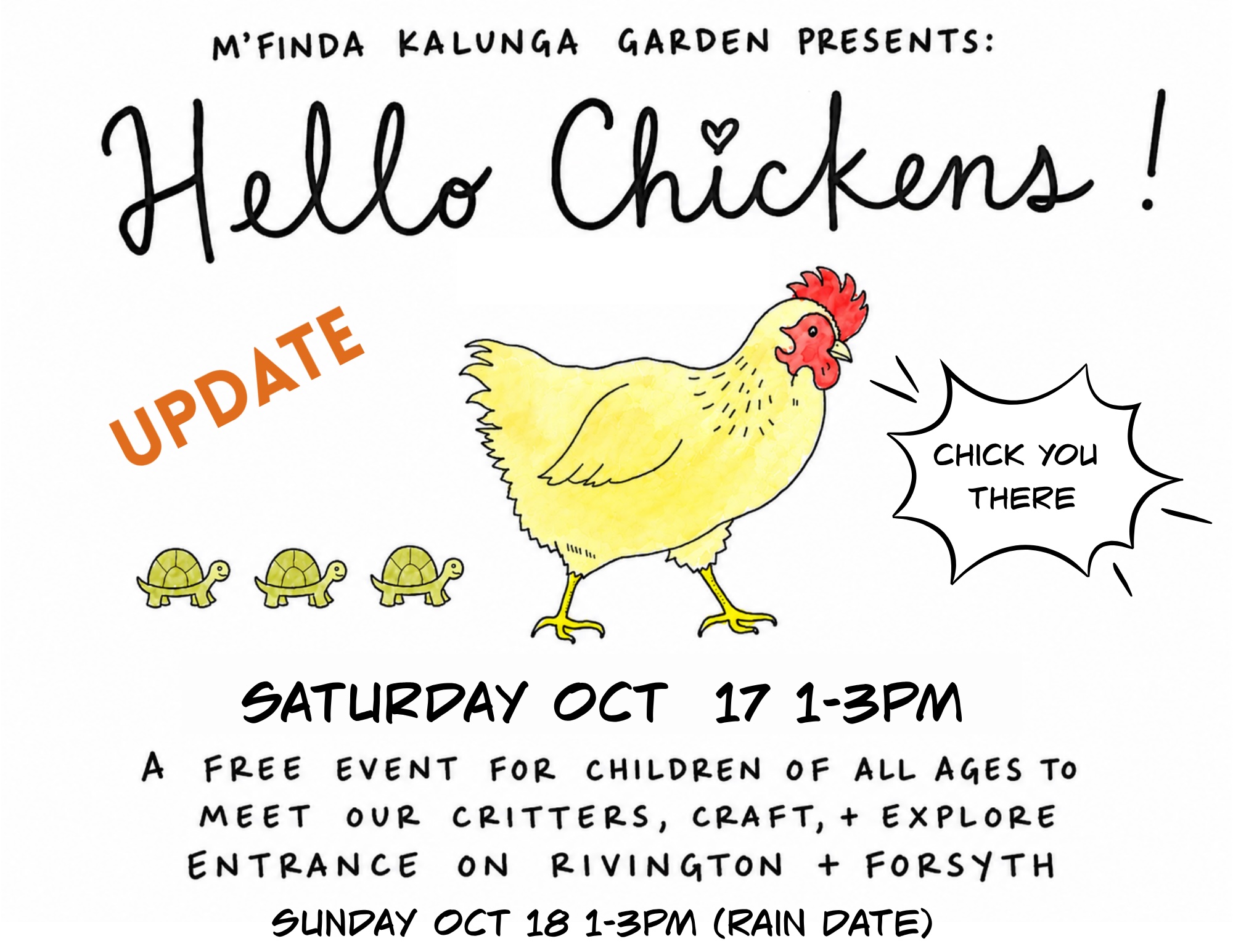
Children discovering flowers, worms, turtles, chickens, gardeners who insist there will be beauty here, PEP officers who answer the call, outreach workers whose paid or unpaid work is to offer resources or a way forward, no matter how they feel or who they’re trying to help feel, 5th precinct officers who work with youth to build gardens and trust here, artists and historians who bring us plays, art, music, history and literal light, the elder living in a shelter offering a “bless you” to a gardener, park workers who do the vital daily and unglamorous work, the thrill of coming upon the Hua Mei birds, the homeless men who directed police officers to find the person who had assaulted an elderly woman, Wellington Chen’s unwillingness to give up on this park, a teenage girl putting aside her panic to tell her dying cousin, stabbed in a fight here, that she loved him, the dawning pride of some hardened denizens of the park on learning that this park’s land once belonged to black farmers, overworked, underfunded organizations still ensuring critical health, a ROAR Festival pushing back against hate, all of us who keep working despite scarce resources to make this park better.

We are all imperfect people and all of us want a park that’s safe to be in and enjoy.

Tonight we get to listen to the people on this panel to hear what they know, and they know plenty, to honor their very different smarts and then to listen and think together.

Writer Alice Walker reminded us that we change things, make hope concrete, not by waiting for somebody else’s boulder of heroism but by our own actions, by deciding person by person to bring our small imperfect stones to the pile.

  • K Webster (President Sara Roosevelt Park Community Coalition)


Moderator Debra Jeffreys-Glass  (VP President Sara Roosevelt Park Community Coalition):

I have the honor of introducing this panel…(there are fuller bios on the tables) please say your name, the organization that you’re with, and a short intro.

(the transcriptions lightly edited from each panelist-ed)

My name is Bob Humber and I’m from Sara Roosevelt Park.

It’s a beautiful garden that you have seen many times and I’ve witnessed. I don’t have too much to say right now, but there will be a lot I’ll say later.

******

My name is Brian Crozier. I am the program coordinator for Housing Works Harm Reduction Program.

We have a Syringe Exchange on East 9th and D and we also do a walkabout harm reduction outreach in Sara Roosevelt Park, Tompkins Square Park and other areas throughout the Lower East Side.

******

My name is Carol Prudhomme Davis. I kind of wear two hats here.

I raised my son right on Bowery and Spring. We had our birthday parties in the park across from your garden. I served as a parent representative of the Lower East Side for Head Start and now I am the executive director of Inside Change from Within and what we do is we support unhoused artists, emerging and activist artists and as a result we are creating food equity programming and we do arts education.  Hi, everyone.

******

My name is Jeff Cohen. I work with Health and Hospitals.

We work with the van, which is usually parked right in front [of the BRC on Delancey]. We’ve been here for approximately three years and we love this neighborhood. So basically, we’re out here every day, Monday through Friday.

******

My name is Marcellus Valentin and I work for City Relief.

I’m a guest care coordinator. We meet people where they’re at on the streets, those who are suffering from homelessness, addiction. We go out to different parts of the city where we bring food also as case managers. In my department, we try to provide resources and get people connected to shelters or whatever they may need.

******

My name is Mason Crawford. I’m with Safe Horizon Street Work Project.

We are a youth drop-in program down on Essex Street. We work with young people ages 16 to 24 [years old] but select ages going up to 29 [years old] for services. We are in the area.

We do street outreach. One thing that’s important about our model is that it’s a youth-led peer outreach so we’re employing youth with cash stipends to go out into the parks and do services to young people who may be experiencing homelessness.

******

Hi, I’m Wei Tchou. I’m a journalist and I recently wrote a long piece about Sara Roosevelt Park and the garden. I’m also working on a book about the park.

******

Jacob Leibovitz:  work with the Downtown Goddard Street Homeless Outreach Team, which is the street homeless outreach team that has the contract from New York City Department of Homeless Services to serve this area. So my co-worker Noel Sierra and I were some of the people that show up when you call 311 to request assistance for someone experiencing homelessness.

My name is Noel Sierra. I work with Jacob Leibovitz. We work at Downtown Goddard. I’m from Brooklyn. I went to high school in Manhattan and I’ve been working with downtown Goddard for a little bit over a year.

******

5th Pct Youth Officer Shaneek Smith Hi, good evening everyone. Sorry for my lateness. You know, sometimes the job takes over!

I’ve been at the Fifth Precinct for about eight and a half years. At the Fifth Precinct, I work at the Youth Offices.  So I deal with everything having to do with kids: whether it’s running the Explorer programs or anything that’s going on in the schools, and so forth.

On a daily basis, I’m in the park…I’ve worked with Ms. K over the years where we’ve done gardening with the Youth Explorers. I bring the Explorers to the Park and we gardening along the stretch from Hester all the way up to this end. We’ve worked in the [M’Finda Garden] behind us.

Read MorePart 2 Question #1: Food & Feedback Sara Roosevelt Park’s Frontline Workers: Stories of Service
  • Post category:News

Part 1: Bios of our Panelists. Food & Feedback: Sara Roosevelts Frontline Workers: Stories of Service

Posting: Food and Feedback:

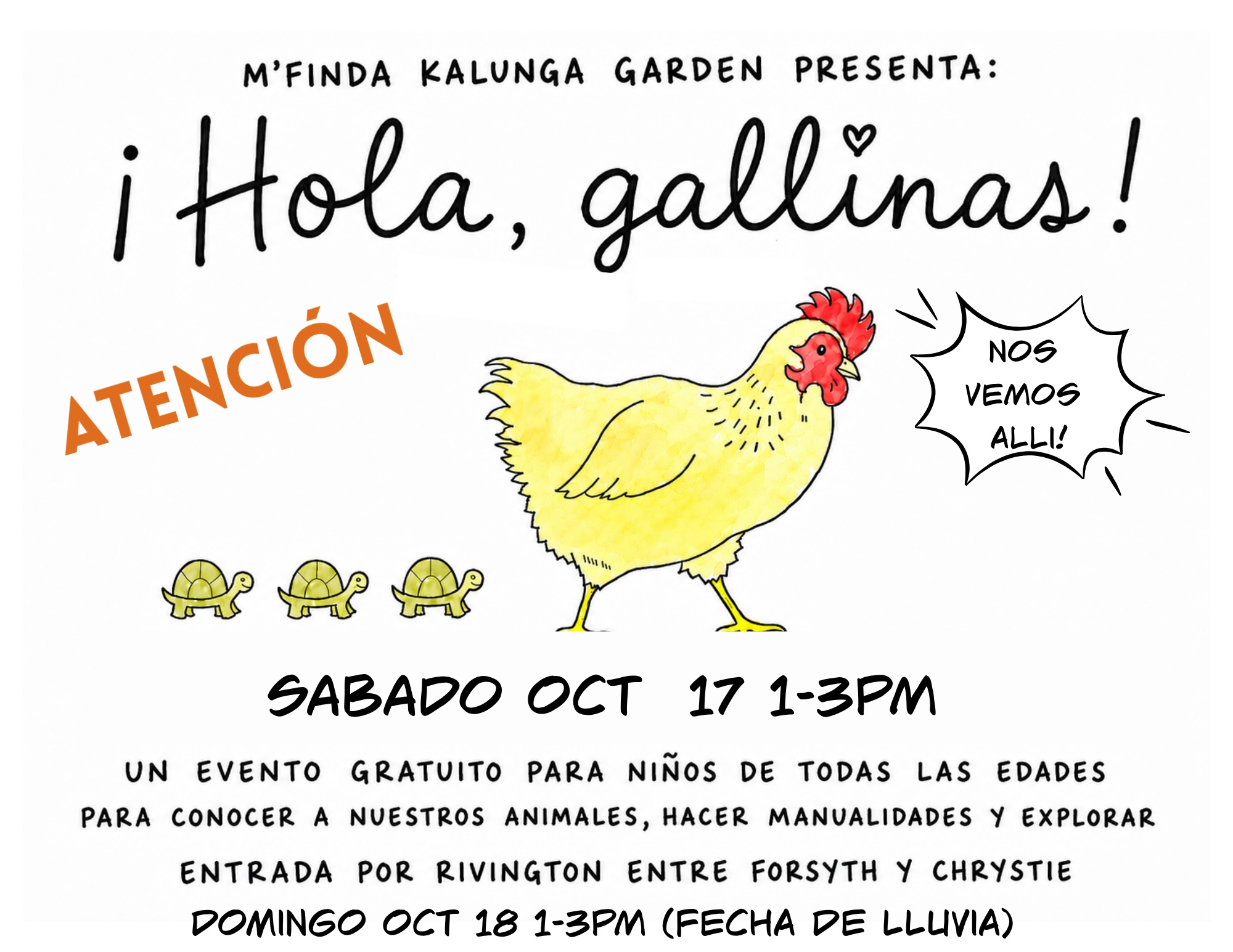
Flyer -Sayde Wilson


The next 8 posts will cover the Food & Feedback meeting we held April 29th 2026.

-Part 1: the bios from each invited panelist (on this page)

-Part 2: the transcriptions (lightly edited) of each panelist’s thoughts. (the following 6 posts)

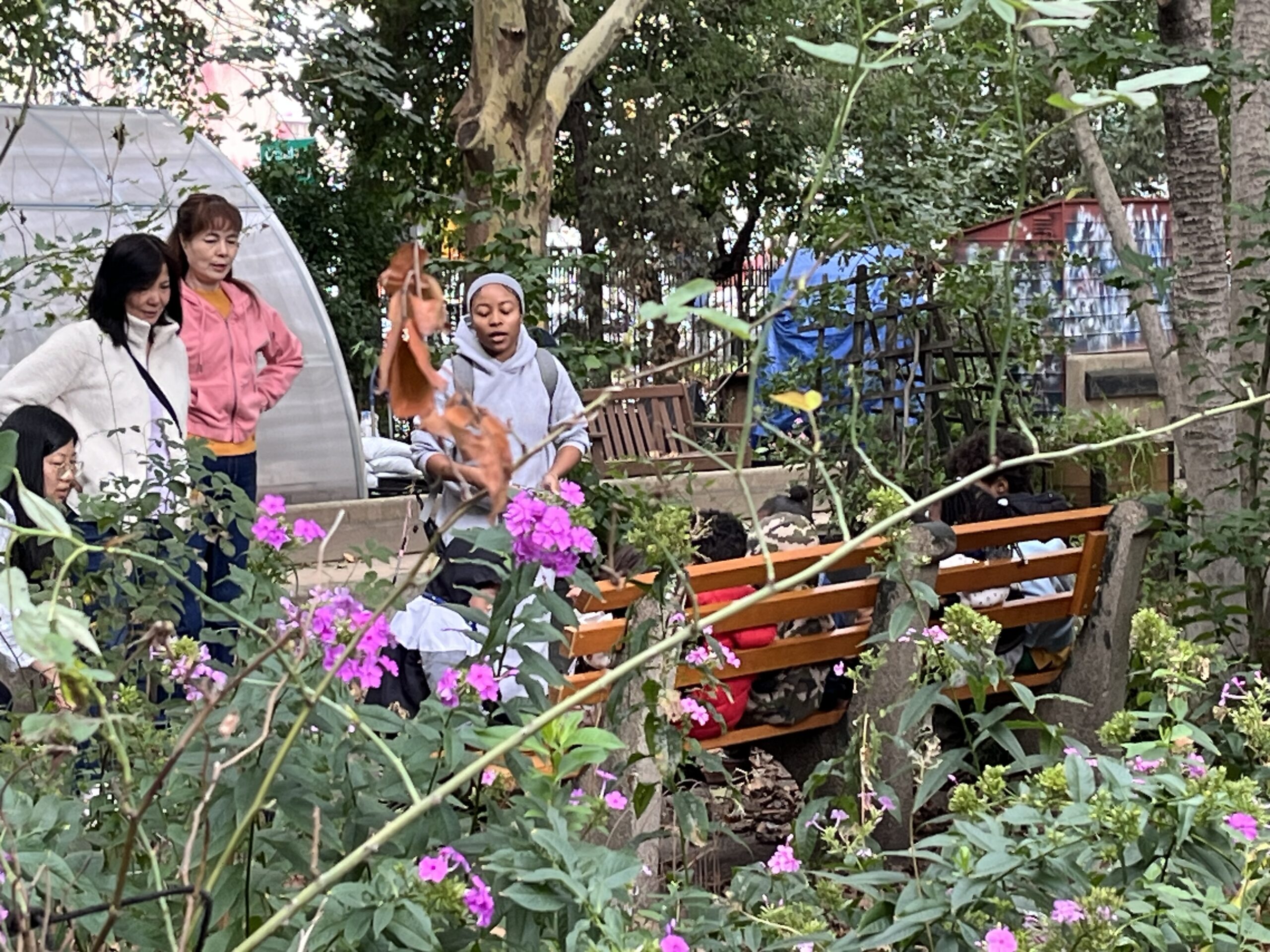
-Part 3: the compiled thoughts of break-out tables (will post more details as soon as we can) & photos. (The final post on Food & Feedback panel)

Bios Here:


Office Smith on the far left with her Youth Explorers! (PO Chan on far left)

Read MorePart 1: Bios of our Panelists. Food & Feedback: Sara Roosevelts Frontline Workers: Stories of Service
  • Post category:News

Every Day Park Workers Take Away Trash. The Next Day? It’s Tripled

Park Workers working in 90 degree weather.

Where is enforcement? Cut from the budget.

In front of a low-income senior nutrition center.


Read MoreEvery Day Park Workers Take Away Trash. The Next Day? It’s Tripled
  • Post category:News