Women’s Environment and Development Organization (WEDO) on UN Paris Climate Agreement
|
|
Please link the Lo-Down for the latest on Rivington House.
“Department of Citywide Administration Services (DCAS) Last month, the city agency agreed to lift a deed restriction in place since 1992 requiring the Rivington Street building to be “limited in perpetuity to a Not-for-Profit Residential Health Care Facility.” The Allure Group paid the city $16,150,000 for the deed. Cathy Hansen, a spokesperson for DCAS said, “The deed restrictions were lifted after a request by the owner to allow the property to be run by for-profit and/or non-profit operators. The deed modifications were approved following a public hearing on June 24, 2015.”
A “public hearing” that no one knew about. Done on behalf of a corporation that did the same thing in Bed Sty. Bait and switch in order to get this goldmine of a public resource on the cheap?
Please read the article for more detail.
And please, let us not let this go by as just another crummy thing that we have to endure. This is going to cost us. It’s going to cost our elders and neighbors who will have no nearby nursing home to go to. And for some elders their need is imminent.
It’s going to increase pressure on lower income tenants and neighbors in the area.
Please write to the Mayor’s liaison and comment on the Lo-Down:
Tommy Lin
Director of Constituent Services
Mayor’s Office Community Affairs Unit
City Hall, Ny, NY 10007
The Lo-Down has our deepest gratitude for their investigative and factual reporting.
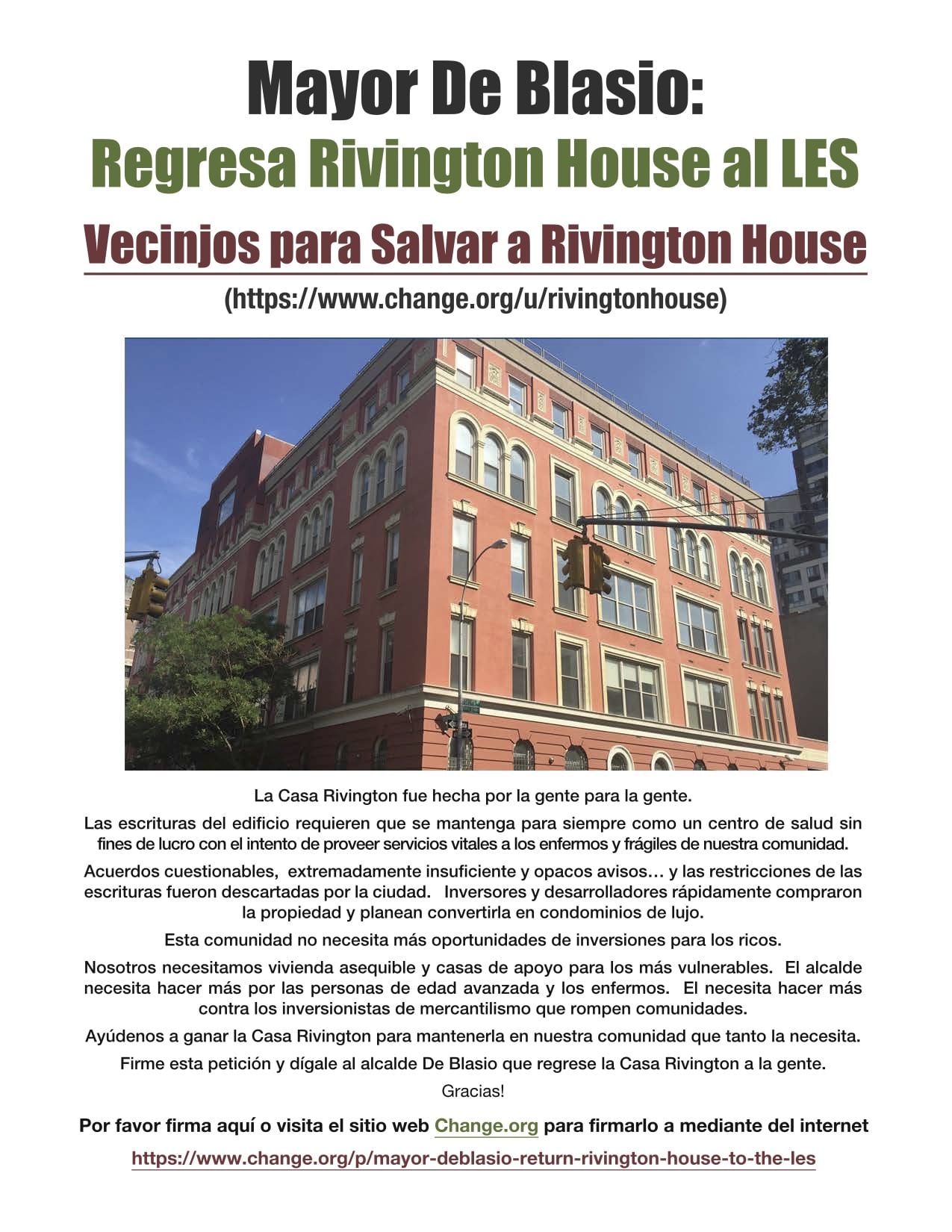
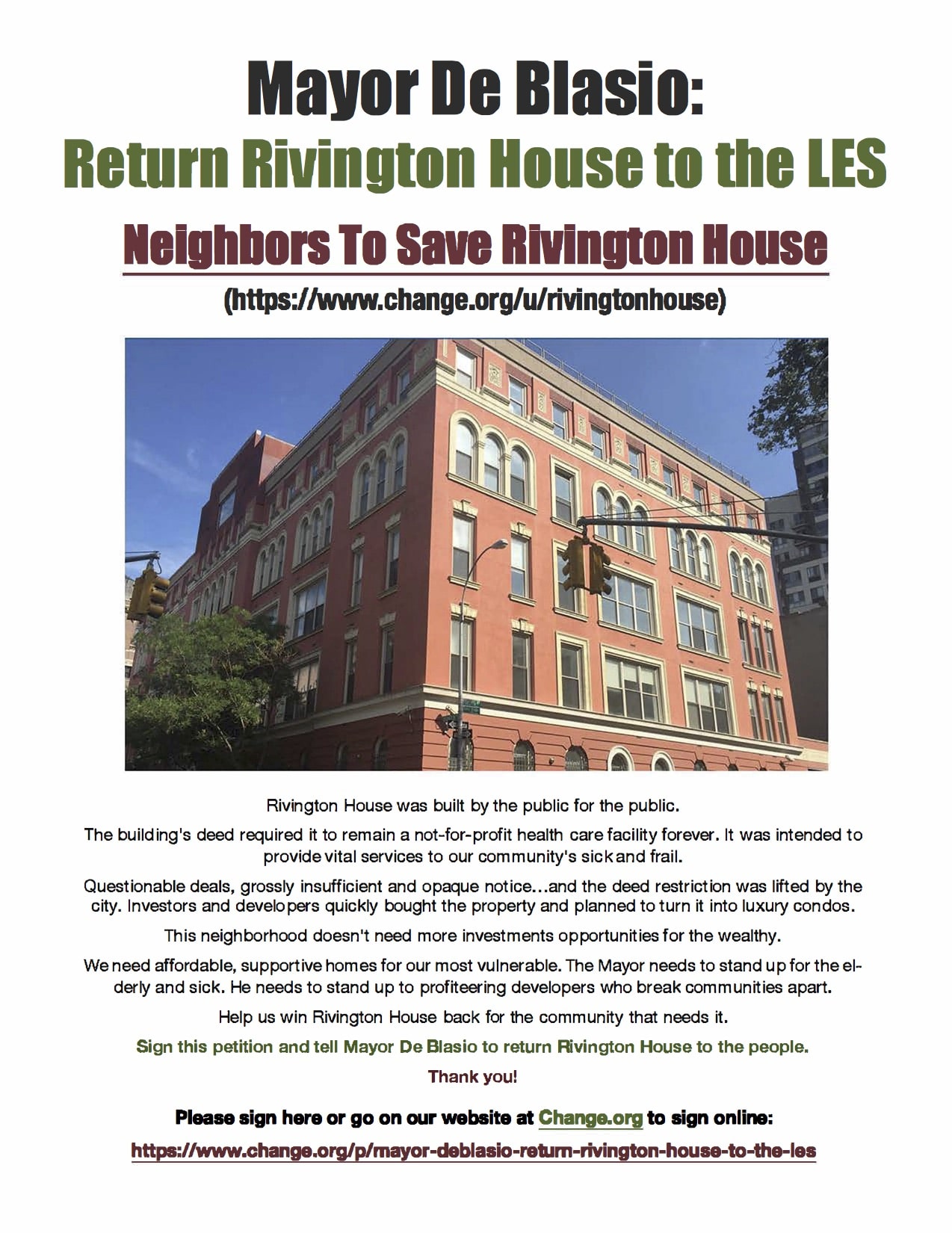
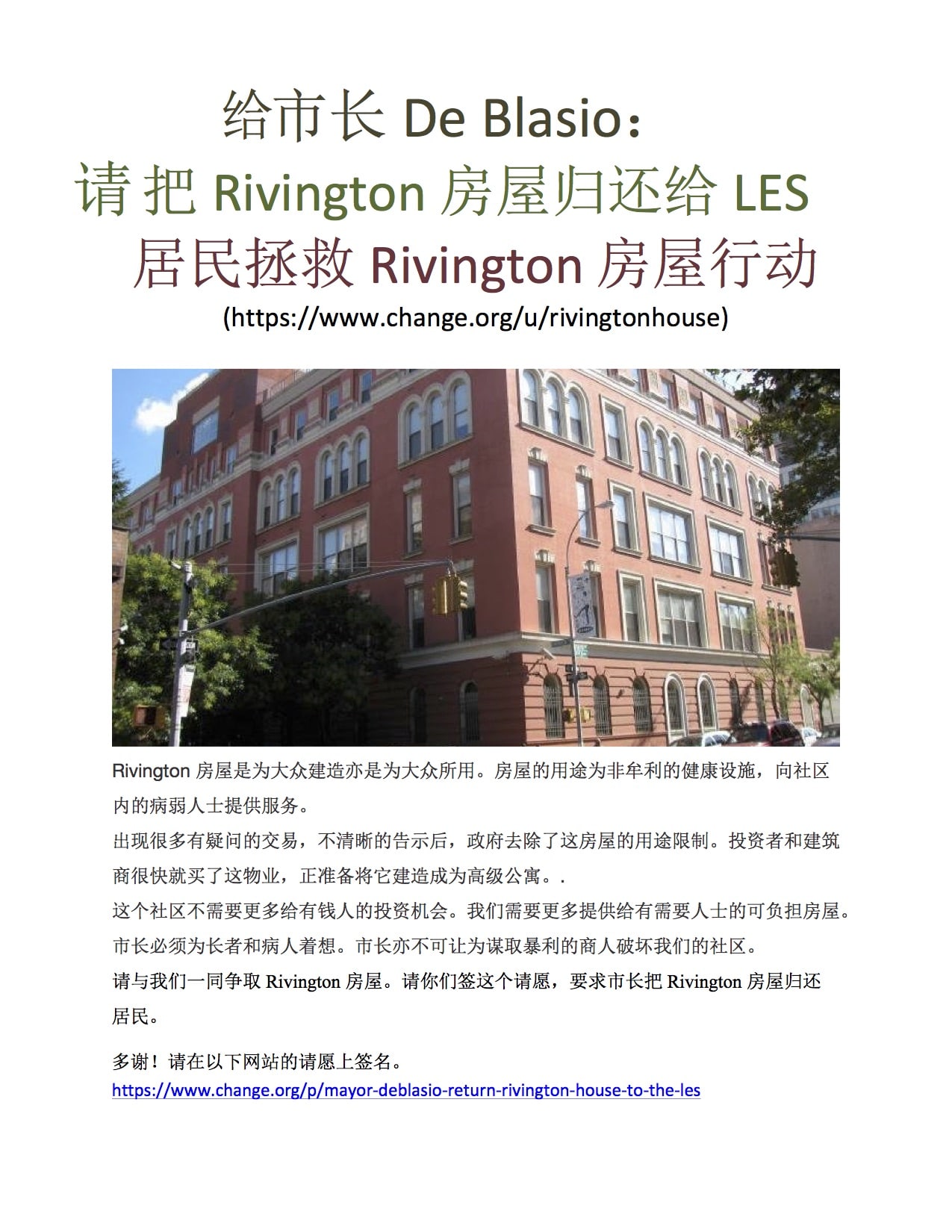
As many know, the former Rivington House, now Manhattan Center for Nursing and Rehabilitation, has been targeted for sale – yet again.
In June, unknown to anyone locally, including local electeds and the community board, the building was readied to be sold by NYC’s Department of City-wide Services Administration.
We ask this Mayor to keep this a desperately needed nursing home, or for use as affordable housing, or to create supportive housing. We do NOT need more luxury housing in this neighborhood!
This building was promised to our community to be of benefit to the public and this neighborhood, in perpetuity.
We need to ask, demand, plead (whatever you are comfortable with!) City Hall to maintain the use of this building with its original intent intact.
Call 311
And/or write a letter to:
Tommy Lin
Director of Constituent Services
Mayor’s Office Community Affairs Unit
City Hall, Ny, NY 10007
Sample letter:
Dear Mayor:
Please keep 45 Rivington Street a community facility—do not sell our neighborhood out to highest bidder. We need affordable housing, shelter beds, community services. In the midst of your affordable housing agenda it makes NO sense to lose this site for the many New Yorkers who need housing.
We restored our community when no one else would come into it due to the high crime here – not even City agencies and departments would come here.
Now that we have built a good, solid base for our neighbors, friends, visitors and families we are being pushed out, marginalized and priced out.
This building is an institution here – it has always served the public. First as a school, then as an AIDs Hospice (when those patients were not welcome anywhere else).
It has served, and should continue to serve, those most in need. The nearby co-op gave up a garden in the plot next door to let the nursing home have a co-generation plant installed in its location, volunteer gardeners worked for 3 and 1/2 decades building a garden in the park across the street – they made those sacrifices for the common good –not to serve those who have no need of the largesse of the poor, working and middle class.
As you are the Mayor of the “Tale of Two Cities” we ask you to live up to those words.
Yours,
(your name)
For more information http://www.thelodownny.com/leslog/2015/12/rivington-street-nursing-center-closes-next-week-relocation-anticipated.html
The Lo-Down has done excellent reporting and investigating of the situation.
Thanks everyone.
|
WEDNESDAY, DECEMBER 16 at 9am MUSEUM OF THE AMERICAN INDIAN @ BOWLING GREEN Starting at 9 am The City Planning Commission is the first of two bodies which must modify or approve the rezoning plans. These plans have been rejected by the majority of our city’s community boards and borough presidents, though their votes are advisory. If approved or modified by the City Planning Commission, these plans go to the City Council for a final vote or modification. Sign up to testify, come to learn and/or present your position. Borough Board President Gale Brewer recommends Yes (conditional approval) for the Mandatory Inclusionary Housng Plan (MIH) plan The “positive recommendation on MIH plan came as a result of [MBP] office securing administration officials’ agreement to make several major improvements” No – (conditional disapproval) on Zoning for Quality and Affordability (ZQA) proposal And the letter from HPD and City Planning : “Attached to this letter is a list of items we agree on reflecting recent discussions between the DCP, HPD and you with respect to the consideration of the Zoning for Quality and Affordability and Mandatory Inclusionary Housing text amendments….” |

“(Paris, France, December 7,2015)–The 21 st Conference of Parties (COP 21) of the United Nations Framework Convention on Climate Change (UNFCCC), meeting in Paris with the objective of coming to an agreement on global efforts that will respond to the increasing impacts of climate change, entered its second week of negotiations yesterday….
A draft Paris agreement is now on the table for Ministers to debate and to iron out by December 11 th…..with 900 text in brackets, showing deep divergences in views among the Parties.
There are a number of key issues with both process and substance that several quarters, including civil society, raise at this Climate Summit.
First, is the seeming systematic attempt by developed countries to undermine the principle of protecting the climate system on the basis of common but differentiated responsibility and respective capabilities (CBDR-RC) that lie at the core of the international climate regime….
Second, is the issue around the temperature limit goal. The United States, Germany and France joined the growing list of countries committing to having a 1.5 degrees temperature rise as a global goal. This may seem aspirational and bold, considering that developing countries have made their position on the need for a global temperature goal that would save people and planet. This goal is achievable, but is premised on developed countries committing to even deeper and more drastic emissions cuts, in line with the ‘fair shares’ principle, i.e. developed countries have already used up more than their fair share of the world’s carbon budget, and so would have to undertake more drastic measures to redesign their production…..
Third, the INDCs are more focused on lowering emissions, where there should be a balance between actions for mitigation and adaptation. While Parties agreed during COP 20 in Lima that INDCs would cover both areas, the draft Paris agreement is said to be leaning less towards adaptation.
Crucial to this is financing, which is a contested issue in the negotiations. A recent study from the Organization for Economic Cooperation and Development (OECD) that showed financing pledges made from COP 15 in Copenhagen as having nearly been met has been described by different quarters as inaccurate and misleading, and at best wanting with only around USD5-8 billion marked for adaptation.
Fourth, countries already agreed during COP 20 to provide support for ‘loss and damage’ for developing countries facing phenomenal weather events, long-term environmental impacts such as increasing salinity etc….. rich country negotiators are putting pressure on developing countries to agree to the condition that in exchange for this agreement they (developing countries) will not hold rich countries liable for losses and damages to be incurred.
Fifth, transparency of and inclusiveness in the negotiations is highly questioned. Negotiations are being done in closed-door sessions, and even those sessions where civil society have been previously allowed entry have been closed. This lack of transparency in the negotiations has raised a lot of concern and critique…..”
December 3, 2015, Paris, France) – Three days into the 21st Conference of Parties (COP) of the United Nations Framework Convention on Climate Change (UNFCCC), negotiations are nearing fever pitch as the December 4 deadline for a revised draft text of the Paris climate agreement looms.
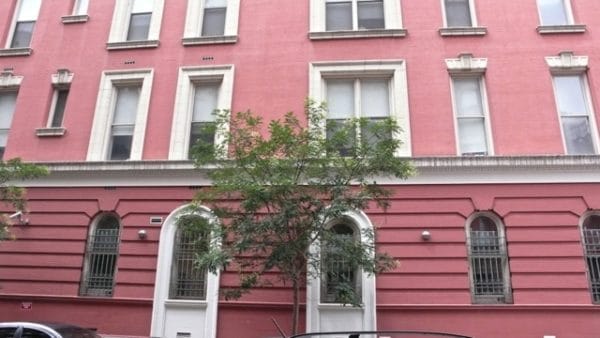
News had been trickling in regarding the possibility of the sell-off of the health care facility at 45 Rivington Street.
Today thanks to the Lo-Down’s reporting we have confirmation of two transactions.
This community worked hard, went to meetings and lobbied for the protection of this building to remain in perpetuity a low-income health care facility.
AIDs patients were summarily removed in the last ‘sale’ and scattered to the winds (much like Bialystoker and Cabrini nursing home residents). The aging community here were hoping for a nursing home they could afford with visits from neighbors and family in their own neighborhood.
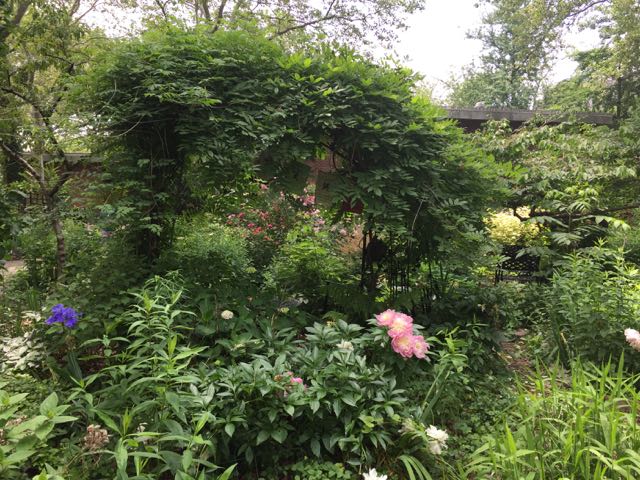
I’m sure they would all be thrilled with the possibility of rich people getting to enjoy a view that poor people built for them in the community garden opposite.
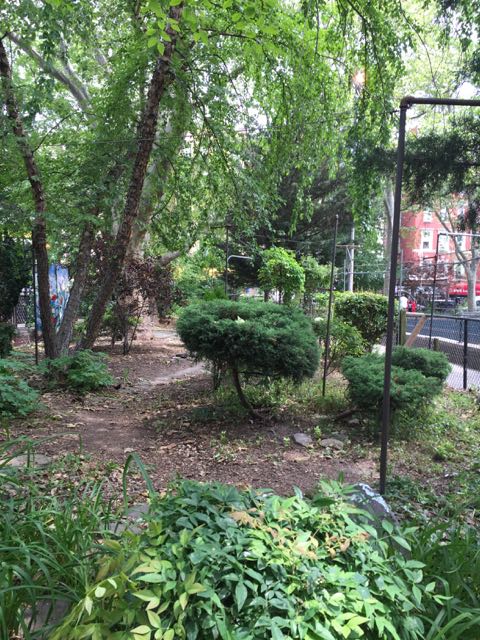
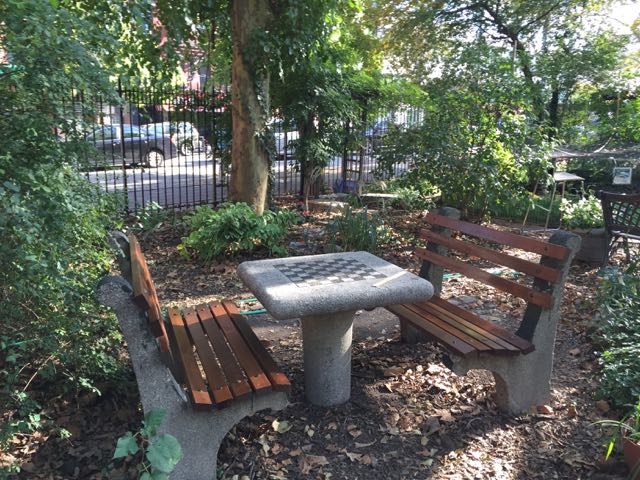
Help Parks rethink SDR Park’s openness – to be both welcoming and safe.
Help Parks Choose New Projects
Parks will select – and fund – the best eight parks to showcase the program.
On the map or through the search bar, find the park you’re interested in. Suggest ways to improve its entrances, edges, and park-adjacent spaces. Our suggestions will influence the design of the projects they select.
Parks is taking comments until the end of February 2016 and will announce the new projects this coming spring.
The more suggestions a park receives, the more likely it will be selected!
How It Works
Find out more about Parks Without Borders projects through their interactive map.
Parks Without Borders focuses on three areas of the park: entrances, edges, and park-adjacent spaces. Help unify the park with our neighborhood(s).
Make entrances more welcoming, clear and safe. Make park boundaries greener, more user friendly, and make the park safer by improving sight lines. Create new centers of positive community activity out of underused areas inside the park!
The Goals of Parks Without Borders:
Make parks more accessible and welcoming to everyone
Improve neighborhoods by extending the beauty of parks out into communities
Create vibrant public spaces by transforming underused or badly used areas


Good entrances are inviting, drawing you in and allowing you to see into the park. They are lovely and exciting, enhanced by things like plantings or art and are easy to find from far away. Good entrances also include amenities such as seating to make them destinations for relaxation and community.
NYC Parks can improve entrances using the following tools, among others:

Entrances and Gates
Widen entrances and make sure they are well-placed; lower or remove gates; improve access for all ages and abilities

Paving
Repair paving or add distinctive pavement

Greening
Add plants and trees

Site Furnishings
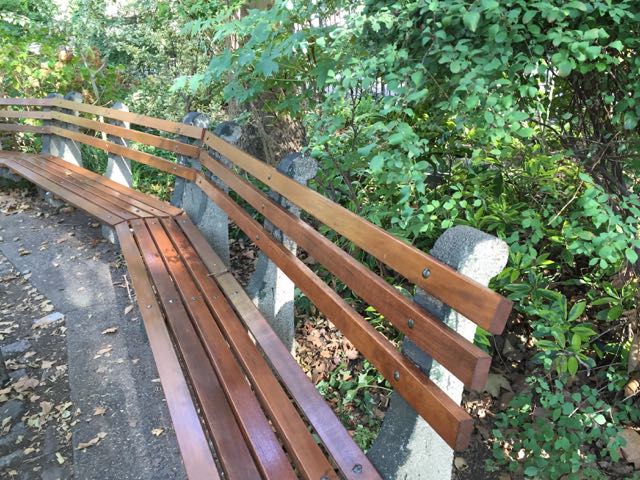
Add benches, tables, and other amenities


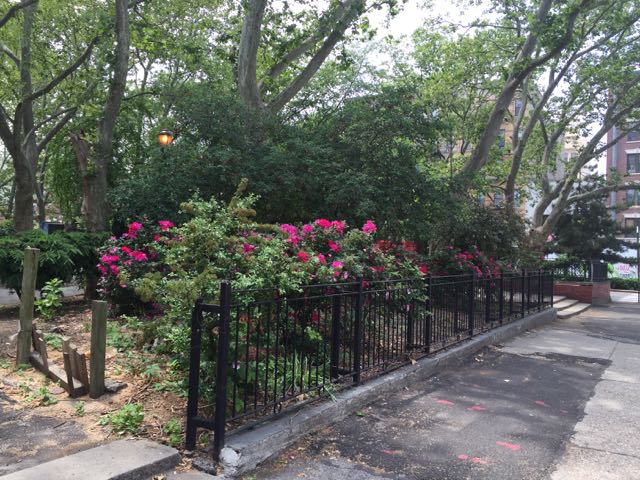
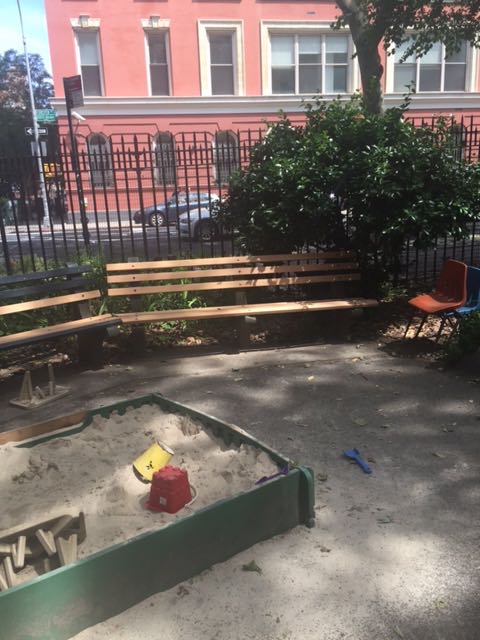
The perimeter or edge of a park belongs to the neighborhood. More open park edges allow better views into the park. They make nearby streets feel connected to the park and park spaces accessible to the neighborhood. Low fences make park edges friendlier and more attractive. Adding seating or other amenities to edges can improve the park and the neighborhood, providing new spaces to enjoy the beauty of a park and interact with neighbors. These improvements can also make parks and streets safer by improving people’s views of both spaces.
NYC Parks will improve edges using the following tools, among others:

Fences
Lower, redesign, or remove fences and gates

Paving
Repair paving

Greening
Add plants and trees

Site Furnishings
Add benches, tables, and other amenities

Parks Without Borders is an NYC Parks initiative to make parks more open, welcoming, and beautiful by focusing on improving entrances, edges, and park-adjacent spaces. As part of OneNYC , Mayor Bill de Blasio has dedicated $50 million to the program. Visit our Parks Without Borders Information page to find out more about how this program works – and scroll down to help us choose new projects.
NYTimes: How to Fight Homelessness
OCT. 19, 2015
Community Board 3 Land Use, Zoning, Public & Private Housing Committee
Wednesday, November 18 at 6:30pm — Project Renewal, Kenton Hall – 333 Bowery (btwn E 2nd & 3rd Sts) will weigh in tonight.
Parks are increasingly the ‘home’ of last resort to the homeless. How do we tackle this honestly and effectively and humanely? Here’s some thinking from City Council Chair and Coalition for the Homeless:
“WITH over 58,000 people in our shelter system every night, and thousands more sleeping on the streets, concern about homelessness in New York City has reached a fever pitch. We must attack this challenge on every front: through construction of more housing with on-site services, expanded federal support for homeless families and improvements in city-run shelters.
But the best solution to homelessness is preventing it before it even occurs…
More than two-thirds of the people in our shelters are families with vulnerable children, and the most common cause of their homelessness isn’t drug dependency or mental illness. It’s eviction….
Evictions have reached epidemic proportions in New York City. The number of families forced from their homes by court order has been rising steadily for the last 10 years, and is now close to 29,000 per year. Countless thousands more are leaving under duress midway through eviction proceedings. Many end up with nowhere to go and are forced to turn to homeless shelters.
The sky-high pace of evictions is exacerbated by our profoundly unequal judicial system. Unlike those in criminal cases, New Yorkers in housing court have no right to counsel. The result: Only 10 percent of New York City tenants who appear in court have attorneys to help protect their rights. In stark contrast, close to 100 percent of landlords do. It’s hard to overstate just how badly this skews the results of eviction proceedings in favor of owners.
Housing law in New York is byzantine and challenging even for lawyers to navigate. For low-income tenants representing themselves, winning a case against a landlord’s attorney is a steep uphill climb. Unscrupulous landlords are fully aware of this dynamic and attempt to capitalize on it by routinely hauling tenants into housing court on weak grounds — knowing full well that the deck is stacked in their favor. Randomized studies have shown that those few tenants who do have attorneys are 80 percent less likely to be evicted as those representing themselves. Landlords know this, too — and will sometimes simply drop their case as soon as they realize a tenant is represented….
….The status quo is untenable, and even judges are increasingly speaking out. New York State’s chief judge, Jonathan Lippman, has called eloquently and powerfully for the establishment of a right to counsel in housing court….”
| Public Hearing on Zoning Changes for Affordable Housing, November 16 |
||
| November 8, 2015
On Monday, November 16, 2015 the Manhattan Borough President’s Office office will conduct a public hearing on two proposed changes to the city zoning code meant to increase the stock of affordable housing in New York City. “ZQA” is the acronym for the first proposal, “Zoning for Quality and Affordability,” which alters how senior housing is classified and constructed, reduces parking requirements as they relate to the construction of affordable housing, and changes the allowable shape of buildings, including height, when buildings contain affordable housing or senior housing. Borough President Brewer coordinated a response to the ZQA proposal by virtually all Manhattan elected officials last spring in a letter, and the Administration responded with modifications; both letters are viewable here: bit.ly/ZQALetters The “Mandatory Inclusionary Housing” (MIH) Program is the second proposal, and it would apply to specific future developments (known as “special permits”) or for neighborhood-wide rezonings (as was recently enacted in Williamsburg by Mayor Bloomberg) which are going to allow for significant new residential development. This program would require developers to provide either 25 percent or 30 percent affordable housing depending on the degree of affordability. There are good things to be said for these proposals—more affordable housing is obviously crucial—but zoning can be a very blunt tool making changes across all five boroughs. We need to make sure that additional density is added in a manner that truly results in the most affordable housing and the fewest possible adverse consequences to our neighborhoods. Public input on these proposals counts! Please join us on November 16 at the Clinton School, 10 E. 15th St., from 6:00 to 8:00 pm. If you plan to testify, please RSVP and upload your testimony here and bring six printed copies of your testimony to the hearing on November 16. |
||