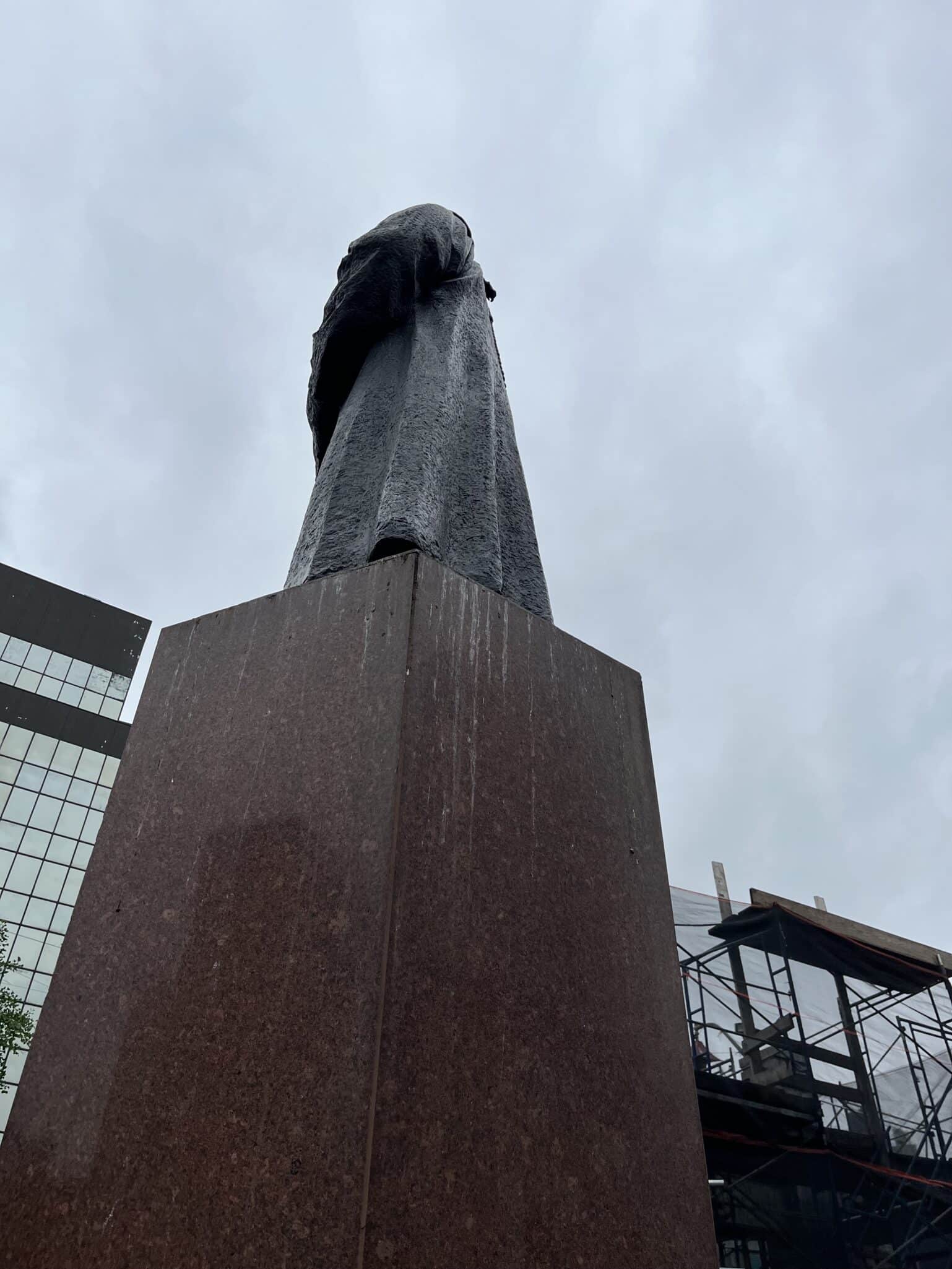
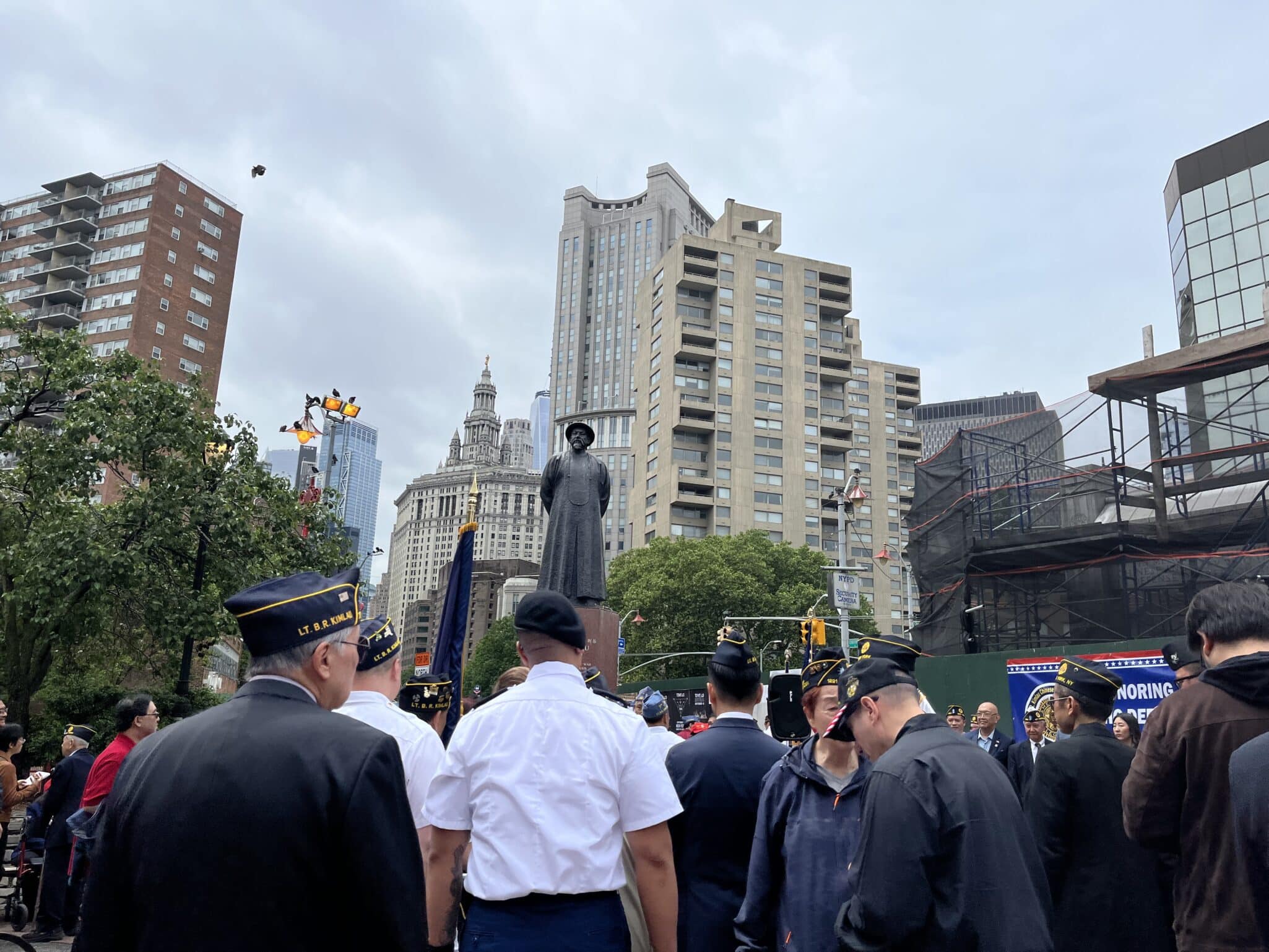
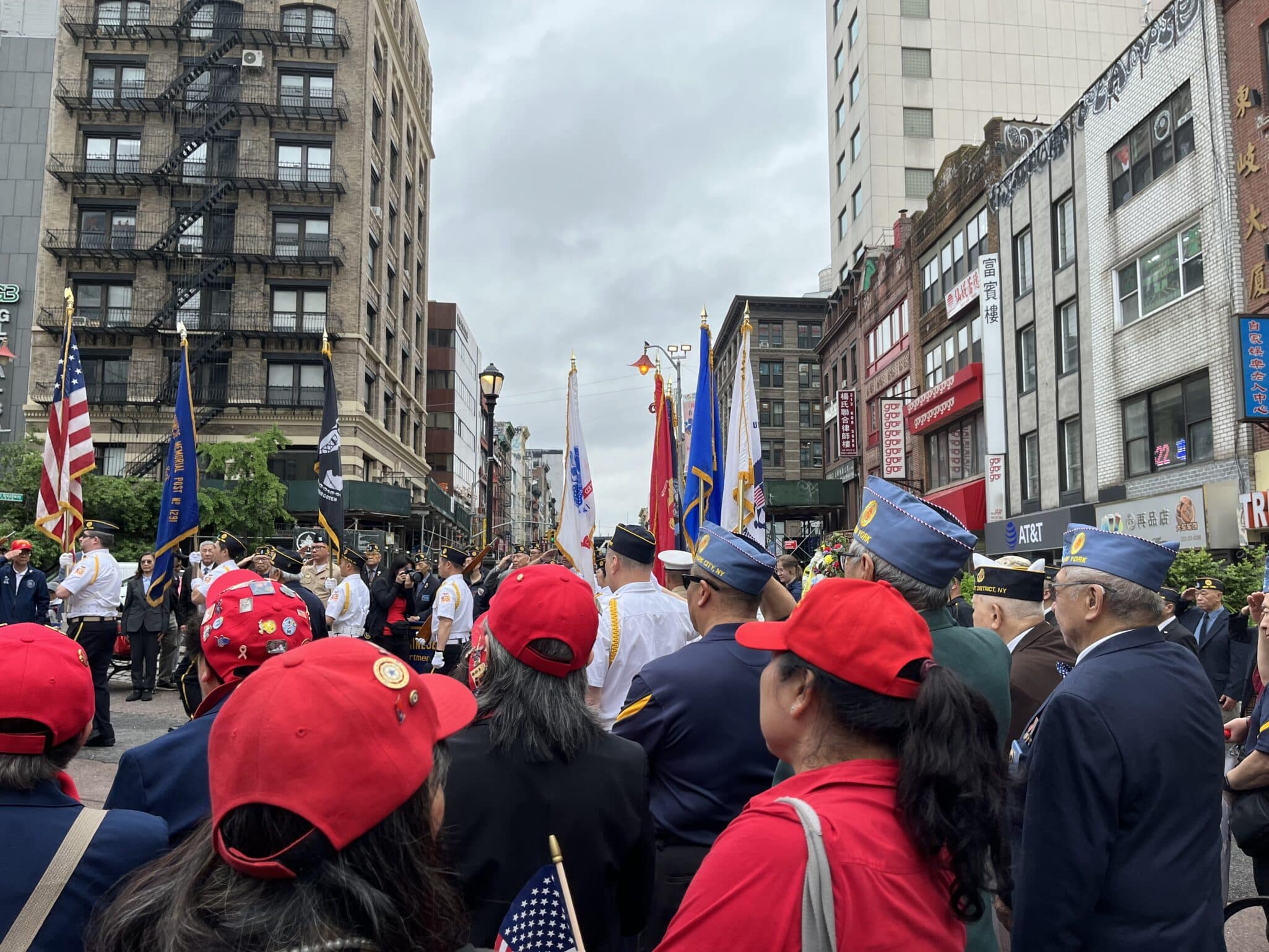
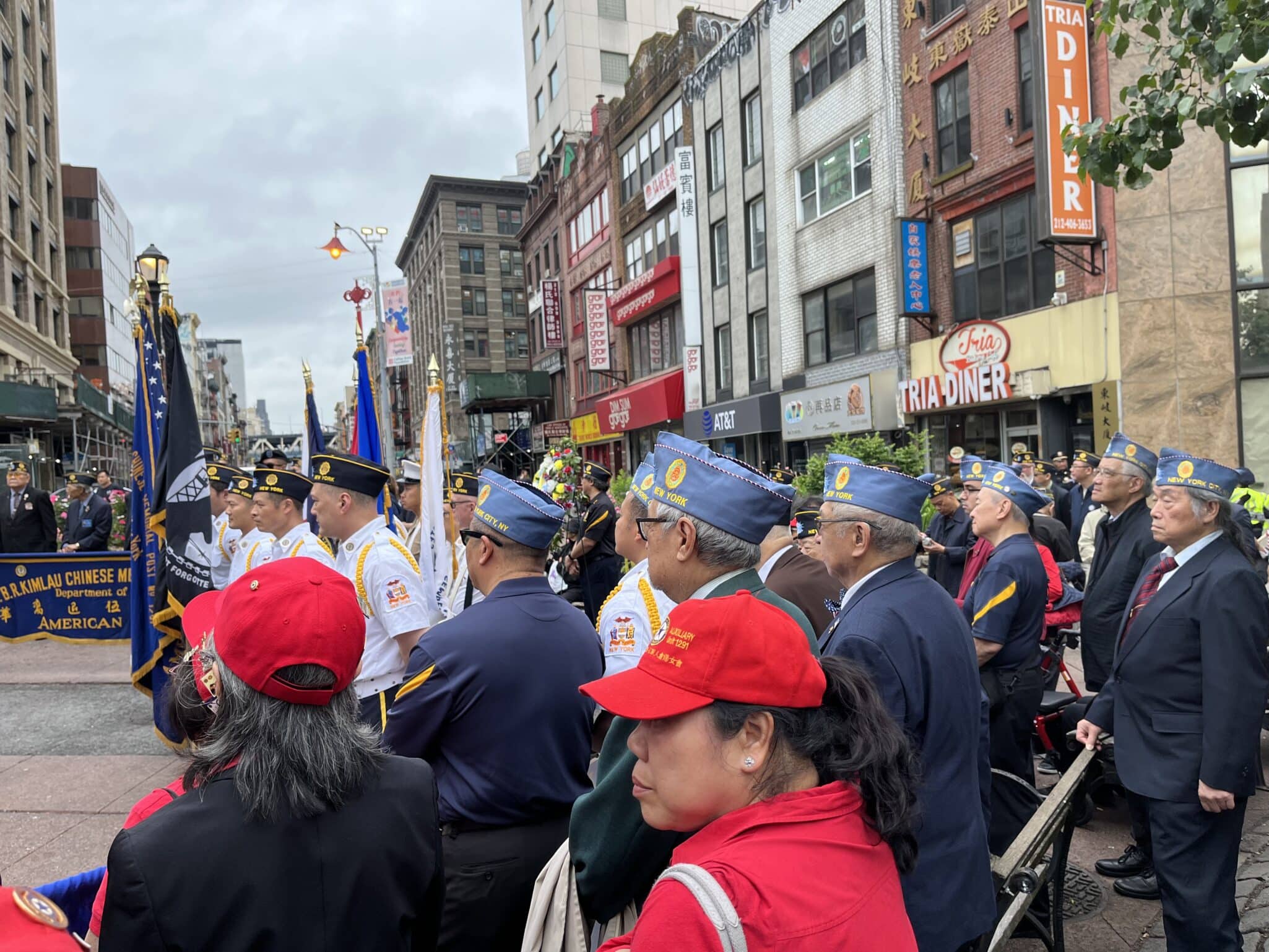
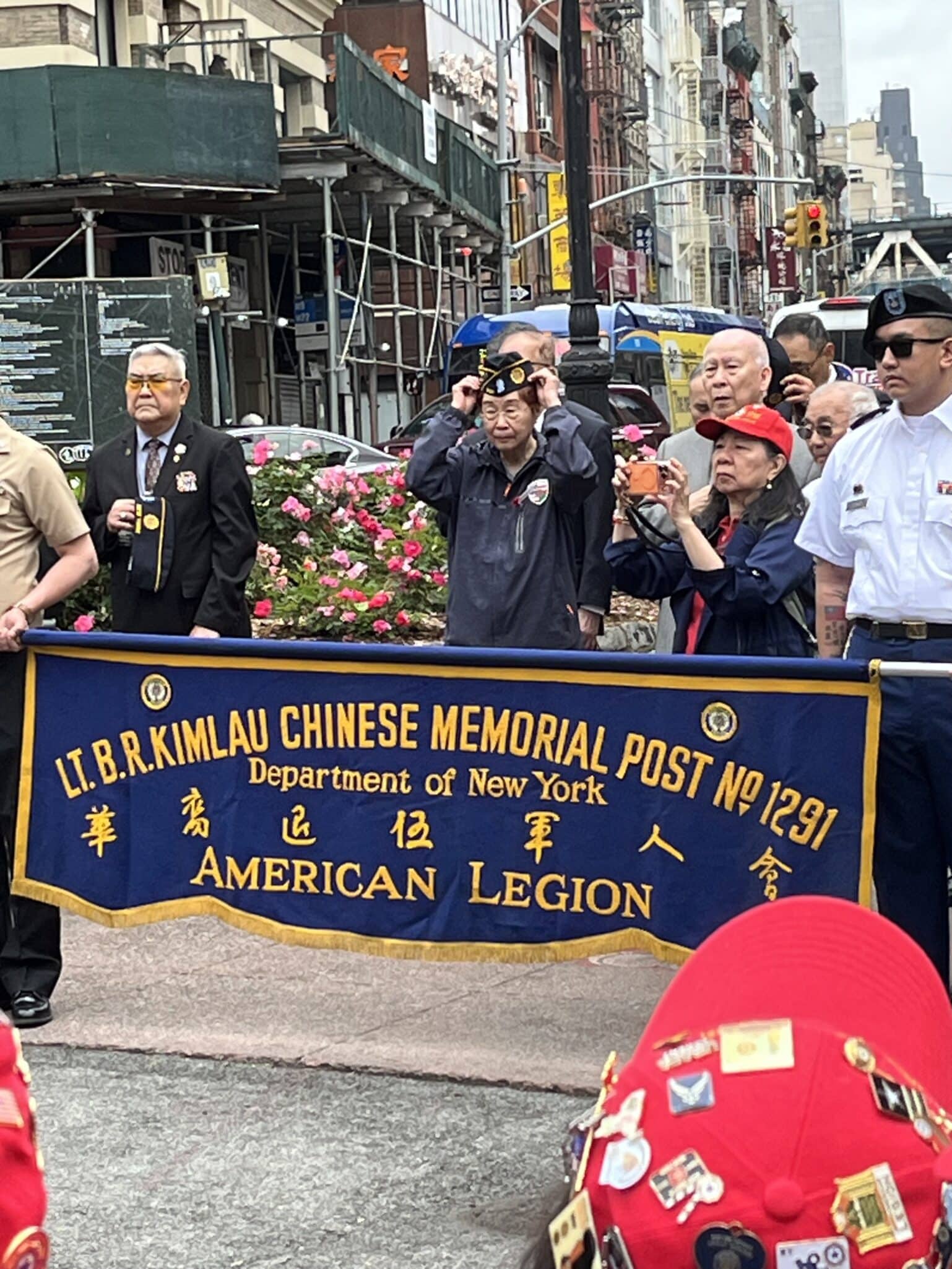
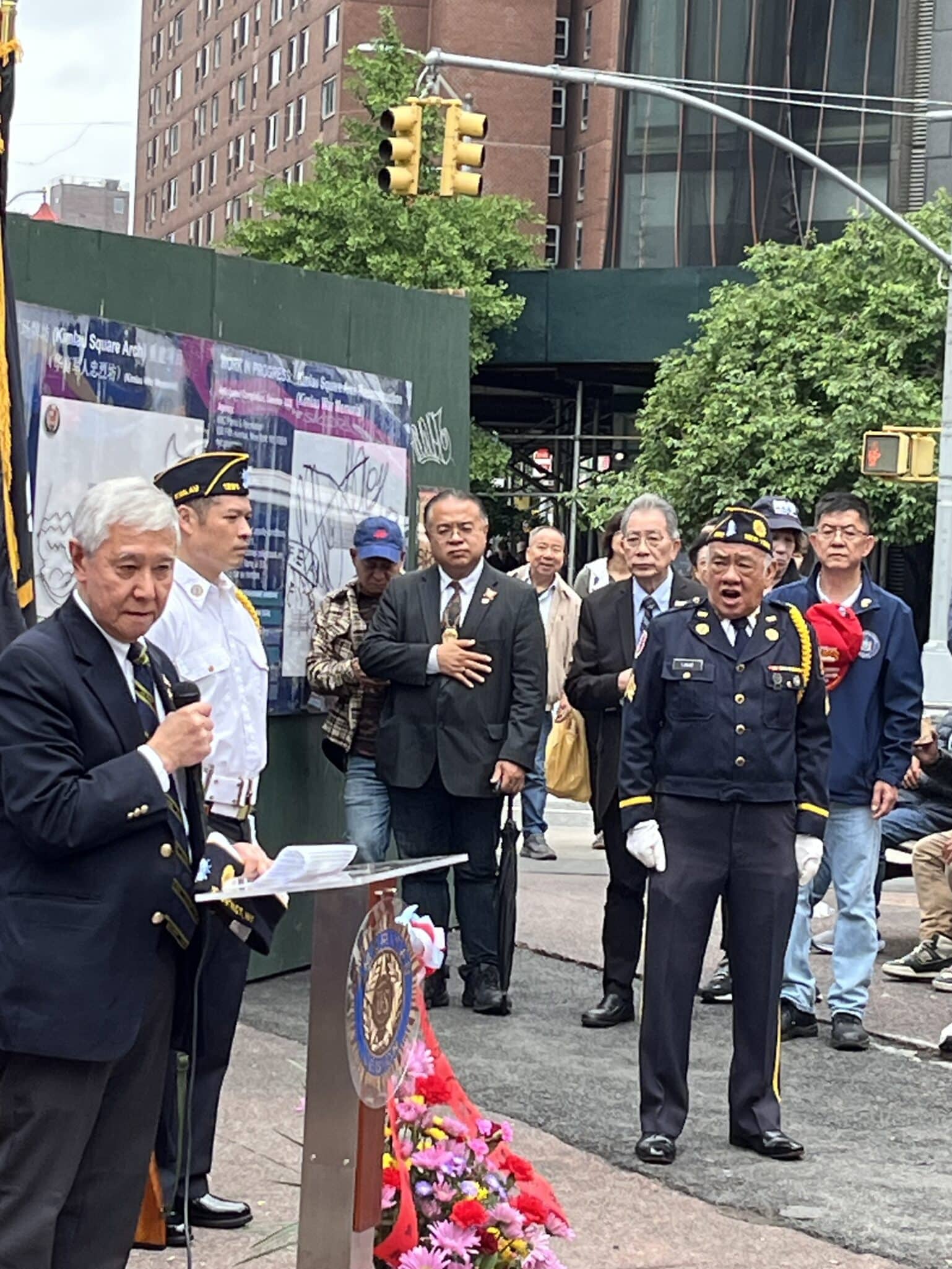
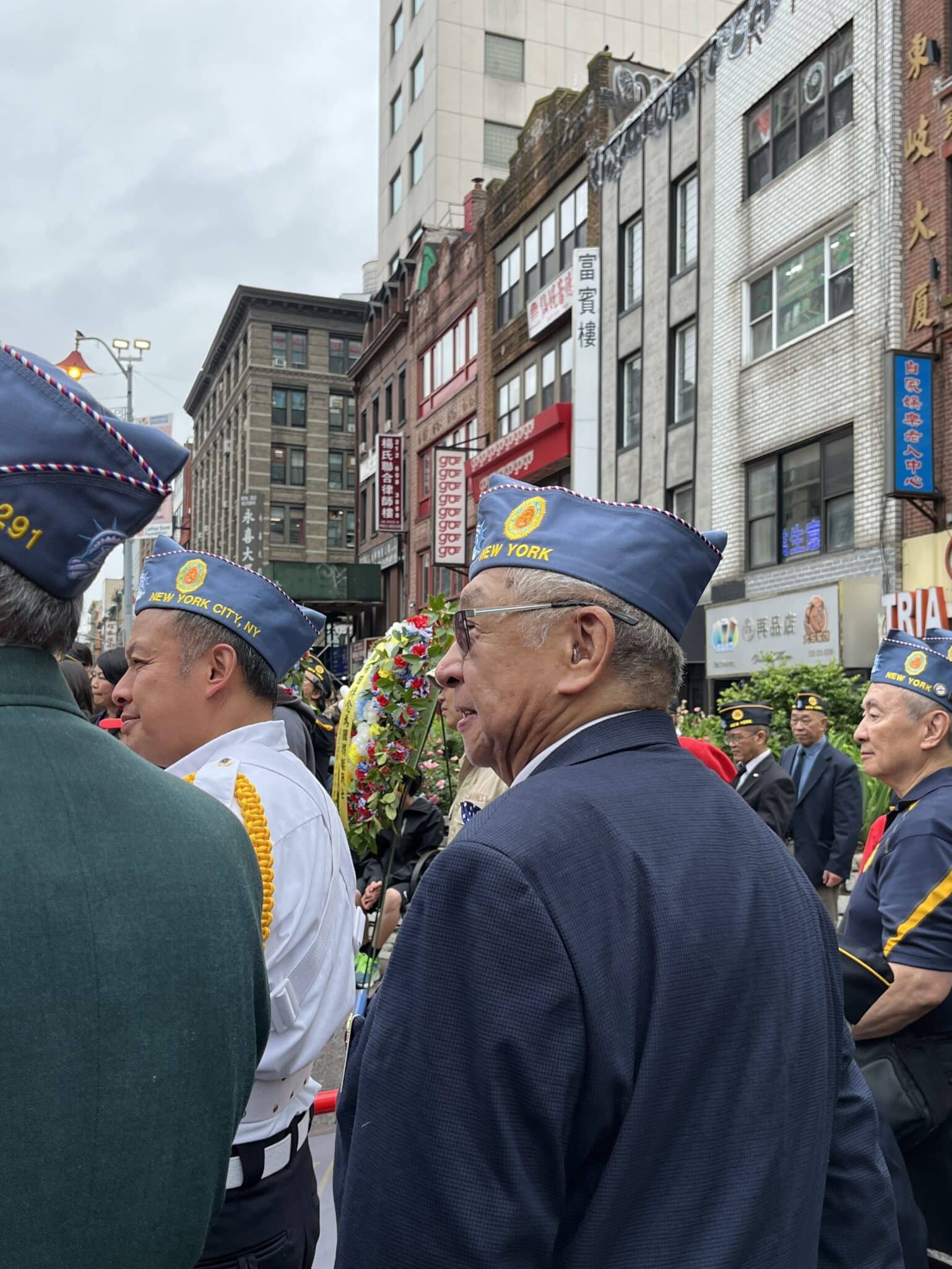
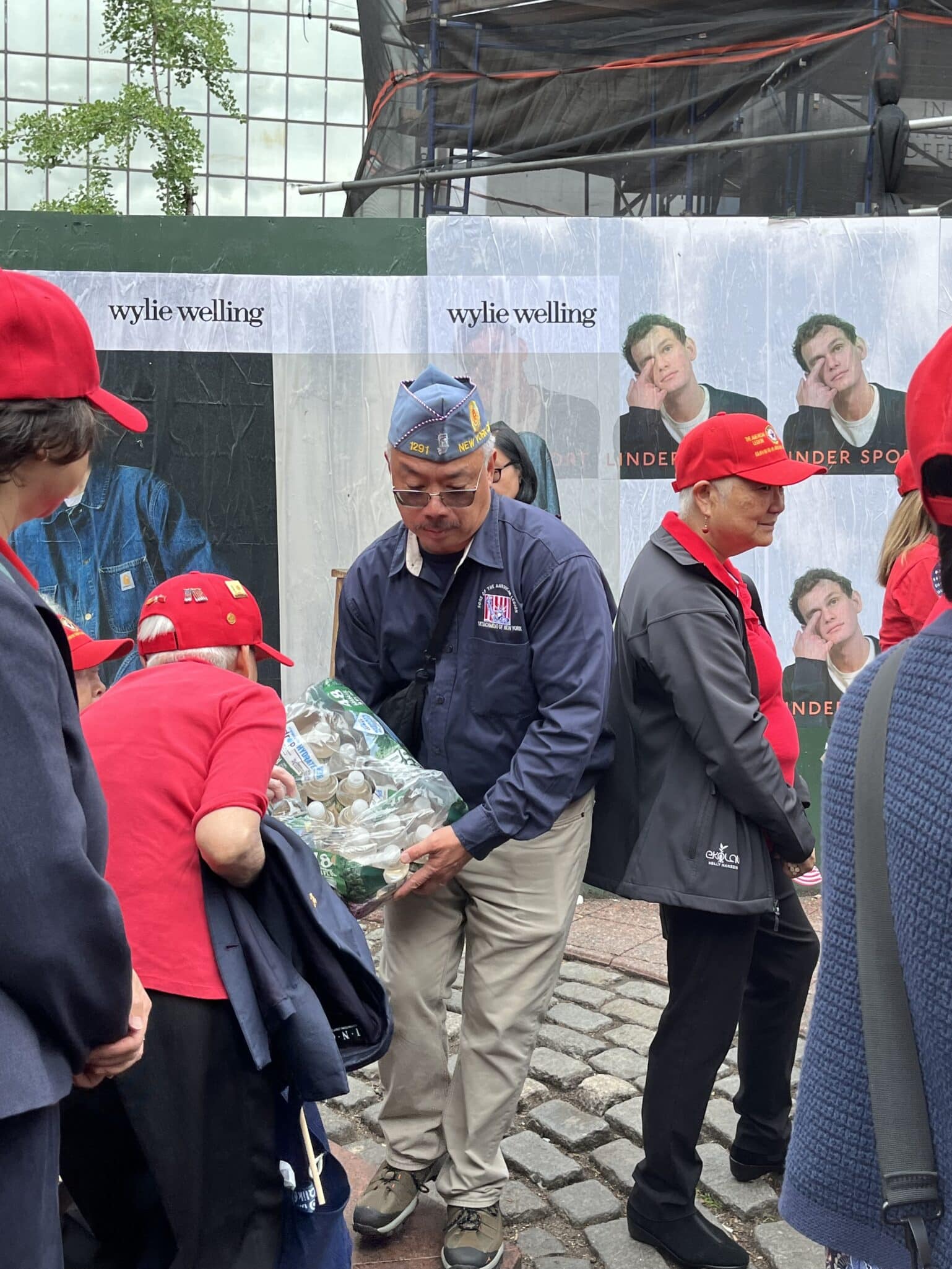
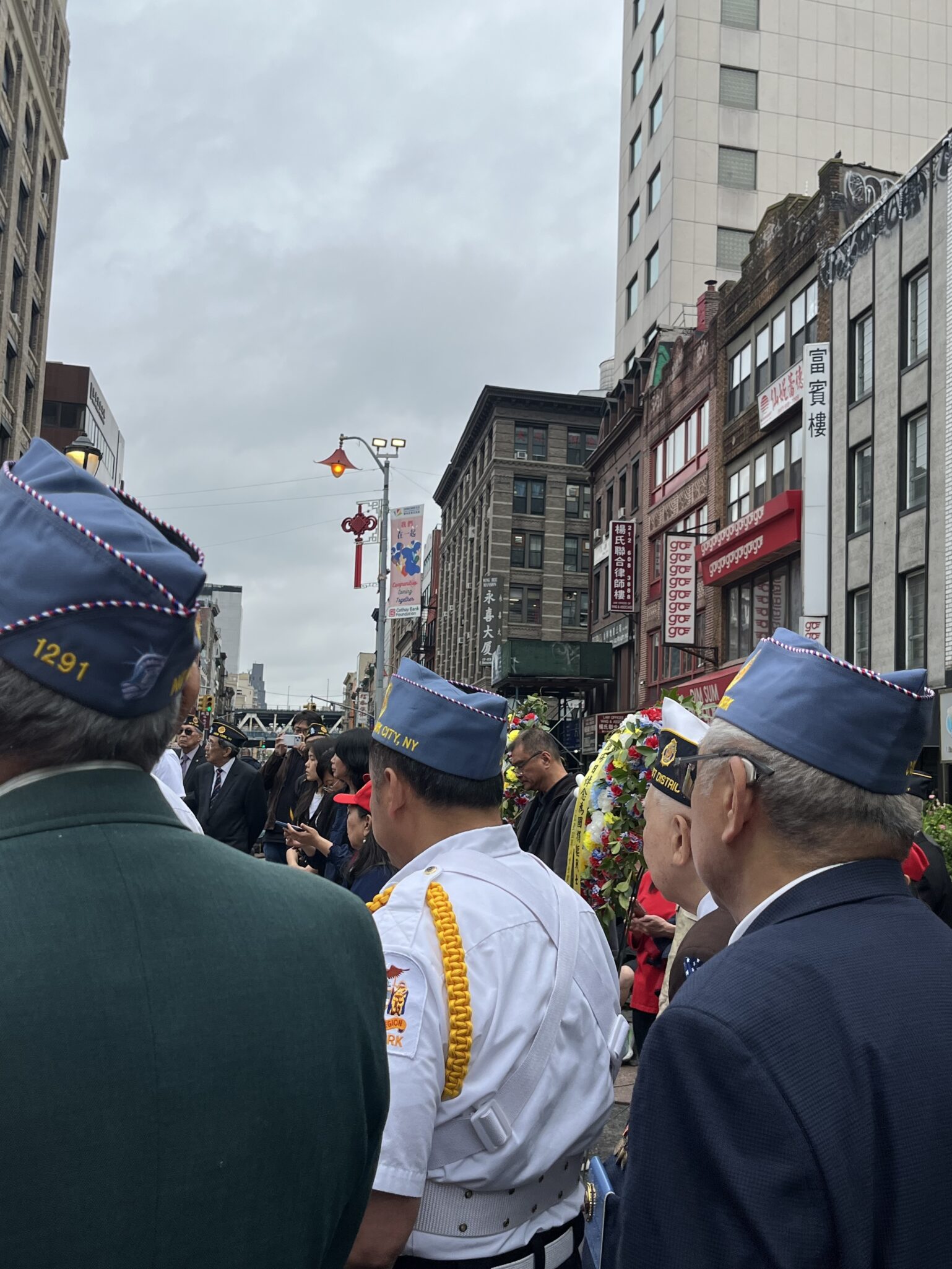
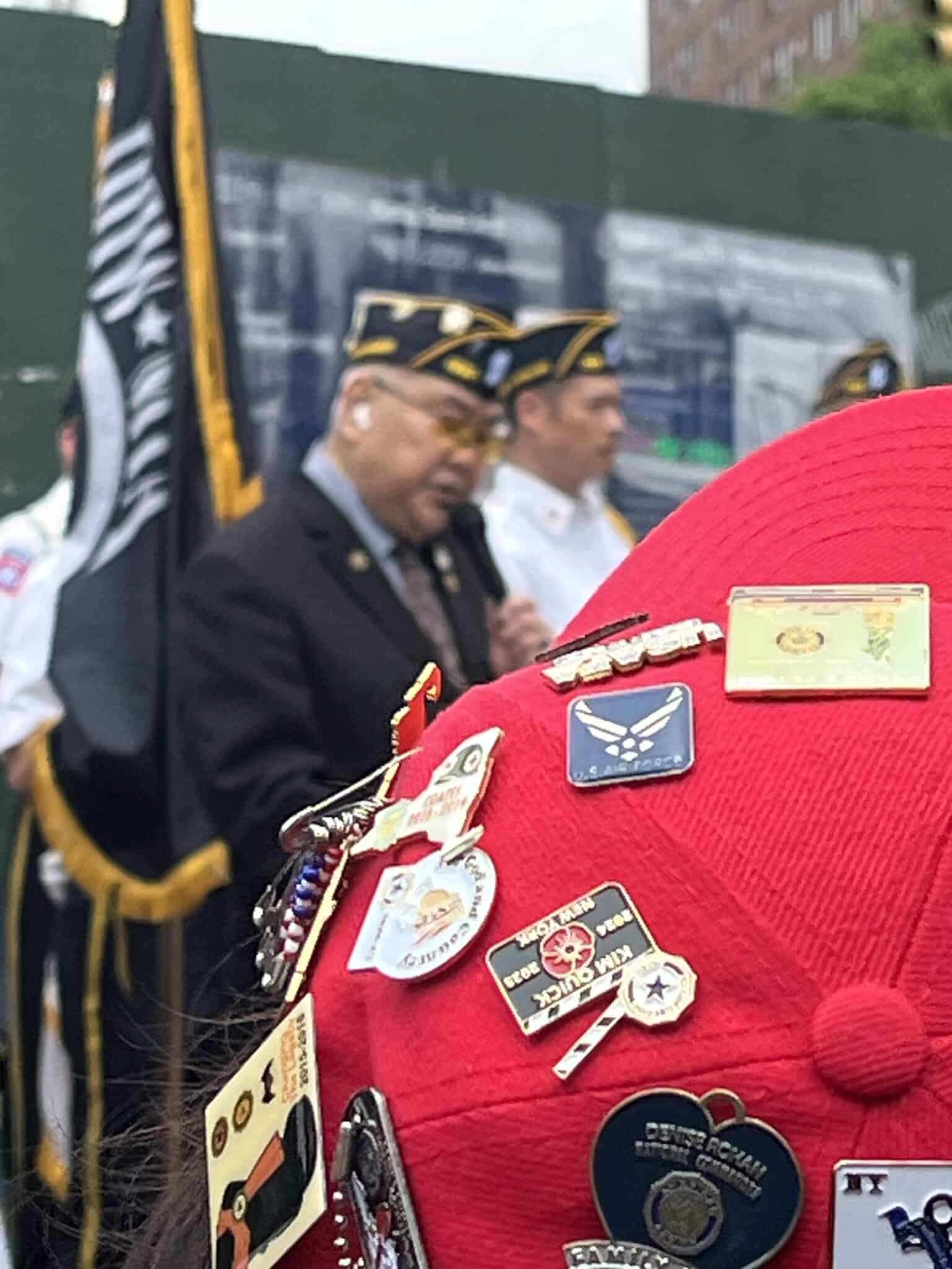
Kimlau Square – Memorial Day Service
As it sits, still awaiting renovation
November 2021:
Chinatown Gets $20 Million Grant To Revamp East Broadway Mall, Forsyth Plaza, And Kimlau Square
History Lesson and Acts of Patriotism: Wong Kim Ark who went to court to secure U.S. citizenship either by establishing constitutional birthright citizenship:
- United States v. Wong Kim Ark (1898)
- The Case: Wong Kim Ark, an American-born son of Chinese immigrants, was denied re-entry to the U.S. after a visit to China. Under the Chinese Exclusion Act of 1882, the government argued he was not a citizen because his parents were legally ineligible for naturalization.
- The Court’s Decision: The U.S. Supreme Court ruled in his favor. The court affirmed that under the 14th Amendment, all persons born in the United States are citizens, regardless of their race or their parents’ nationality.
- The Impact: This landmark ruling secured birthright citizenship for the children of Chinese and other immigrant groups. You can learn more about this case via the National Constitution Center.
March Route Margaret Chin and her faithful friends and followers.

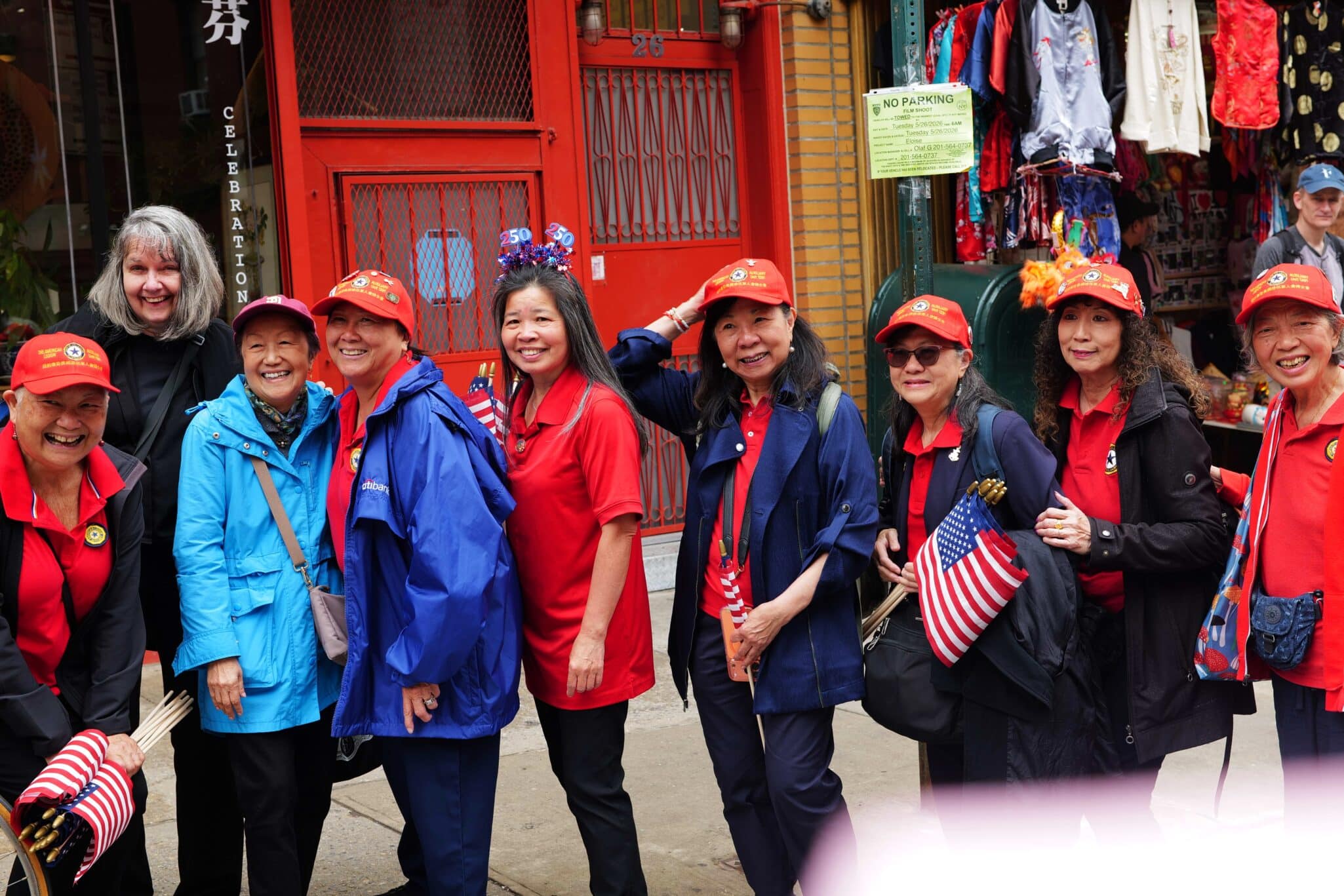
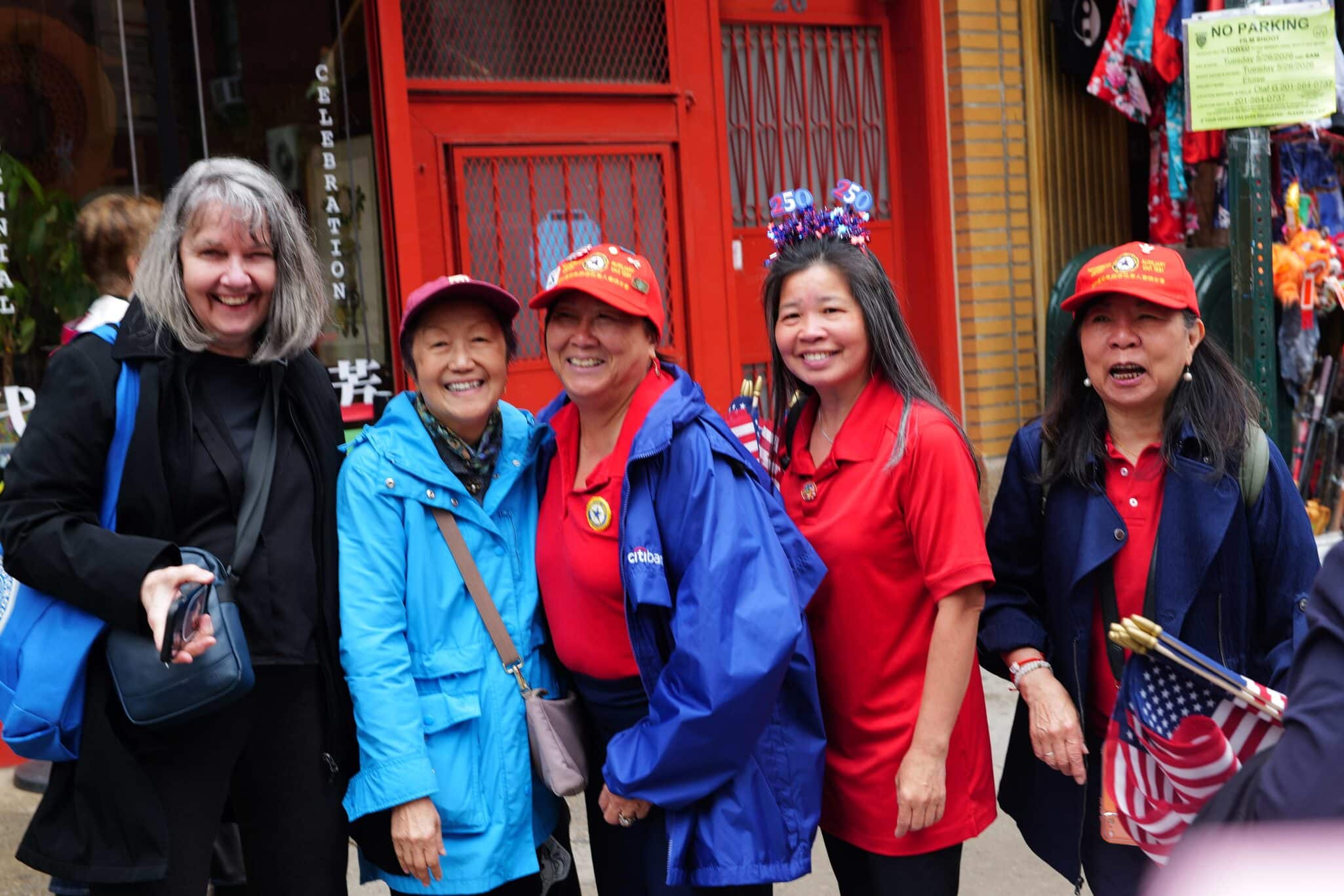


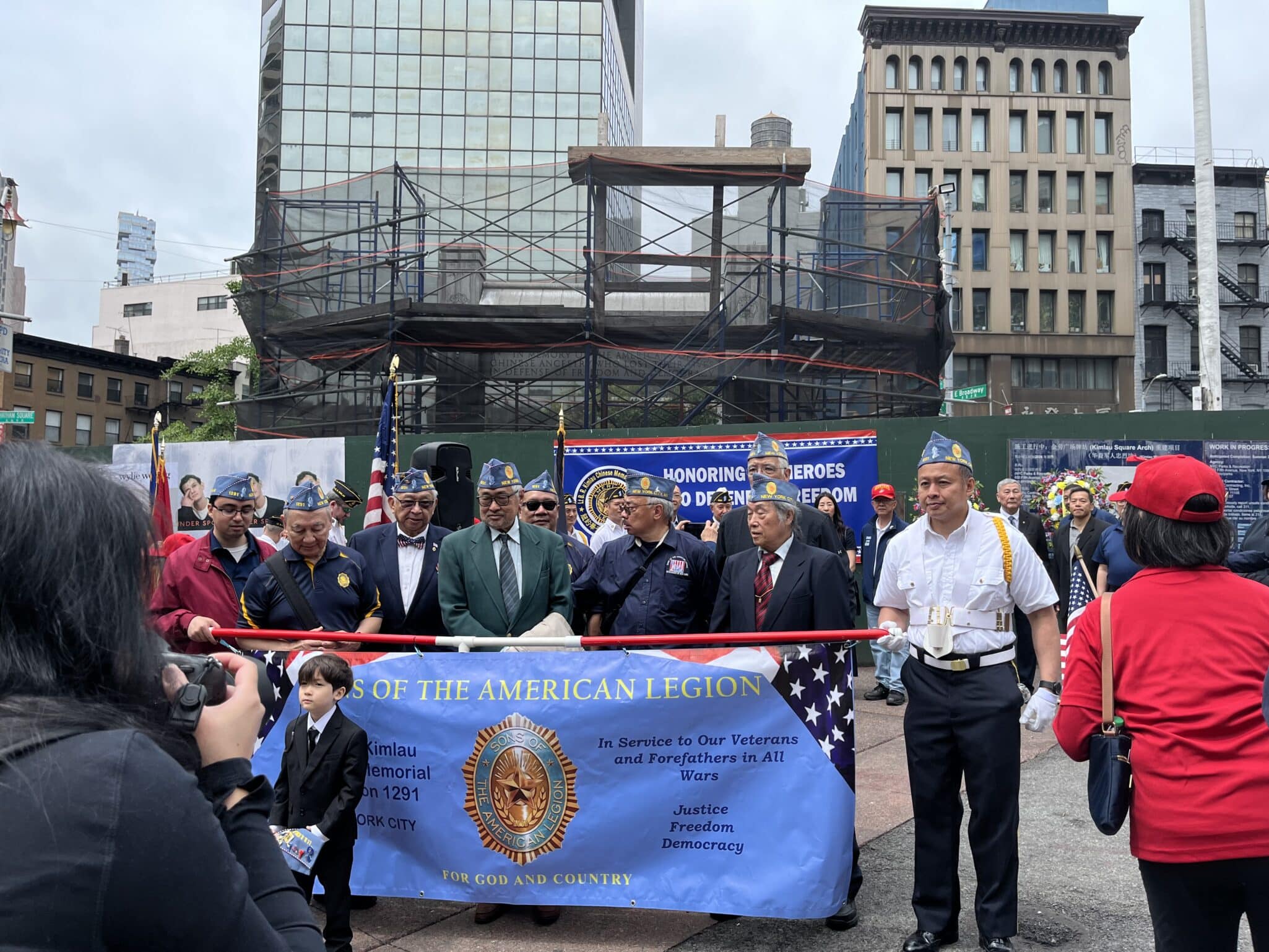
Pledge of Allegiance and the National Anthem sung by legionnaire, David Louie. Heartfelt and honest remembrance. Especially these days.
Tommy, Gabe, Harold, Yvonne, Minerva and many many others, long time advocates to honor Kimlau arch.
Approximately 0.22% of all U.S. veterans (about 32,882 individuals) experience homelessness on any given night, representing roughly 5% of the country’s overall homeless adult population. Veterans fall into homelessness at a higher rate than the overall U.S. population
A top priority for homeless veterans is secure, safe, clean housing that offers a supportive environment free of drugs and alcohol.
Homeless veteran demographics from the National Coalition of Homeless Veterans
- 5.3 % of the homeless adult population are veterans
- 20% of the male homeless population are veterans
- 68% reside in principal cities
- 32% reside in suburban/rural areas
- 51% of individual homeless veterans have disabilities
- 50% have serious mental illness
- 70% have substance abuse problems
- 51% are white males, compared to 38% of non-veterans
- 50% are age 51 or older, compared to 19% non-veterans