Warming in Arctic Raises Fears of a ‘Rapid Unraveling’ of the Region

NYTimes:

The rising air temperatures are having profound effects on sea ice, and on life on land and in the ocean, scientists said. The impacts can be felt far beyond the region, especially since the changing Arctic climate may be influencing extreme weather events around the world.”


“Persistent warming in the Arctic is pushing the region into “uncharted territory” and increasingly affecting the continental United States, scientists said Tuesday.

“We’re seeing this continued increase of warmth pervading across the entire Arctic system,” said Emily Osborne, an official with the National Oceanic and Atmospheric Administration, who presented the agency’s annual assessment of the state of the region, the “Arctic Report Card.”

“….The warmer Arctic air causes the jet stream to become “sluggish and unusually wavy,” the researchers said. That has possible connections to extreme weather events elsewhere on the globe, including last winter’s severe storms in the United States and a bitter cold spell in Europe known as the “Beast From the East.”


Some of the findings in the research, provided by 81 scientists in 12 countries, included:

  • Ice that persists year after year, forming thick layers, is disappearing from the Arctic. This is important because the very old ice tends to resist melting; without it, melting accelerates. Old ice made up less than 1 percent of the Arctic ice pack this year, a decline of 95 percent over the last 33 years.

  • Donald K. Perovich, a sea-ice expert at Dartmouth College who contributed to the report, said the “big story” for ice this year was in the Bering Sea, off western Alaska, where the extent of sea ice reached a record low for virtually the entire winter. During two weeks in February, normally a time when sea ice grows, the Bering Sea lost an area of ice the size of Idaho, Dr. Perovich said.

  • The lack of ice and surge of warmth coincides with rapid expansion of algae species in the Arctic Ocean, associated with harmful blooms that can poison marine life and people who eat the contaminated seafood. The northward shift of the algae “means that the Arctic is now vulnerable to species introductions into local communities and ecosystems that have little to no prior exposure to this phenomenon,” the report said.

  • Reindeer and caribou populations have declined 56 percent in the past two decades, dropping to 2.1 million from 4.7 million. Scientists monitoring 22 herds found that two of them were at peak numbers without declines, but five populations had declined more than 90 percent “and show no sign of recovery.”

  • Tiny bits of ocean plastic, which can be ingested by marine life, are proliferating at the top of the planet. “Concentrations in the remote Arctic Ocean are higher than all other ocean basins in the world,” the report said. The microplastics are also showing up in Arctic sea ice. Scientists have found samples of cellulose acetate, used in making cigarette filters, and particles of plastics used in bottle caps and packaging material.”

Read MoreWarming in Arctic Raises Fears of a ‘Rapid Unraveling’ of the Region
  • Post category:News

In Honor of World AIDS Day


Neighbors to Save Rivington House:

An education and community-building art project with Neighbors to Save Rivington House, local artist Lee Brozgol, and the youth of University Settlement.


From UN AIDS:

“This we stand in solidarity with all people living with or affected by HIV, and remember our friends and family who have died from AIDS-related illnesses”


ACT-UP NY “Silence = Death” Meetings Dec 7, 2018


NYTimes: “Loss and Bravery Intimate Photos from the First Decade of the AIDS Crisis”


More Photos:


Read MoreIn Honor of World AIDS Day
  • Post category:News

NYC Councilman Just Unveiled A Historic Bill To Cut Its Biggest Source Of Climate Pollution

Huffington Post:   Nov 20, 2018

By Alexander C. Kaufman 

This legislation would set a new standard for big cities looking to cut emissions from large buildings.

“A top New York City lawmaker unveiled landmark legislation Tuesday to dramatically decrease emissions from big buildings, the city’s largest source of climate pollution.

If passed, the bill would set a new standard for cities around the world and mark the most aggressive climate action yet taken by the nation’s largest and most financially and culturally influential city.

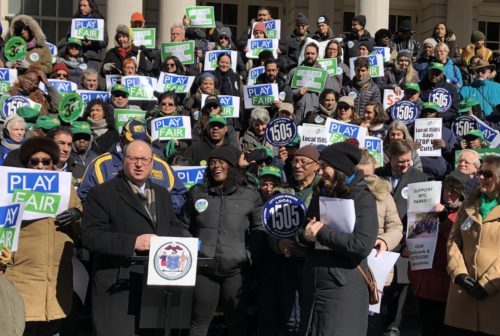
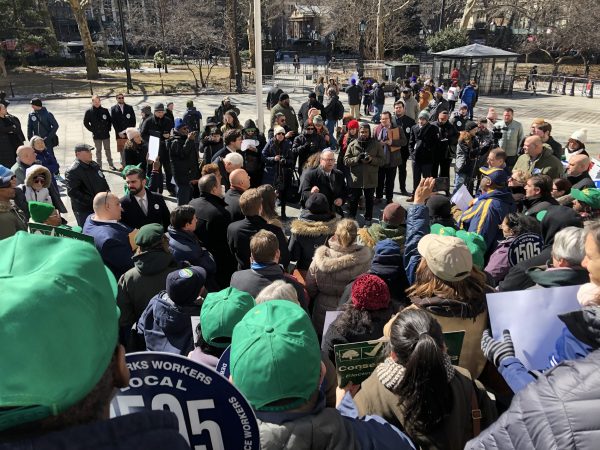
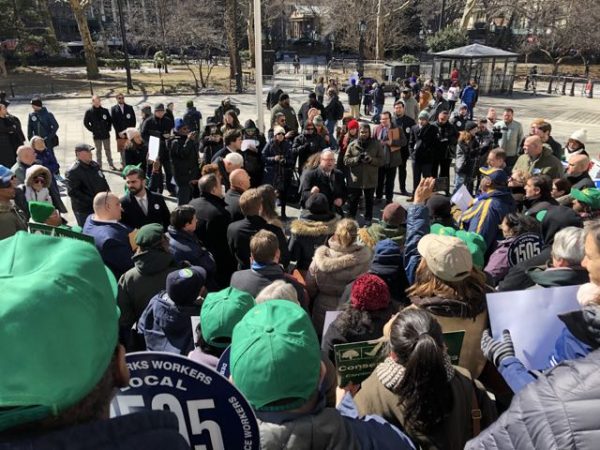
“We know New York City has to act and has to act quickly,” City Councilman Costa Constantinides, a Queens legislator who leads the council’s Committee on Environmental Protection, said on the steps of City Hall Tuesday afternoon. “What happens in New York City is emulated everywhere else….”

Starting in 2022, the new legislation proposes cutting pollution 40 percent by 2030, a timeline roughly twice as fast as the original agreement brokered by the Urban Green Council, a nonprofit linked to the U.S. Green Building Council that published the framework as a report three months ago. It’ll establish a new Office of Building Energy Performance under the Department of Buildings and set up a 27-member advisory board to guide future emissions cuts through 2050.

“We can be stricter in requirements, but at this point, we can’t be any looser,” Constantinides said.”


“…The bill offers protections for the city’s dwindling stock of roughly 990,000 rent-regulated apartments, sparing landlords who own those buildings from expensive retrofit requirements that could be legally passed onto tenants in the form of rent increases of up to 6 percent a year. Instead, the legislation proposes requiring the same auditing for to all buildings over 25,000 square feet that buildings over 50,000 square feet already undergo, a step that avoids rent hikes but increases pressure to decrease energy use in the structures.”

Read MoreNYC Councilman Just Unveiled A Historic Bill To Cut Its Biggest Source Of Climate Pollution
  • Post category:News

Rare microbes lead scientists to discover new branch on the tree of life


From CBC News:

Hemimastigotes are more different from all other living things than animals are from fungi

“Canadian researchers have discovered a new kind of organism that’s so different from other living things that it doesn’t fit into the plant kingdom, the animal kingdom, or any other kingdom used to classify known organisms.

Two species of the microscopic organisms, called hemimastigotes…”

Read MoreRare microbes lead scientists to discover new branch on the tree of life
  • Post category:News