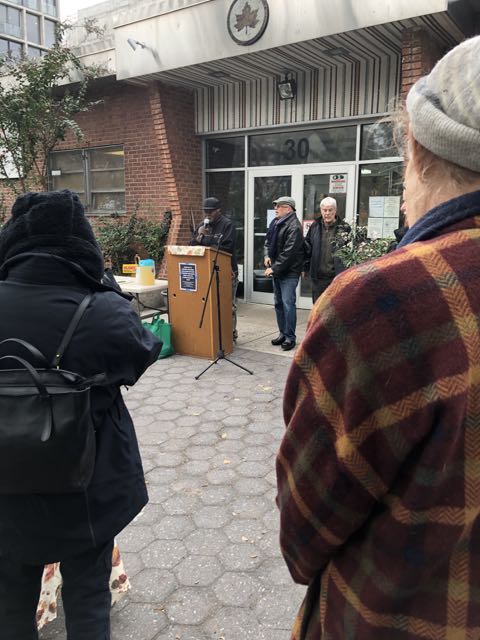
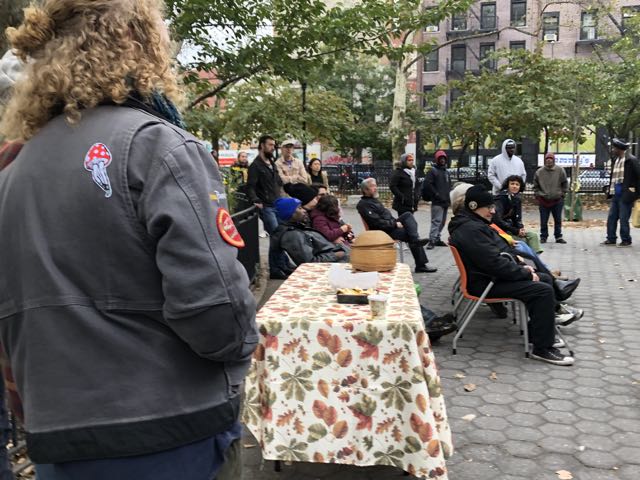
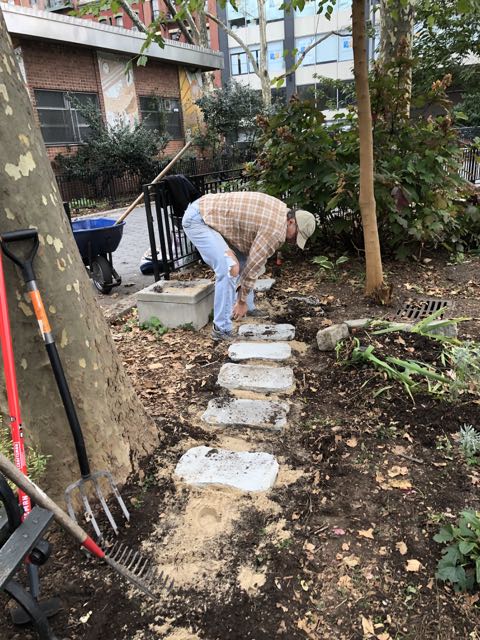
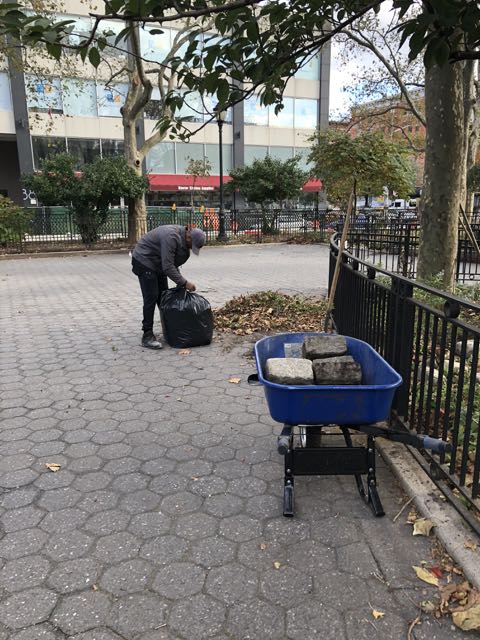
The UN Climate Summit in Support of the UN Sustainable Development Goals

Full SDG’s:

Goal 1. End poverty in all its forms everywhere

1.1 By 2030, eradicate extreme poverty for all people everywhere, currently measured as people living on less than $1.25 a day 

1.2 By 2030, reduce at least by half the proportion of men, women and children of all ages living in poverty in all its dimensions according to national definitions 

1.3 Implement nationally appropriate social protection systems and measures for all, including floors, and by 2030 achieve substantial coverage of the poor and the vulnerable 

1.4 By 2030, ensure that all men and women, in particular the poor and the vulnerable, have equal rights to economic resources, as well as access to basic services, ownership and control over land and other forms of property, inheritance, natural resources, appropriate new technology and financial services, including microfinance 

1.5 By 2030, build the resilience of the poor and those in vulnerable situations and reduce their exposure and vulnerability to climate-related extreme events and other economic, social and environmental shocks and disasters 

1.a Ensure significant mobilization of resources from a variety of sources, including through enhanced development cooperation, in order to provide adequate and predictable means for developing countries, in particular least developed countries, to implement programmes and policies to end poverty in all its dimensions 

1.b Create sound policy frameworks at the national, regional and international levels, based on pro-poor and gender-sensitive development strategies, to support accelerated investment in poverty eradication actions

Goal 2. End hunger, achieve food security and improved nutrition and promote sustainable agriculture

2.1 By 2030, end hunger and ensure access by all people, in particular the poor and people in vulnerable situations, including infants, to safe, nutritious and sufficient food all year round 

2.2 By 2030, end all forms of malnutrition, including achieving, by 2025, the internationally agreed targets on stunting and wasting in children under 5 years of age, and address the nutritional needs of adolescent girls, pregnant and lactating women and older persons 

2.3 By 2030, double the agricultural productivity and incomes of small-scale food producers, in particular women, indigenous peoples, family farmers, pastoralists and fishers, including through secure and equal access to land, other productive resources and inputs, knowledge, financial services, markets and opportunities for value addition and non-farm employment 

2.4 By 2030, ensure sustainable food production systems and implement resilient agricultural practices that increase productivity and production, that help maintain ecosystems, that strengthen capacity for adaptation to climate change, extreme weather, drought, flooding and other disasters and that progressively improve land and soil quality 

2.5 By 2020, maintain the genetic diversity of seeds, cultivated plants and farmed and domesticated animals and their related wild species, including through soundly managed and diversified seed and plant banks at the national, regional and international levels, and promote access to and fair and equitable sharing of benefits arising from the utilization of genetic resources and associated traditional knowledge, as internationally agreed 

2.a Increase investment, including through enhanced international cooperation, in rural infrastructure, agricultural research and extension services, technology development and plant and livestock gene banks in order to enhance agricultural productive capacity in developing countries, in particular least developed countries 

2.b Correct and prevent trade restrictions and distortions in world agricultural markets, including through the parallel elimination of all forms of agricultural export subsidies and all export measures with equivalent effect, in accordance with the mandate of the Doha Development Round 

2.c Adopt measures to ensure the proper functioning of food commodity markets and their derivatives and facilitate timely access to market information, including on food reserves, in order to help limit extreme food price volatility

Goal 3. Ensure healthy lives and promote well-being for all at all ages

3.1 By 2030, reduce the global maternal mortality ratio to less than 70 per 100,000 live births 

3.2 By 2030, end preventable deaths of newborns and children under 5 years of age, with all countries aiming to reduce neonatal mortality to at least as low as 12 per 1,000 live births and under-5 mortality to at least as low as 25 per 1,000 live births 

3.3 By 2030, end the epidemics of AIDS, tuberculosis, malaria and neglected tropical diseases and combat hepatitis, water-borne diseases and other communicable diseases 

3.4 By 2030, reduce by one third premature mortality from non-communicable diseases through prevention and treatment and promote mental health and well-being 

3.5 Strengthen the prevention and treatment of substance abuse, including narcotic drug abuse and harmful use of alcohol 

3.6 By 2020, halve the number of global deaths and injuries from road traffic accidents 

3.7 By 2030, ensure universal access to sexual and reproductive health-care services, including for family planning, information and education, and the integration of reproductive health into national strategies and programmes 

3.8 Achieve universal health coverage, including financial risk protection, access to quality essential health-care services and access to safe, effective, quality and affordable essential medicines and vaccines for all 

3.9 By 2030, substantially reduce the number of deaths and illnesses from hazardous chemicals and air, water and soil pollution and contamination 

3.a Strengthen the implementation of the World Health Organization Framework Convention on Tobacco Control in all countries, as appropriate 

3.b Support the research and development of vaccines and medicines for the communicable and non-communicable diseases that primarily affect developing countries, provide access to affordable essential medicines and vaccines, in accordance with the Doha Declaration on the TRIPS Agreement and Public Health, which affirms the right of developing countries to use to the full the provisions in the Agreement on Trade-Related Aspects of Intellectual Property Rights regarding flexibilities to protect public health, and, in particular, provide access to medicines for all 

3.c Substantially increase health financing and the recruitment, development, training and retention of the health workforce in developing countries, especially in least developed countries and small island developing States 

3.d Strengthen the capacity of all countries, in particular developing countries, for early warning, risk reduction and management of national and global health risks

Goal 4. Ensure inclusive and equitable quality education and promote lifelong learning opportunities for all

4.1 By 2030, ensure that all girls and boys complete free, equitable and quality primary and secondary education leading to relevant and effective learning outcomes 

4.2 By 2030, ensure that all girls and boys have access to quality early childhood development, care and pre-primary education so that they are ready for primary education 

4.3 By 2030, ensure equal access for all women and men to affordable and quality technical, vocational and tertiary education, including university 

4.4 By 2030, substantially increase the number of youth and adults who have relevant skills, including technical and vocational skills, for employment, decent jobs and entrepreneurship 

4.5 By 2030, eliminate gender disparities in education and ensure equal access to all levels of education and vocational training for the vulnerable, including persons with disabilities, indigenous peoples and children in vulnerable situations 

4.6 By 2030, ensure that all youth and a substantial proportion of adults, both men and women, achieve literacy and numeracy 

4.7 By 2030, ensure that all learners acquire the knowledge and skills needed to promote sustainable development, including, among others, through education for sustainable development and sustainable lifestyles, human rights, gender equality, promotion of a culture of peace and non-violence, global citizenship and appreciation of cultural diversity and of culture’s contribution to sustainable development 

4.a Build and upgrade education facilities that are child, disability and gender sensitive and provide safe, non-violent, inclusive and effective learning environments for all 

4.b By 2020, substantially expand globally the number of scholarships available to developing countries, in particular least developed countries, small island developing States and African countries, for enrolment in higher education, including vocational training and information and communications technology, technical, engineering and scientific programmes, in developed countries and other developing countries 

4.c By 2030, substantially increase the supply of qualified teachers, including through international cooperation for teacher training in developing countries, especially least developed countries and small island developing States

Goal 5. Achieve gender equality and empower all women and girls

5.1 End all forms of discrimination against all women and girls everywhere 

5.2 Eliminate all forms of violence against all women and girls in the public and private spheres, including trafficking and sexual and other types of exploitation 

5.3 Eliminate all harmful practices, such as child, early and forced marriage and female genital mutilation 

5.4 Recognize and value unpaid care and domestic work through the provision of public services, infrastructure and social protection policies and the promotion of shared responsibility within the household and the family as nationally appropriate 

5.5 Ensure women’s full and effective participation and equal opportunities for leadership at all levels of decision-making in political, economic and public life 

5.6 Ensure universal access to sexual and reproductive health and reproductive rights as agreed in accordance with the Programme of Action of the International Conference on Population and Development and the Beijing Platform for Action and the outcome documents of their review conferences 

5.a Undertake reforms to give women equal rights to economic resources, as well as access to ownership and control over land and other forms of property, financial services, inheritance and natural resources, in accordance with national laws 

5.b Enhance the use of enabling technology, in particular information and communications technology, to promote the empowerment of women 

5.c Adopt and strengthen sound policies and enforceable legislation for the promotion of gender equality and the empowerment of all women and girls at all levels

Goal 6. Ensure availability and sustainable management of water and sanitation for all

6.1 By 2030, achieve universal and equitable access to safe and affordable drinking water for all 

6.2 By 2030, achieve access to adequate and equitable sanitation and hygiene for all and end open defecation, paying special attention to the needs of women and girls and those in vulnerable situations 

6.3 By 2030, improve water quality by reducing pollution, eliminating dumping and minimizing release of hazardous chemicals and materials, halving the proportion of untreated wastewater and substantially increasing recycling and safe reuse globally 

6.4 By 2030, substantially increase water-use efficiency across all sectors and ensure sustainable withdrawals and supply of freshwater to address water scarcity and substantially reduce the number of people suffering from water scarcity 

6.5 By 2030, implement integrated water resources management at all levels, including through transboundary cooperation as appropriate 

6.6 By 2020, protect and restore water-related ecosystems, including mountains, forests, wetlands, rivers, aquifers and lakes 

6.a By 2030, expand international cooperation and capacity-building support to developing countries in water- and sanitation-related activities and programmes, including water harvesting, desalination, water efficiency, wastewater treatment, recycling and reuse technologies 

6.b Support and strengthen the participation of local communities in improving water and sanitation management

Goal 7. Ensure access to affordable, reliable, sustainable and modern energy for all

7.1 By 2030, ensure universal access to affordable, reliable and modern energy services 

7.2 By 2030, increase substantially the share of renewable energy in the global energy mix 

7.3 By 2030, double the global rate of improvement in energy efficiency 

7.a By 2030, enhance international cooperation to facilitate access to clean energy research and technology, including renewable energy, energy efficiency and advanced and cleaner fossil-fuel technology, and promote investment in energy infrastructure and clean energy technology 

7.b By 2030, expand infrastructure and upgrade technology for supplying modern and sustainable energy services for all in developing countries, in particular least developed countries, small island developing States, and land-locked developing countries, in accordance with their respective programmes of support

Goal 8. Promote sustained, inclusive and sustainable economic growth, full and productive employment and decent work for all

8.1 Sustain per capita economic growth in accordance with national circumstances and, in particular, at least 7 per cent gross domestic product growth per annum in the least developed countries 

8.2 Achieve higher levels of economic productivity through diversification, technological upgrading and innovation, including through a focus on high-value added and labour-intensive sectors 

8.3 Promote development-oriented policies that support productive activities, decent job creation, entrepreneurship, creativity and innovation, and encourage the formalization and growth of micro-, small- and medium-sized enterprises, including through access to financial services 

8.4 Improve progressively, through 2030, global resource efficiency in consumption and production and endeavour to decouple economic growth from environmental degradation, in accordance with the 10-year framework of programmes on sustainable consumption and production, with developed countries taking the lead 

8.5 By 2030, achieve full and productive employment and decent work for all women and men, including for young people and persons with disabilities, and equal pay for work of equal value 

8.6 By 2020, substantially reduce the proportion of youth not in employment, education or training 

8.7 Take immediate and effective measures to eradicate forced labour, end modern slavery and human trafficking and secure the prohibition and elimination of the worst forms of child labour, including recruitment and use of child soldiers, and by 2025 end child labour in all its forms 

8.8 Protect labour rights and promote safe and secure working environments for all workers, including migrant workers, in particular women migrants, and those in precarious employment 

8.9 By 2030, devise and implement policies to promote sustainable tourism that creates jobs and promotes local culture and products 

8.10 Strengthen the capacity of domestic financial institutions to encourage and expand access to banking, insurance and financial services for all 

8.a Increase Aid for Trade support for developing countries, in particular least developed countries, including through the Enhanced Integrated Framework for Trade-Related Technical Assistance to Least Developed Countries 

8.b By 2020, develop and operationalize a global strategy for youth employment and implement the Global Jobs Pact of the International Labour Organization

Goal 9. Build resilient infrastructure, promote inclusive and sustainable industrialization and foster innovation

9.1 Develop quality, reliable, sustainable and resilient infrastructure, including regional and transborder infrastructure, to support economic development and human well-being, with a focus on affordable and equitable access for all 

9.2 Promote inclusive and sustainable industrialization and, by 2030, significantly raise industry’s share of employment and gross domestic product, in line with national circumstances, and double its share in least developed countries 

9.3 Increase the access of small-scale industrial and other enterprises, in particular in developing countries, to financial services, including affordable credit, and their integration into value chains and markets 

9.4 By 2030, upgrade infrastructure and retrofit industries to make them sustainable, with increased resource-use efficiency and greater adoption of clean and environmentally sound technologies and industrial processes, with all countries taking action in accordance with their respective capabilities 

9.5 Enhance scientific research, upgrade the technological capabilities of industrial sectors in all countries, in particular developing countries, including, by 2030, encouraging innovation and substantially increasing the number of research and development workers per 1 million people and public and private research and development spending 

9.a Facilitate sustainable and resilient infrastructure development in developing countries through enhanced financial, technological and technical support to African countries, least developed countries, landlocked developing countries and small island developing States 

9.b Support domestic technology development, research and innovation in developing countries, including by ensuring a conducive policy environment for, inter alia, industrial diversification and value addition to commodities 

9.c Significantly increase access to information and communications technology and strive to provide universal and affordable access to the Internet in least developed countries by 2020

Goal 10. Reduce inequality within and among countries

10.1 By 2030, progressively achieve and sustain income growth of the bottom 40 per cent of the population at a rate higher than the national average 

10.2 By 2030, empower and promote the social, economic and political inclusion of all, irrespective of age, sex, disability, race, ethnicity, origin, religion or economic or other status 

10.3 Ensure equal opportunity and reduce inequalities of outcome, including by eliminating discriminatory laws, policies and practices and promoting appropriate legislation, policies and action in this regard 

10.4 Adopt policies, especially fiscal, wage and social protection policies, and progressively achieve greater equality 

10.5 Improve the regulation and monitoring of global financial markets and institutions and strengthen the implementation of such regulations 

10.6 Ensure enhanced representation and voice for developing countries in decision-making in global international economic and financial institutions in order to deliver more effective, credible, accountable and legitimate institutions 

10.7 Facilitate orderly, safe, regular and responsible migration and mobility of people, including through the implementation of planned and well-managed migration policies 

10.a Implement the principle of special and differential treatment for developing countries, in particular least developed countries, in accordance with World Trade Organization agreements 

10.b Encourage official development assistance and financial flows, including foreign direct investment, to States where the need is greatest, in particular least developed countries, African countries, small island developing States and landlocked developing countries, in accordance with their national plans and programmes 

10.c By 2030, reduce to less than 3 per cent the transaction costs of migrant remittances and eliminate remittance corridors with costs higher than 5 per cent

Goal 11. Make cities and human settlements inclusive, safe, resilient and sustainable

11.1 By 2030, ensure access for all to adequate, safe and affordable housing and basic services and upgrade slums 

11.2 By 2030, provide access to safe, affordable, accessible and sustainable transport systems for all, improving road safety, notably by expanding public transport, with special attention to the needs of those in vulnerable situations, women, children, persons with disabilities and older persons 

11.3 By 2030, enhance inclusive and sustainable urbanization and capacity for participatory, integrated and sustainable human settlement planning and management in all countries 

11.4 Strengthen efforts to protect and safeguard the world’s cultural and natural heritage 

11.5 By 2030, significantly reduce the number of deaths and the number of people affected and substantially decrease the direct economic losses relative to global gross domestic product caused by disasters, including water-related disasters, with a focus on protecting the poor and people in vulnerable situations 

11.6 By 2030, reduce the adverse per capita environmental impact of cities, including by paying special attention to air quality and municipal and other waste management 

11.7 By 2030, provide universal access to safe, inclusive and accessible, green and public spaces, in particular for women and children, older persons and persons with disabilities 

11.a Support positive economic, social and environmental links between urban, peri-urban and rural areas by strengthening national and regional development planning 

11.b By 2020, substantially increase the number of cities and human settlements adopting and implementing integrated policies and plans towards inclusion, resource efficiency, mitigation and adaptation to climate change, resilience to disasters, and develop and implement, in line with the Sendai Framework for Disaster Risk Reduction 2015-2030, holistic disaster risk management at all levels 

11.c Support least developed countries, including through financial and technical assistance, in building sustainable and resilient buildings utilizing local materials

Goal 12. Ensure sustainable consumption and production patterns

12.1 Implement the 10-year framework of programmes on sustainable consumption and production, all countries taking action, with developed countries taking the lead, taking into account the development and capabilities of developing countries 

12.2 By 2030, achieve the sustainable management and efficient use of natural resources 

12.3 By 2030, halve per capita global food waste at the retail and consumer levels and reduce food losses along production and supply chains, including post-harvest losses 

12.4 By 2020, achieve the environmentally sound management of chemicals and all wastes throughout their life cycle, in accordance with agreed international frameworks, and significantly reduce their release to air, water and soil in order to minimize their adverse impacts on human health and the environment 

12.5 By 2030, substantially reduce waste generation through prevention, reduction, recycling and reuse 

12.6 Encourage companies, especially large and transnational companies, to adopt sustainable practices and to integrate sustainability information into their reporting cycle 

12.7 Promote public procurement practices that are sustainable, in accordance with national policies and priorities 

12.8 By 2030, ensure that people everywhere have the relevant information and awareness for sustainable development and lifestyles in harmony with nature 

12.a Support developing countries to strengthen their scientific and technological capacity to move towards more sustainable patterns of consumption and production 

12.b Develop and implement tools to monitor sustainable development impacts for sustainable tourism that creates jobs and promotes local culture and products 

12.c Rationalize inefficient fossil-fuel subsidies that encourage wasteful consumption by removing market distortions, in accordance with national circumstances, including by restructuring taxation and phasing out those harmful subsidies, where they exist, to reflect their environmental impacts, taking fully into account the specific needs and conditions of developing countries and minimizing the possible adverse impacts on their development in a manner that protects the poor and the affected communities

Goal 13. Take urgent action to combat climate change and its impacts*

13.1 Strengthen resilience and adaptive capacity to climate-related hazards and natural disasters in all countries 

13.2 Integrate climate change measures into national policies, strategies and planning 

13.3 Improve education, awareness-raising and human and institutional capacity on climate change mitigation, adaptation, impact reduction and early warning 

13.a Implement the commitment undertaken by developed-country parties to the United Nations Framework Convention on Climate Change to a goal of mobilizing jointly $100 billion annually by 2020 from all sources to address the needs of developing countries in the context of meaningful mitigation actions and transparency on implementation and fully operationalize the Green Climate Fund through its capitalization as soon as possible 

13.b Promote mechanisms for raising capacity for effective climate change-related planning and management in least developed countries and small island developing States, including focusing on women, youth and local and marginalized communities

* Acknowledging that the United Nations Framework Convention on Climate Change is the primary international, intergovernmental forum for negotiating the global response to climate change.

Goal 14. Conserve and sustainably use the oceans, seas and marine resources for sustainable development

14.1 By 2025, prevent and significantly reduce marine pollution of all kinds, in particular from land-based activities, including marine debris and nutrient pollution 

14.2 By 2020, sustainably manage and protect marine and coastal ecosystems to avoid significant adverse impacts, including by strengthening their resilience, and take action for their restoration in order to achieve healthy and productive oceans 

14.3 Minimize and address the impacts of ocean acidification, including through enhanced scientific cooperation at all levels 

14.4 By 2020, effectively regulate harvesting and end overfishing, illegal, unreported and unregulated fishing and destructive fishing practices and implement science-based management plans, in order to restore fish stocks in the shortest time feasible, at least to levels that can produce maximum sustainable yield as determined by their biological characteristics 

14.5 By 2020, conserve at least 10 per cent of coastal and marine areas, consistent with national and international law and based on the best available scientific information 

14.6 By 2020, prohibit certain forms of fisheries subsidies which contribute to overcapacity and overfishing, eliminate subsidies that contribute to illegal, unreported and unregulated fishing and refrain from introducing new such subsidies, recognizing that appropriate and effective special and differential treatment for developing and least developed countries should be an integral part of the World Trade Organization fisheries subsidies negotiation 

14.7 By 2030, increase the economic benefits to Small Island developing States and least developed countries from the sustainable use of marine resources, including through sustainable management of fisheries, aquaculture and tourism 

14.a Increase scientific knowledge, develop research capacity and transfer marine technology, taking into account the Intergovernmental Oceanographic Commission Criteria and Guidelines on the Transfer of Marine Technology, in order to improve ocean health and to enhance the contribution of marine biodiversity to the development of developing countries, in particular small island developing States and least developed countries 

14.b Provide access for small-scale artisanal fishers to marine resources and markets 

14.c Enhance the conservation and sustainable use of oceans and their resources by implementing international law as reflected in UNCLOS, which provides the legal framework for the conservation and sustainable use of oceans and their resources, as recalled in paragraph 158 of The Future We Want

Goal 15. Protect, restore and promote sustainable use of terrestrial ecosystems, sustainably manage forests, combat desertification, and halt and reverse land degradation and halt biodiversity loss

15.1 By 2020, ensure the conservation, restoration and sustainable use of terrestrial and inland freshwater ecosystems and their services, in particular forests, wetlands, mountains and drylands, in line with obligations under international agreements 

15.2 By 2020, promote the implementation of sustainable management of all types of forests, halt deforestation, restore degraded forests and substantially increase afforestation and reforestation globally 

15.3 By 2030, combat desertification, restore degraded land and soil, including land affected by desertification, drought and floods, and strive to achieve a land degradation-neutral world 

15.4 By 2030, ensure the conservation of mountain ecosystems, including their biodiversity, in order to enhance their capacity to provide benefits that are essential for sustainable development 

15.5 Take urgent and significant action to reduce the degradation of natural habitats, halt the loss of biodiversity and, by 2020, protect and prevent the extinction of threatened species 

15.6 Promote fair and equitable sharing of the benefits arising from the utilization of genetic resources and promote appropriate access to such resources, as internationally agreed 

15.7 Take urgent action to end poaching and trafficking of protected species of flora and fauna and address both demand and supply of illegal wildlife products 

15.8 By 2020, introduce measures to prevent the introduction and significantly reduce the impact of invasive alien species on land and water ecosystems and control or eradicate the priority species 

15.9 By 2020, integrate ecosystem and biodiversity values into national and local planning, development processes, poverty reduction strategies and accounts 

15.a Mobilize and significantly increase financial resources from all sources to conserve and sustainably use biodiversity and ecosystems 

15.b Mobilize significant resources from all sources and at all levels to finance sustainable forest management and provide adequate incentives to developing countries to advance such management, including for conservation and reforestation 

15.c Enhance global support for efforts to combat poaching and trafficking of protected species, including by increasing the capacity of local communities to pursue sustainable livelihood opportunities

Goal 16. Promote peaceful and inclusive societies for sustainable development, provide access to justice for all and build effective, accountable and inclusive institutions at all levels

16.1 Significantly reduce all forms of violence and related death rates everywhere 

16.2 End abuse, exploitation, trafficking and all forms of violence against and torture of children 

16.3 Promote the rule of law at the national and international levels and ensure equal access to justice for all 

16.4 By 2030, significantly reduce illicit financial and arms flows, strengthen the recovery and return of stolen assets and combat all forms of organized crime 

16.5 Substantially reduce corruption and bribery in all their forms 

16.6 Develop effective, accountable and transparent institutions at all levels 

16.7 Ensure responsive, inclusive, participatory and representative decision-making at all levels 

16.8 Broaden and strengthen the participation of developing countries in the institutions of global governance 

16.9 By 2030, provide legal identity for all, including birth registration 

16.10 Ensure public access to information and protect fundamental freedoms, in accordance with national legislation and international agreements 

16.a Strengthen relevant national institutions, including through international cooperation, for building capacity at all levels, in particular in developing countries, to prevent violence and combat terrorism and crime 

16.b Promote and enforce non-discriminatory laws and policies for sustainable development

Goal 17. Strengthen the means of implementation and revitalize the global partnership for sustainable development

Finance

17.1 Strengthen domestic resource mobilization, including through international support to developing countries, to improve domestic capacity for tax and other revenue collection 

17.2 Developed countries to implement fully their official development assistance commitments, including the commitment by many developed countries to achieve the target of 0.7 per cent of ODA/GNI to developing countries and 0.15 to 0.20 per cent of ODA/GNI to least developed countries; ODA providers are encouraged to consider setting a target to provide at least 0.20 per cent of ODA/GNI to least developed countries 

17.3 Mobilize additional financial resources for developing countries from multiple sources 

17.4 Assist developing countries in attaining long-term debt sustainability through coordinated policies aimed at fostering debt financing, debt relief and debt restructuring, as appropriate, and address the external debt of highly indebted poor countries to reduce debt distress 

17.5 Adopt and implement investment promotion regimes for least developed countries

Technology

17.6 Enhance North-South, South-South and triangular regional and international cooperation on and access to science, technology and innovation and enhance knowledge sharing on mutually agreed terms, including through improved coordination among existing mechanisms, in particular at the United Nations level, and through a global technology facilitation mechanism 

17.7 Promote the development, transfer, dissemination and diffusion of environmentally sound technologies to developing countries on favourable terms, including on concessional and preferential terms, as mutually agreed 

17.8 Fully operationalize the technology bank and science, technology and innovation capacity-building mechanism for least developed countries by 2017 and enhance the use of enabling technology, in particular information and communications technology

Capacity-building

17.9 Enhance international support for implementing effective and targeted capacity-building in developing countries to support national plans to implement all the sustainable development goals, including through North-South, South-South and triangular cooperation

Trade

17.10 Promote a universal, rules-based, open, non-discriminatory and equitable multilateral trading system under the World Trade Organization, including through the conclusion of negotiations under its Doha Development Agenda 

17.11 Significantly increase the exports of developing countries, in particular with a view to doubling the least developed countries’ share of global exports by 2020 

17.12 Realize timely implementation of duty-free and quota-free market access on a lasting basis for all least developed countries, consistent with World Trade Organization decisions, including by ensuring that preferential rules of origin applicable to imports from least developed countries are transparent and simple, and contribute to facilitating market access

Systemic issues

Policy and institutional coherence

17.13 Enhance global macroeconomic stability, including through policy coordination and policy coherence 

17.14 Enhance policy coherence for sustainable development 

17.15 Respect each country’s policy space and leadership to establish and implement policies for poverty eradication and sustainable development

Multi-stakeholder partnerships

17.16 Enhance the global partnership for sustainable development, complemented by multi-stakeholder partnerships that mobilize and share knowledge, expertise, technology and financial resources, to support the achievement of the sustainable development goals in all countries, in particular developing countries 

17.17 Encourage and promote effective public, public-private and civil society partnerships, building on the experience and resourcing strategies of partnerships

Data, monitoring and accountability

17.18 By 2020, enhance capacity-building support to developing countries, including for least developed countries and small island developing States, to increase significantly the availability of high-quality, timely and reliable data disaggregated by income, gender, age, race, ethnicity, migratory status, disability, geographic location and other characteristics relevant in national contexts 

17.19 By 2030, build on existing initiatives to develop measurements of progress on sustainable development that complement gross domestic product, and support statistical capacity-building in developing countries

Read MoreThe UN Climate Summit in Support of the UN Sustainable Development Goals
  • Post category:News

UN Climate Summit – Links to Events September

UN Climate Summit Events

United Nations General Assembly Events Link

Climate Week NYC Events Link


The Sustainable Development Goals: Link

The 2030 Agenda for Sustainable Development, adopted by all United Nations Member States in 2015, provides a shared blueprint for peace and prosperity for people and the planet, now and into the future. At its heart are the 17 Sustainable Development Goals (SDGs), which are an urgent call for action by all countries – developed and developing – in a global partnership. They recognize that ending poverty and other deprivations must go hand-in-hand with strategies that improve health and education, reduce inequality, and spur economic growth – all while tackling climate change and working to preserve our oceans and forests.


The 17 sustainable development goals (SDGs) to transform our world:

GOAL 1: No Poverty

GOAL 2: Zero Hunger

GOAL 3: Good Health and Well-being

GOAL 4: Quality Education

GOAL 5: Gender Equality

GOAL 6: Clean Water and Sanitation

GOAL 7: Affordable and Clean Energy

GOAL 8: Decent Work and Economic Growth

GOAL 9: Industry, Innovation and Infrastructure

GOAL 10: Reduced Inequality

GOAL 11: Sustainable Cities and Communities

GOAL 12: Responsible Consumption and Production

GOAL 13: Climate Action

GOAL 14: Life Below Water

GOAL 15: Life on Land

GOAL 16: Peace and Justice Strong Institutions

GOAL 17: Partnerships to achieve the Goal

Read MoreUN Climate Summit – Links to Events September
  • Post category:News

Tracking progress of the One Billion Trees Programme in New Zealand

New Zealand: A billion trees by 2027

“The Government has set a goal to plant a billion trees in the next 10 years – between 2018 and 2027.

Initial estimates suggest about half that number will be achieved through existing planting programmes. The Ministry for Primary Industries (MPI) will be helping boost planting rates to achieve the goal.

It will take a combined effort by government, landowners, commercial foresters, conservation groups, regional councils, iwi, communities, and others.”


This is what ‘progressive’ means in the real world.

Where are we at in NYC Parks?


Read MoreTracking progress of the One Billion Trees Programme in New Zealand
  • Post category:News

Black Urban Growers Call for Proposals


Call for Workshop Proposals!

Deadline: Friday, September 6, 2019!

The 9th Annual Black Farmers and Urban Gardeners National BUGS Conference is happening October 25 – 27, 2019 in New York, NY!

Calling all farmers, gardeners, herbalists, food entrepreneurs, chefs, foodies, afro-ecologists, food activists, educators, afro-futurists, policy-makers, nutritionists & more! Are you interested in facilitating a workshop to over 400 attendees at the 2019 Black Farmers & Urban Gardeners National BUGS Conference in New York, NY, October 25 – 27, 2019? If yes, see below for more information and the online application! 

Deadline to submit your workshop application is Friday, September 6, 2019 or until workshop slots have been filled!  Submit your proposal today! Read the guidelines and submit your workshop proposal here: Workshop Guidelines and Online Submission Form

Join the Black Farmers and Urban Gardeners’ Facebook community of over 10,000 + followers here: Black Farmers and Urban Gardeners (BUGS) Facebook Page

Interested in facilitating a workshop at the BUGS conference but currently experiencing a financial hardship? Submit your workshop proposal, then send an email to BUGS regarding more information about hardship support for approved workshop presenters. **Note: we cannot guarantee that workshop presenters will receive hardship assistance.**

Any additional questions, please send an email to Lorrie Clevenger, Co-Coordinator for the 2019 BUGS Conference at info@blackurbangrowers.org or send a message through the BUGS Facebook page.

Read MoreBlack Urban Growers Call for Proposals
  • Post category:News

Summary IPCC Special Report on Global Warming of 1.5°C approved by governments

Limiting global warming to 1.5°C would require rapid, far-reaching and unprecedented changes in all aspects of society, the IPCC said in a new assessment. With clear benefits to people and natural ecosystems, limiting global warming to 1.5°C compared to 2°C could go hand in hand with ensuring a more sustainable and equitable society, the Intergovernmental Panel on Climate Change (IPCC) said on Monday.

The Special Report on Global Warming of 1.5°C was approved by the IPCC on Saturday in Incheon, Republic of Korea. It will be a key scientific input into the Katowice Climate Change Conference in Poland in December, when governments review the Paris Agreement to tackle climate change.

“With more than 6,000 scientific references cited and the dedicated contribution of thousands of expert and government reviewers worldwide, this important report testifies to the breadth and policy relevance of the IPCC,” said Hoesung Lee, Chair of the IPCC.

Ninety-one authors and review editors from 40 countries prepared the IPCC report in response to an invitation from the United Nations Framework Convention on Climate Change (UNFCCC) when it adopted the Paris Agreement in 2015.

The report’s full name is Global Warming of 1.5°C, an IPCC special report on the impacts of global warming of 1.5°C above pre-industrial levels and related global greenhouse gas emission pathways, in the context of strengthening the global response to the threat of climate change, sustainable development, and efforts to eradicate poverty.

“One of the key messages that comes out very strongly from this report is that we are already seeing the consequences of 1°C of global warming through more extreme weather, rising sea levels and diminishing Arctic sea ice, among other changes,” said Panmao Zhai, Co-Chair of IPCC Working Group I.

The report highlights a number of climate change impacts that could be avoided by limiting global warming to 1.5°C compared to 2°C, or more. For instance, by 2100, global sea level rise would be 10 cm lower with global warming of 1.5°C compared with 2°C. The likelihood of an Arctic Ocean free of sea ice in summer would be once per century with global warming of 1.5°C, compared with at least once per decade with 2°C. Coral reefs would decline by 70-90 percent with global warming of 1.5°C, whereas virtually all (> 99 percent) would be lost with 2°C.

“Every extra bit of warming matters, especially since warming of 1.5°C or higher increases the risk associated with long-lasting or irreversible changes, such as the loss of some ecosystems,” said Hans-Otto Pörtner, Co-Chair of IPCC Working Group II.

Limiting global warming would also give people and ecosystems more room to adapt and remain below relevant risk thresholds, added Pörtner. The report also examines pathways available to limit warming to 1.5°C, what it would take to achieve them and what the consequences could be. “The good news is that some of the kinds of actions that would be needed to limit global warming to 1.5°C are already underway around the world, but they would need to accelerate,” said Valerie Masson-Delmotte, Co-Chair of Working Group I.

The report finds that limiting global warming to 1.5°C would require “rapid and far-reaching” transitions in land, energy, industry, buildings, transport, and cities. Global net human-caused emissions of carbon dioxide (CO2) would need to fall by about 45 percent from 2010 levels by 2030, reaching ‘net zero’ around 2050. This means that any remaining emissions would need to be balanced by removing CO2 from the air.

“Limiting warming to 1.5°C is possible within the laws of chemistry and physics but doing so would require unprecedented changes,” said Jim Skea, Co-Chair of IPCC Working Group III.

Allowing the global temperature to temporarily exceed or ‘overshoot’ 1.5°C would mean a greater reliance on techniques that remove CO2 from the air to return global temperature to below 1.5°C by 2100. The effectiveness of such techniques are unproven at large scale and some may carry significant risks for sustainable development, the report notes.

“Limiting global warming to 1.5°C compared with 2°C would reduce challenging impacts on ecosystems, human health and well-being, making it easier to achieve the United Nations Sustainable Development Goals,” said Priyardarshi Shukla, Co-Chair of IPCC Working Group III.

The decisions we make today are critical in ensuring a safe and sustainable world for everyone, both now and in the future, said Debra Roberts, Co-Chair of IPCC Working Group II.

“This report gives policymakers and practitioners the information they need to make decisions that tackle climate change while considering local context and people’s needs. The next few years are probably the most important in our history,” she said.

The IPCC is the leading world body for assessing the science related to climate change, its impacts and potential future risks, and possible response options.

The report was prepared under the scientific leadership of all three IPCC working groups. Working Group I assesses the physical science basis of climate change; Working Group II addresses impacts, adaptation and vulnerability; and Working Group III deals with the mitigation of climate change.

The Paris Agreement adopted by 195 nations at the 21st Conference of the Parties to the UNFCCC in December 2015 included the aim of strengthening the global response to the threat of climate change by “holding the increase in the global average temperature to well below 2°C above pre-industrial levels and pursuing efforts to limit the temperature increase to 1.5°C above pre-industrial levels.”

As part of the decision to adopt the Paris Agreement, the IPCC was invited to produce, in 2018, a Special Report on global warming of 1.5°C above pre-industrial levels and related global greenhouse gas emission pathways. The IPCC accepted the invitation, adding that the Special Report would look at these issues in the context of strengthening the global response to the threat of climate change, sustainable development, and efforts to eradicate poverty.

Global Warming of 1.5°C is the first in a series of Special Reports to be produced in the IPCC’s Sixth Assessment Cycle. Next year the IPCC will release the Special Report on the Ocean and Cryosphere in a Changing Climate, and Climate Change and Land, which looks at how climate change affects land use.

The Summary for Policymakers (SPM) presents the key findings of the Special Report, based on the assessment of the available scientific, technical and socio-economic literature relevant to global warming of 1.5°C.

The Summary for Policymakers of the Special Report on Global Warming of 1.5°C (SR15) is available at https://www.ipcc.ch/sr15 or www.ipcc.ch.

Key statistics of the Special Report on Global Warming of 1.5°C

91 authors from 44 citizenships and 40 countries of residence
– 14 Coordinating Lead Authors (CLAs)
– 60 Lead authors (LAs)
– 17 Review Editors (REs)

133 Contributing authors (CAs)
Over 6,000 cited references
A total of 42,001 expert and government review comments
(First Order Draft 12,895; Second Order Draft 25,476; Final Government Draft: 3,630)

For more information, contact:
IPCC Press Office, Email: ipcc-media@wmo.int
Werani Zabula +41 79 108 3157 or Nina Peeva +41 79 516 7068

Notes for editors

The Special Report on Global Warming of 1.5 °C, known as SR15, is being prepared in response to an invitation from the 21st Conference of the Parties (COP21) to the United Nations Framework Convention on Climate Change in December 2015, when they reached the Paris Agreement, and will inform the Talanoa Dialogue at the 24th Conference of the Parties (COP24). The Talanoa Dialogue will take stock of the collective efforts of Parties in relation to progress towards the long-term goal of the Paris Agreement, and to inform the preparation of nationally determined contributions. Details of the report, including the approved outline, can be found on the report page. The report was prepared under the joint scientific leadership of all three IPCC Working Groups, with support from the Working Group I Technical Support Unit.

What is the IPCC?
The Intergovernmental Panel on Climate Change (IPCC) is the UN body for assessing the science related to climate change. It was established by the United Nations Environment Programme (UN Environment) and the World Meteorological Organization (WMO) in 1988 to provide policymakers with regular scientific assessments concerning climate change, its implications and potential future risks, as well as to put forward adaptation and mitigation strategies. It has 195 member states.

IPCC assessments provide governments, at all levels, with scientific information that they can use to develop climate policies. IPCC assessments are a key input into the international negotiations to tackle climate change. IPCC reports are drafted and reviewed in several stages, thus guaranteeing objectivity and transparency.

The IPCC assesses the thousands of scientific papers published each year to tell policymakers what we know and don’t know about the risks related to climate change. The IPCC identifies where there is agreement in the scientific community, where there are differences of opinion, and where further research is needed. It does not conduct its own research.

To produce its reports, the IPCC mobilizes hundreds of scientists. These scientists and officials are drawn from diverse backgrounds. Only a dozen permanent staff work in the IPCC’s Secretariat.

The IPCC has three working groups: Working Group I, dealing with the physical science basis of climate change; Working Group II, dealing with impacts, adaptation and vulnerability; and Working Group III, dealing with the mitigation of climate change. It also has a Task Force on National Greenhouse Gas Inventories that develops methodologies for measuring emissions and removals.

IPCC Assessment Reports consist of contributions from each of the three working groups and a Synthesis Report. Special Reports undertake an assessment of cross-disciplinary issues that span more than one working group and are shorter and more focused than the main assessments.

Sixth Assessment Cycle
At its 41st Session in February 2015, the IPCC decided to produce a Sixth Assessment Report (AR6). At its 42nd Session in October 2015 it elected a new Bureau that would oversee the work on this report and Special Reports to be produced in the assessment cycle. At its 43rd Session in April 2016, it decided to produce three Special Reports, a Methodology Report and AR6.

The Methodology Report to refine the 2006 IPCC Guidelines for National Greenhouse Gas Inventories will be delivered in 2019. Besides Global Warming of 1.5°C, the IPCC will finalize two further special reports in 2019: the Special Report on the Ocean and Cryosphere in a Changing Climate and Climate Change and Land: an IPCC special report on climate change, desertification, land degradation, sustainable land management, food security, and greenhouse gas fluxes in terrestrial ecosystems. The AR6 Synthesis Report will be finalized in the first half of 2022, following the three working group contributions to AR6 in 2021.

For more information, including links to the IPCC reports, go to: www.ipcc.ch

Read MoreSummary IPCC Special Report on Global Warming of 1.5°C approved by governments
  • Post category:News

Should Rivers Have Same Legal Rights As Humans?

From NPR:

In early July, Bangladesh became the first country to grant all of its rivers the same legal status as humans. From now on, its rivers will be treated as living entities in a court of law. The landmark ruling by the Bangladeshi Supreme Court is meant to protect the world’s largest delta from further degradation from pollution, illegal dredging and human intrusion.

“In Bangladesh, the river is considered as our mother,” says Mohammad Abdul Matin, general secretary of Bangladesh Poribesh Andolon, a Dhaka-based environmental group. As Bangladesh sits where three major rivers converge and empty into the Bay of Bengal, nearly 100% of its land is delta land, he tells NPR.

Following the ruling, anyone accused of harming the rivers can be taken to court by the new, government-appointed National River Conservation Commission. They may be tried and delivered a verdict as if they had harmed their own mother, Matin says.

“The river is now considered by law, by code, a living entity, so you’ll have to face the consequence by law if you do anything that kills the river,” Matin says.

Bangladesh follows a handful of countries that have subscribed to an idea known as environmental personhood. It was first highlighted in essays by University of Southern California law professor Christopher D. Stone, collected into a 1974 book titled Should Trees Have Standing? Toward Legal Rights for Natural Objects. Stone argued that if an environmental entity is given “legal personality,” it cannot be owned and has the right to appear in court.

Traditionally, nature has been subject to a Western-conceived legal regime of property-based ownership, says Monti Aguirre with the environmental group International Rivers.

“That means … an owner has the right to modify their features, their natural features, or to destroy them all at will,” Aguirre says.

The idea of environmental personhood turns that paradigm on its head by recognizing that nature has rights and that those rights should be enforced by a court of law. It’s a philosophical idea, says Aguirre, with indigenous communities leading the charge.”

Read MoreShould Rivers Have Same Legal Rights As Humans?
  • Post category:News

Planting Trees Is Good. Eliminating Deforestation is Better.

From Mother Jones:

The UN report says we just have to stop cutting them down

Forests provide many benefits beyond storing carbon, they store and recycle our water, they prevent erosion, they harbor biodiversity. There’s a legion of reasons to protect forests, especially in the tropics. When we plant forests, we gain some of those benefits, but it takes years to decades to grow a healthy forest.” Rob Jackson, Stanford University

Every year, an estimated 15 billion trees are chopped down across the planet to make room for agricultural and urban lands and other uses. We’ve cut down so many, in fact, that what’s left is about half of the number of trees that the Earth supported before the rise of human civilization, and scientists warn that it’s not helping our climate. Planting more trees is one way to offset deforestation. But now, a report from the United Nations’ Intergovernmental Panel on Climate Change finds that to have a shot at combatting the climate crisis, among other efforts, we’ll need to cut down fewer trees to begin with.

Global deforestation is a major source of greenhouse gas emissions. Of all the land-use-related carbon dioxide emissions between 2007 and 2016—between 2.6 and 7.8 gigatonnes of carbon dioxide yearly—most of it comes from deforestation, the IPCC report’s authors estimate.

Rebecca Leber explains:

The way we eat, farm, and cut down forests contributes in a major way to the climate problem. Deforestation, agriculture, and other land use are already responsible for 23 percent of the rise in human-caused greenhouse gases, and agriculture is responsible for 44 percent of methane emissions. Those numbers will certainly grow without changes in land management—changes like growing forests and improving soil’s carbon capture with more native plants and crops.

Read MorePlanting Trees Is Good. Eliminating Deforestation is Better.
  • Post category:News

The Great Land Robbery

From The Atlantic:

A war waged by deed of title has dispossessed 98 percent of black agricultural landowners in America

“Back in the day, snow-white bolls of King Cotton reigned. Now much of the land is green with soybeans. The farms and plantations are much larger—industrial operations with bioengineered plants, laser-guided tractors, and crop-dusting drones. Fewer and fewer farms are still owned by actual farmers. Investors in boardrooms throughout the country have bought hundreds of thousands of acres of premium Delta land. If you’re one of the millions of people who have a retirement account with the Teachers Insurance and Annuity Association, for instance, you might even own a little bit yourself…

..Hancock Agricultural Investment Group manages more than 65,000 acres in what it calls the “Delta states.” The real-estate trust Farmland Partners has 30,000 acres in and around the Delta. AgriVest, a subsidiary of the Swiss bank UBS, owned 22,000 acres as of 2011. (AgriVest did not respond to a request for more recent information.)

This is not a story about TIAA—at least not primarily. The company’s newfound dominance in the region is merely the topsoil covering a history of loss and legally sanctioned theft in which TIAA played no part. But TIAA’s position is instrumental in understanding both how the crimes of Jim Crow have been laundered by time and how the legacy of ill-gotten gains has become a structural part of American life. The land was wrested first from Native Americans, by force. It was then cleared, watered, and made productive for intensive agriculture by the labor of enslaved Africans, who after Emancipation would come to own a portion of it. Later, through a variety of means—sometimes legal, often coercive, in many cases legal and coercive, occasionally violent—farmland owned by black people came into the hands of white people. It was aggregated into larger holdings, then aggregated again, eventually attracting the interest of Wall Street.

Owners of small farms everywhere, black and white alike, have long been buffeted by larger economic forces. But what happened to black landowners in the South, and particularly in the Delta, is distinct, and was propelled not only by economic change but also by white racism and local white power. A war waged by deed of title has dispossessed 98 percent of black agricultural landowners in America. They have lost 12 million acres over the past century. But even that statement falsely consigns the losses to long-ago history. In fact, the losses mostly occurred within living memory, from the 1950s onward. Today, except for a handful of farmers like the Scotts who have been able to keep or get back some land, black people in this most productive corner of the Deep South own almost nothing of the bounty under their feet…”


Read MoreThe Great Land Robbery
  • Post category:News

Scientists Back Efforts to Pull CO2 from the Atmosphere

From Scientific American:A new report from the National Academics calls for concerted research into “negative emissions technologies”

“The nation’s top scientists yesterday proposed the most ambitious research agenda yet to limit global warming by midcentury. It centers on “negative emissions technologies,” or NETs.

These technologies would pull carbon dioxide from the atmosphere and either store it underground or, as described in the second of two new reports, combine it into useful products like concrete and paving materials.”

Pacala said that extracting CO2 directly from the air was one of two technologies favored by the panels because, once developed, they appeared to have no inherent limitations. The second technology among many mentioned in the panels’ reports is called “carbon mineralization.” It takes advantage of the fact that CO2 “reacts spontaneously” with carbon-containing rocks.

CO2 can be stored in some rock formations, and it eventually becomes part of the rocks. CO2 can also be used in making certain long-lasting construction materials such as concrete and cement, products that are needed by huge markets in the United States and other nations.

Pacala noted that last week, a “sister committee” to his panel, which contained scientists and company executives, produced a report called “Gaseous Carbon Waste Streams Utilization.” It lists a number of other marketable products that may, over time, evolve from more intense climate change-connected research…”

Read more here.

Read MoreScientists Back Efforts to Pull CO2 from the Atmosphere
  • Post category:News

The Benefits of Trees.

Benefits of Trees

We plant trees primarily for their beauty and to provide shade but they do create many other benefits. Trees can sooth and relax us and help us connect to nature and our surroundings. The color green – is a calming, cool color that helps your eyes quickly recover from strain. By planting and caring for trees, you help improve your surrounding, reduce pollution, lower energy costs, improve the appearance of your community and increase the value of your property.


Environmental Benefits

  • Trees can reduce air temperature by blocking sunlight. Further cooling occurs when water evaporates from the leaf surface. The conversion of water to air vapor — a chemical process — removes heat energy from the air.
  • A tree can be a natural air conditioner. The evaporation from a single tree can produce the cooling effect of 10 room size air conditioners operating 20 hours a day.
  • You can improve the efficiency of your heat pump by shading it with a tree.
  • Deciduous trees block sunlight in the summer but allow sunlight to reach and warm your home in the winter —- place deciduous trees on the south and west sides of your home.
  • Trees can shade hard surface areas such as driveways, patios, building and sidewalks thus minimizing landscape heat load — a build up of heat during the day that is radiated at night resulting in warmer temperatures. Ideally, 50 percent of the total paved surface should be shaded.
  • Evergreen trees can be used to reduce wind speed and thus loss of heat from your home in the winter by as much as 10 to 50 percent.
  • Trees absorb and block noise and reduce glare. A well placed tree can reduce noise by as much as 40 percent.
  • Fallen tree leaves can reduce soil temperature and soil moisture loss. Decaying leaves promote soil microorganism and provide nutrients for tree growth.
  • Trees help settle out and trap dust, pollen and smoke from the air. The dust level in the air can be as much as 75 percent lower on the sheltered side of the tree compared to the windward side.
  • Trees create an ecosystem to provide habitat and food for birds and other animals.
  • Trees absorb carbon dioxide and potentially harmful gasses, such as sulfur dioxide, carbon monoxide, from the air and release oxygen.
    • One large tree can supply a day’s supply of oxygen for four people.
    • A healthy tree can store 13 pounds of carbon each year —-for an acre of trees that equals to 2.6 tons of carbon dioxide.
    • Each gallon of gasoline burned produces almost 20 pounds of carbon dioxide.
    • For every 10,000 miles you drive, it takes 7 trees to remove the amount of carbon dioxide produce if your car gets 40 miles per gallon (mpg); it will take 10 trees at 30 mpg; 15 trees at 20 mpg; 20 trees at 15 mpg; and 25 trees at 12 mpg)
  • Trees help reduce surface water runoff from storms, thus decreasing soil erosion and the accumulation of sediments in streams. They increase ground water recharge and reduce the number of potentially harmful chemicals transported to our streams.
  • An acre of trees absorb enough carbon dioxide in a year to equal the amount produced when you drive a car 26,000 miles.
  • Trees cool the air, land and water with shade and moisture thus reduce the heat-island effect of our urban communities. The temperature in urban areas is often 9 degrees warmer than in areas with heavy tree cover.
  • Trees can help offset the buildup of carbon dioxide in the air and reduce the ” greenhouse effect.”
  • Trees create microclimates suitable for growing shade loving plants.
  • The American Forestry Association estimates that 100 million new trees would absorb 18 million tons of carbon dioxide and cut US air conditioning costs by $4 billion annually.
  • Dews and frosts are less under tree because less radiant heat is lost at night.


Personal and Social Benefits


  • Trees are the least expensive plants you can add to your landscape when you consider the impact they create due to their size.
  • A tree can add music to your life by attracting birds and other animals.
  • A tree can provide pleasant smells. A cherry tree can perfume the air with 200,000 flowers.
  • Hospital patients have been shown to recover from surgery more quickly when their hospital room offered a view of trees. They also had fewer complaints, less pain killers and left the hospital sooner.
  • Most of us respond to the presence of trees beyond simply observing their beauty. We feel serene, peaceful, restful and tranquil in a grove of trees. We are “at home” there.
  • Trees provide us with color, flowers, fruit, interesting shapes and forms to look at.
  • Trees can screen unattractive views, soften the sometimes harsh outline of masonry, metal, asphalt, steel, and glass.
  • Trees can seperate and define space thus providing a sense of privacy, solitude and security, and create a feeling of relaxation and well being.
  • Trees can serve as a living legacy for the next generation – thus linking us to near and distant generations
  • Lowered electricity bills are paid by customers when power companies build fewer new facilities to meet peak demands, use reduced amounts of fossil fuel in their furnaces and need fewer measures to control air pollution.
  • Trees can help direct pedestrian traffic, provide background and thus enhance the appearance of other landscape plants and our homes.
  • Trees help people reflect positively on life’ changes.
  • Trees have been reported as having a relaxing effect on students studying for exams.
  • Studies have documented that urban vegetation can result in slower heartbeats, lower blood pressure and more relaxed brain wave patterns.
  • Sound waves are absorbed by tree leaves and branches. A belt of trees 100 feet wide and 45 feet high can reduce highway noise by 50 percent. Prolonged exposure to noise can cause hypertension, higher cholesterol levels, irritability and aggressive behavior.

Community Benefits


  • Trees can create lasting impression on how a community is perceived by visitors and affect the mood and community pride of its residents.
  • Trees can enhance community economic stability by attracting businesses and tourists —–people linger and shop longer when trees are present.
  • Apartments and offices in wooded areas rent quicker and have a higher occupancy rate — workers in offices in wooded areas report more productivity and less absenteeism.
  • Property values of landscaped homes are 5 to 15% higher than those of non-landscaped homes and homes are quicker to resell than homes without trees.
  • Trees increase the humidity in the air, help increase ground water recharge, reduce soil erosion and storm water run-off thus reducing the amount of water we consume and the need for new water treatment plant and storm water structures. A study in Salt Lake City revealed the tree canopy reduced surface runoff by 11.3 million gallons following a 1 inch rain.
  • The feeling of community pride created by trees can help reduce crime.
  • By reducing heating and cooling cost, trees can reduce our dependance on oil and natural gas.
  • By absorbing and deflecting falling rain, trees can reduce the severity of floods.
  • By reducing carbon dioxide, dust and other potentially harm gasses in the air, our air quality is improved through lower levels of ozone, carbon monoxide and sulfur dioxide.
  • Trees make communities livable for people and their activities. People walk and jog more on streets with trees; children and adults have a cool place to play or relax in the summer, thus increasing their interaction with neighbors.

Compiled by: Erv Evans
Web Design by: Mark Dearmon

Trees of Strength is a registered service mark of NC State University.

Read MoreThe Benefits of Trees.
  • Post category:News